Adaptive Reuse: Converting Warehouses Into Modern Commercial Spaces
Transform underutilized industrial properties into thriving commercial hubs that attract quality tenants and maximize your ROI.

Introduction: The Growing Demand for Adaptive Reuse in Secondary Markets
The commercial real estate landscape is undergoing a significant transformation. Across secondary markets and urban centers alike, developers are discovering tremendous opportunity in properties that were once considered liabilities. Adaptive reuse—the practice of converting existing structures for new purposes—has emerged as one of the most dynamic and profitable strategies in modern commercial development.
Warehouses and industrial buildings that sat vacant or underutilized for years are now being reimagined as vibrant commercial spaces. This shift isn't merely a trend; it reflects fundamental changes in how businesses operate and where they choose to locate. Companies increasingly seek authentic, character-filled spaces that offer flexibility and community connection. Meanwhile, property owners recognize that strategic conversion can unlock substantial value in their portfolios.
The demand for adaptive reuse projects continues to accelerate, driven by rising construction costs, environmental consciousness, and the scarcity of suitable development land. Smart investors are positioning themselves to capitalize on this opportunity by understanding the strategies, challenges, and financial potential of warehouse conversion.
Key Strategies for Converting Warehouses Into Functional Commercial Properties
Assess Structural Integrity and Building Systems
Before committing to any conversion project, conduct a thorough evaluation of the building's structural condition. Engage structural engineers to assess load-bearing walls, foundations, and roof systems. Understanding the existing infrastructure—including electrical, plumbing, HVAC, and fire suppression systems—is critical for accurate budgeting and timeline planning.
Key considerations include:
- Foundation stability and potential settling issues
- Roof condition and waterproofing requirements
- Existing utility capacity and upgrade needs
- Compliance with current building codes and ADA requirements
Maximize Natural Light and Open Spaces
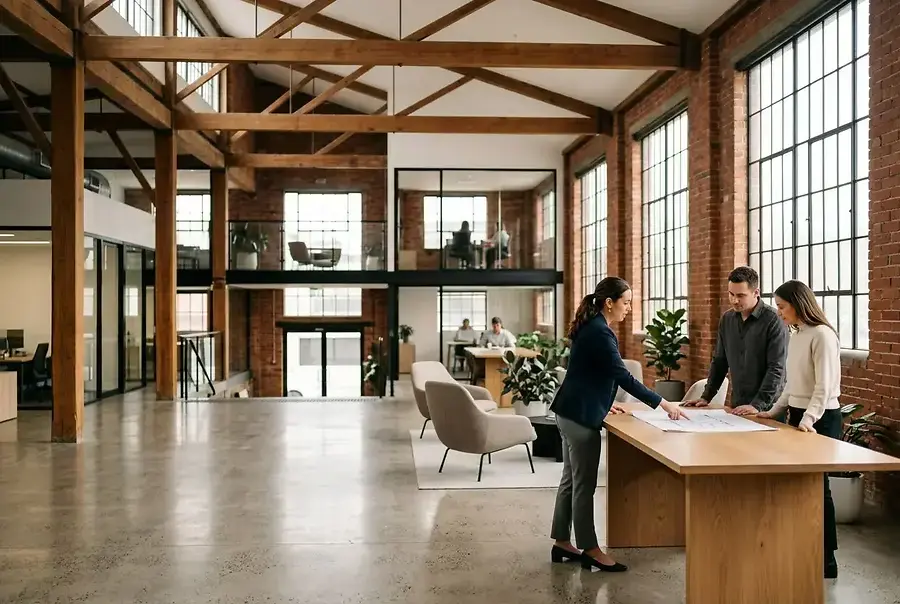
One of the greatest assets of warehouse conversions is their expansive, column-free or minimally-columned layouts. Preserve these open floor plans whenever possible, as they appeal to modern tenants seeking flexible, collaborative work environments. Strategic placement of skylights, large windows, and glass partitions can flood interior spaces with natural light while maintaining the industrial aesthetic that attracts contemporary businesses.
Consider creating mezzanine levels to increase usable square footage without sacrificing the sense of openness that makes these spaces desirable.
Preserve Character While Modernizing Systems
The charm of converted warehouses lies in their authentic industrial character. Exposed brick, timber beams, concrete floors, and soaring ceilings are features that tenants actively seek and are willing to pay premium rates for. Rather than concealing these elements, celebrate them. Simultaneously, ensure that modern mechanical, electrical, and plumbing systems are seamlessly integrated without compromising the aesthetic appeal.
The balance between preservation and modernization is what transforms a warehouse into a premium commercial asset.
Plan for Flexible Tenant Configurations
Design the space to accommodate various tenant sizes and business types. Incorporate flexible demising walls, modular office configurations, and shared amenity spaces. This adaptability increases your potential tenant pool and allows you to maximize occupancy rates across different market cycles.
Invest in Amenities and Common Areas
Modern tenants expect more than just raw space. Develop attractive common areas, including:
- Professional lobbies and reception areas
- Collaborative meeting spaces and lounges
- On-site parking or bike storage facilities
- Cafes, coffee bars, or food service options
- Fitness centers or wellness amenities
These amenities justify higher rental rates and create a sense of community that attracts quality tenants.
Financial Benefits and ROI Potential for Adaptive Reuse Projects
Lower Acquisition Costs
Warehouse properties in secondary markets typically command significantly lower purchase prices than comparable new construction or prime commercial real estate. This lower entry point reduces your initial capital requirement and improves your overall project economics.
Faster Development Timeline
Converting an existing structure is generally faster than ground-up development. You're working with an established foundation and envelope, which accelerates the path to revenue generation. Faster completion means quicker returns on your investment capital.
Reduced Construction Costs
While conversion projects require specialized expertise, they typically cost less per square foot than new construction. You're leveraging existing structural systems and building shells, which translates to material and labor savings.
Premium Rental Rates
The most compelling financial benefit is the ability to command premium rental rates. Tenants actively seek converted warehouse spaces and are willing to pay 15-30% above standard commercial rates for authentic, character-filled environments with modern amenities. This rental premium directly flows to your bottom line.
Tax Incentives and Grants
Many municipalities offer tax credits, grants, and incentive programs for adaptive reuse projects, particularly in revitalization zones. Historic preservation tax credits can provide substantial financial benefits if your project qualifies. Research local and state programs to maximize available incentives.
Long-Term Value Appreciation
Successful adaptive reuse projects often catalyze neighborhood revitalization, attracting complementary businesses and increasing surrounding property values. Your converted warehouse becomes an anchor asset in an increasingly desirable location, positioning you for significant long-term appreciation.
Smart investors recognize that adaptive reuse isn't just about conversion—it's about creating community destinations that tenants and customers actively choose.
Conclusion: Positioning Yourself as an Expert in Commercial Transformation
Adaptive reuse represents one of the most compelling opportunities in commercial real estate today. By understanding the strategic, operational, and financial dimensions of warehouse conversion, you can transform underutilized properties into thriving commercial hubs that attract quality tenants and generate exceptional returns.
Success requires careful planning, attention to detail, and a clear vision for how existing spaces can serve modern business needs. It demands expertise in structural assessment, design, construction management, and tenant relations. But for developers willing to invest in mastering these skills, the rewards are substantial.
The market for adaptive reuse continues to expand as businesses seek authentic, flexible, and community-connected spaces. By positioning yourself as an expert in commercial transformation, you'll be well-positioned to capture this growing opportunity and build a reputation as a developer who creates spaces where businesses thrive and communities flourish.