Adaptive Reuse Projects Transforming Greenville's Commercial Landscape
Discover how vacant Greenville commercial buildings are being repositioned into thriving mixed-use developments that attract premium tenants and drive neighborhood revitalization.

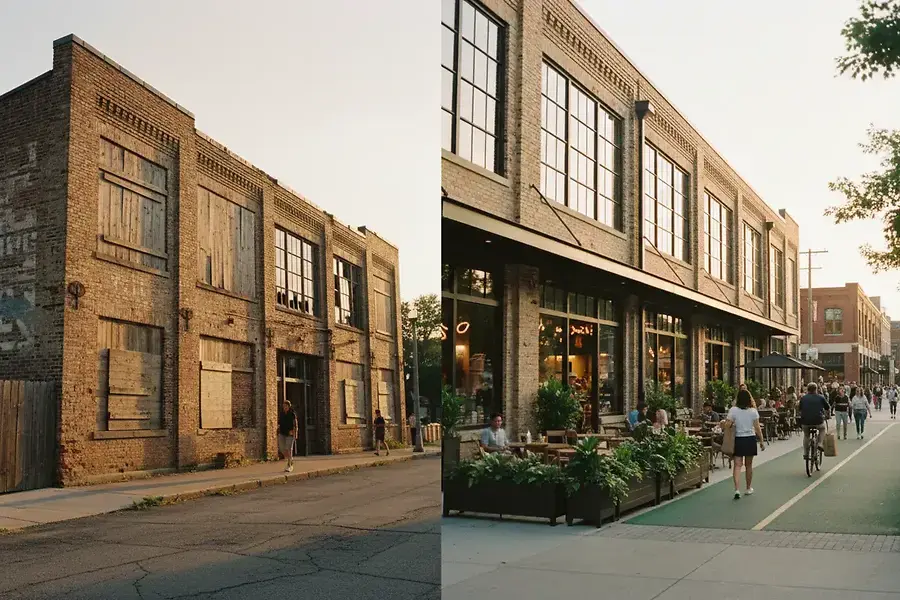
Understanding Adaptive Reuse: From Obsolete to Opportunity
Adaptive reuse represents one of the most dynamic trends reshaping Greenville's commercial real estate landscape. Rather than demolishing aging or underutilized buildings, developers are strategically converting these structures into modern, mixed-use spaces that serve contemporary market demands. This approach breathes new life into forgotten properties while preserving the architectural character that makes Greenville's neighborhoods distinctive.
The concept extends beyond simple renovation. True adaptive reuse involves reimagining a building's purpose entirely—transforming a defunct warehouse into luxury lofts, converting an abandoned factory into creative office space, or repurposing a shuttered retail building into a vibrant food hall. These projects address multiple market needs simultaneously: they reduce urban sprawl, preserve historical assets, and create economically viable properties that generate strong returns for investors.
Why Adaptive Reuse Makes Economic Sense
Greenville's adaptive reuse boom isn't driven by nostalgia alone—it's fundamentally sound economics. Existing structures often cost significantly less to acquire than prime development land, while their established locations in walkable neighborhoods command premium rents. Additionally, many adaptive reuse projects qualify for historic tax credits and other incentive programs that substantially improve project economics.
- Lower land acquisition costs compared to new development sites
- Access to historic preservation tax credits
- Established infrastructure and utilities already in place
- Prime locations in walkable, established neighborhoods
- Reduced environmental remediation compared to greenfield development
Greenville's Most Promising Conversion Projects and Their Market Impact
Several flagship adaptive reuse projects are setting the standard for Greenville's commercial transformation and demonstrating the model's viability at scale.
The Warehouse District Renaissance
Historic warehouse buildings along Greenville's riverfront are experiencing remarkable transformations. Former industrial spaces are becoming sought-after addresses for creative agencies, tech startups, and boutique professional services firms. These conversions typically feature exposed brick, soaring ceilings, and flexible floor plans that appeal to modern tenants seeking character and functionality. Occupancy rates in repositioned warehouse properties consistently exceed 95%, with waiting lists for premium spaces.
Retail-to-Mixed-Use Conversions
Struggling retail corridors are being reimagined as vibrant mixed-use destinations. Ground-floor restaurants and specialty retailers anchor these projects, while upper floors accommodate residential lofts, corporate offices, or hospitality uses. This vertical integration creates synergies that drive foot traffic and tenant retention across all uses.
Industrial-to-Innovation Hub Transformations
Vacant manufacturing facilities are being repositioned as innovation hubs, maker spaces, and collaborative work environments. These projects attract growing companies seeking affordable, flexible space with authentic character. The conversion of a former textile mill into a multi-tenant creative campus demonstrates how industrial heritage can become a competitive advantage in attracting knowledge-economy tenants.
Investment Returns and Tenant Demand in Repositioned Properties
The financial performance of adaptive reuse projects tells a compelling story for investors. Market data demonstrates that repositioned properties deliver competitive returns while offering lower risk profiles than speculative new development.
Strong Rental Growth and Occupancy
Adaptive reuse properties in Greenville command rental rates comparable to or exceeding new construction in similar locations. More importantly, tenant retention rates are exceptionally high, with many repositioned properties maintaining 90%+ occupancy rates year after year. Tenants value the distinctive character, established locations, and community identity these spaces provide.
Diversified Tenant Base
Successful adaptive reuse projects attract a diverse mix of tenants across multiple sectors:
- Creative and technology companies seeking distinctive, affordable space
- Food and beverage operators drawn to walkable, high-traffic locations
- Professional services firms valuing character and neighborhood prestige
- Residential tenants seeking authentic urban living experiences
- Hospitality operators creating boutique hotels and experiential venues
Capital Appreciation and Exit Strategies
Beyond rental income, adaptive reuse projects have demonstrated strong appreciation potential. As neighborhoods revitalize around these anchor projects, property values increase, creating substantial equity gains. Investors benefit from multiple exit strategies: long-term hold for cash flow, refinancing to recycle capital, or strategic sales to institutional investors seeking stabilized assets.
Getting Ahead: How to Identify and Capitalize on Adaptive Reuse Opportunities
For investors seeking to participate in Greenville's adaptive reuse movement, success requires strategic thinking and careful market analysis.
Identifying Promising Conversion Candidates
Look for buildings with these characteristics:
- Strong bones: Solid structural systems, high ceilings, and interesting architectural features
- Strategic location: Proximity to amenities, walkability, and neighborhood momentum
- Undervalued acquisition: Distressed properties or those owned by sellers lacking development expertise
- Regulatory support: Zoning that permits mixed-use development and local incentive programs
- Market demand: Clear tenant demand for the proposed use in the target neighborhood
Navigating Regulatory and Financial Considerations
Successful adaptive reuse requires expertise across multiple disciplines. Partner with experienced development teams, architects familiar with historic preservation, and lenders comfortable with adaptive reuse projects. Understand available incentive programs—historic tax credits, opportunity zone benefits, and local economic development grants can substantially improve project economics.
Building Community Support
The most successful adaptive reuse projects enhance neighborhood character and generate community enthusiasm. Engage early with neighborhood stakeholders, preserve architectural heritage where appropriate, and design projects that contribute positively to the surrounding area. This approach not only creates better projects but also facilitates permitting and attracts quality tenants who value community integration.
"Adaptive reuse isn't just about preserving buildings—it's about preserving neighborhoods and creating vibrant communities where people want to live, work, and gather."
The Path Forward
Greenville's adaptive reuse movement represents a fundamental shift in how the city develops commercially. By transforming vacant buildings into thriving mixed-use destinations, developers and investors are creating value while strengthening neighborhoods and preserving community character. For those positioned to identify and capitalize on these opportunities, the potential returns—both financial and community-focused—are substantial. The future of Greenville's commercial landscape belongs to those who see potential where others see only obsolescence.


