Building Multi-Unit Investment Portfolios in South LA County Markets
A comprehensive guide to residential and commercial property strategies across the region's most promising markets.

Understanding Multi-Unit Property Investment Fundamentals
Multi-unit property investment represents one of the most reliable pathways to building long-term wealth through real estate. Unlike single-family homes, multi-unit properties generate multiple revenue streams from a single location, providing investors with enhanced cash flow and portfolio stability.
What defines a multi-unit property? These are residential or commercial buildings containing two or more rental units. They range from duplexes and triplexes to apartment complexes and mixed-use developments. The key advantage lies in their ability to generate income from multiple tenants simultaneously, reducing vacancy risk and maximizing returns on investment.
Core Benefits of Multi-Unit Investing
- Diversified Income Streams: Multiple units mean multiple rent payments, creating stability even if one unit sits vacant
- Economies of Scale: Operating costs per unit decrease as property size increases
- Financing Advantages: Lenders often provide better terms for multi-unit properties with proven income potential
- Tax Benefits: Depreciation, maintenance expenses, and mortgage interest offer significant deductions
- Appreciation Potential: Multi-unit properties typically appreciate faster than single-family homes in growing markets
The foundation of successful multi-unit investing begins with understanding these fundamentals and how they apply to your specific market conditions.
Key Markets for Residential-Commercial Hybrid Properties in South LA County
South LA County encompasses diverse neighborhoods with varying investment opportunities. The region's economic growth, population density, and infrastructure development create compelling opportunities for hybrid property investments that combine residential and commercial elements.
Emerging Neighborhoods with Strong Potential
Long Beach: This vibrant coastal city offers excellent opportunities for mixed-use developments. The area's revitalization efforts, proximity to ports, and growing tech sector attract both residential tenants and commercial businesses. Properties here command premium rents and show consistent appreciation.
Torrance and Redondo Beach: These South Bay communities appeal to professionals seeking quality of life. Multi-unit residential properties with ground-floor commercial spaces perform exceptionally well, combining stable residential income with retail or office revenue.
Compton and Inglewood: These areas represent emerging opportunities with lower entry costs and significant growth potential. Recent infrastructure improvements and entertainment industry expansion create favorable conditions for investors willing to take calculated risks.
Hybrid Property Advantages in South LA County
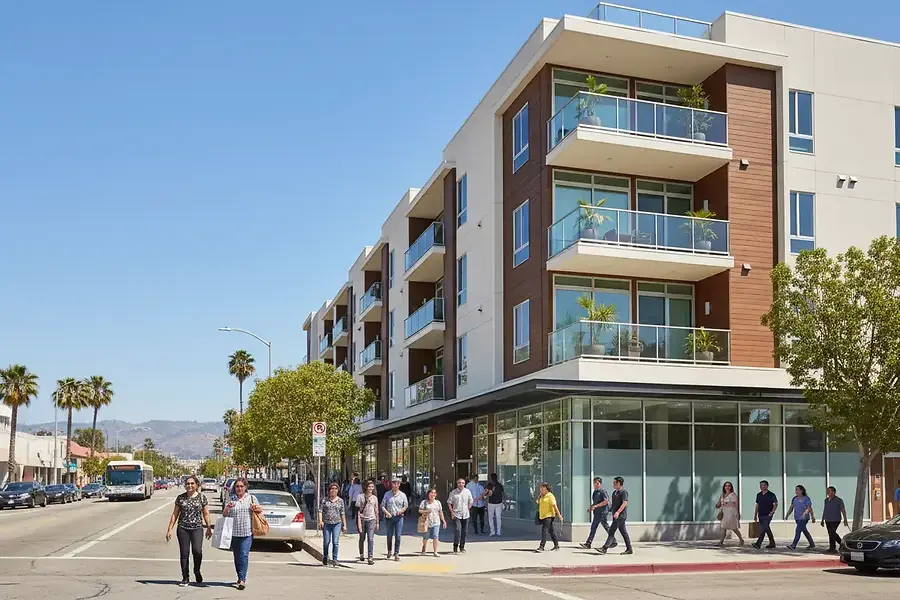
Residential-commercial hybrid properties maximize land utilization and revenue potential. A typical structure might include:
- Ground-floor retail or office space generating commercial rent
- Upper-floor residential units providing residential income
- Shared amenities reducing per-unit operating costs
- Flexible tenant mix allowing rapid pivots if market conditions shift
The most successful investors in South LA County recognize that hybrid properties aren't just about maximizing square footage—they're about creating communities that serve multiple purposes and generate resilient income streams.
Financial Analysis and ROI Strategies for Mixed-Portfolio Development
Building a profitable multi-unit portfolio requires rigorous financial analysis. Understanding key metrics helps you identify undervalued properties and optimize returns.
Essential Financial Metrics
Cap Rate (Capitalization Rate): This measures annual net operating income divided by property value. South LA County properties typically show cap rates between 4-7%, depending on location and condition. Higher cap rates indicate greater return potential but may signal higher risk.
Cash-on-Cash Return: This calculates annual cash flow against your initial investment. A 10-15% cash-on-cash return is considered excellent in this market. This metric helps you understand actual cash generated relative to capital deployed.
Debt Service Coverage Ratio (DSCR): Lenders require this ratio to exceed 1.25, meaning annual net operating income must be 25% higher than annual debt payments. Strong DSCR ratios improve financing terms and reduce risk.
Building Your Financial Strategy
- Analyze comparable properties: Study recent sales of similar multi-unit properties to establish realistic valuations
- Project conservative income: Use 90% of market rent rates to account for vacancies and collection losses
- Account for all expenses: Include property taxes, insurance, maintenance, utilities, property management, and capital reserves
- Model multiple scenarios: Test your assumptions against rising interest rates, market downturns, and unexpected vacancies
- Calculate long-term appreciation: Factor in historical appreciation rates of 3-4% annually for South LA County properties
Successful investors develop detailed pro forma statements for each potential acquisition, stress-testing assumptions to ensure profitability across various market conditions.
Getting Started: Steps to Build Your Investment Portfolio Today
Transforming real estate investment aspirations into reality requires a structured approach. Follow these actionable steps to launch your multi-unit portfolio.
Step 1: Establish Your Investment Foundation
Before pursuing properties, clarify your investment goals, timeline, and capital availability. Determine whether you're seeking monthly cash flow, long-term appreciation, or a balanced approach. Secure financing pre-approval to understand your purchasing power and demonstrate credibility to sellers.
Step 2: Research and Identify Target Markets
Spend time in different South LA County neighborhoods. Analyze demographic trends, employment growth, infrastructure projects, and rental demand. Connect with local real estate professionals who understand market nuances and can identify off-market opportunities.
Step 3: Develop Your Acquisition Strategy
Decide whether you'll pursue value-add properties requiring renovation, stabilized properties generating immediate income, or development opportunities. Each strategy carries different risk-reward profiles. Most successful portfolios combine multiple strategies to balance risk and return.
Step 4: Build Your Team
Assemble experienced professionals including a real estate attorney, accountant, property manager, and contractor. These relationships prove invaluable for navigating complex transactions, optimizing tax strategies, and maintaining properties efficiently.
Step 5: Execute Your First Acquisition
Start with a property matching your criteria and financial parameters. Don't rush—the right opportunity will align with your goals. Conduct thorough due diligence including property inspections, title searches, and tenant interviews. Negotiate aggressively but fairly.
Step 6: Optimize and Scale
After successfully acquiring and managing your first property, use the experience and cash flow to fund subsequent acquisitions. Each property should strengthen your portfolio's overall performance and reduce risk through diversification.
The path to building a substantial multi-unit portfolio in South LA County is achievable for disciplined investors willing to conduct thorough analysis and execute strategically. Start today by taking the first step—whether that's attending a local real estate investment meeting, analyzing your first property, or connecting with experienced mentors in your target market.


