Chicago Condo vs. Single-Family Homes: Which Is Right for You?
Discover the key differences between Chicago's condo and single-family home markets to make an informed decision for your lifestyle and investment goals.

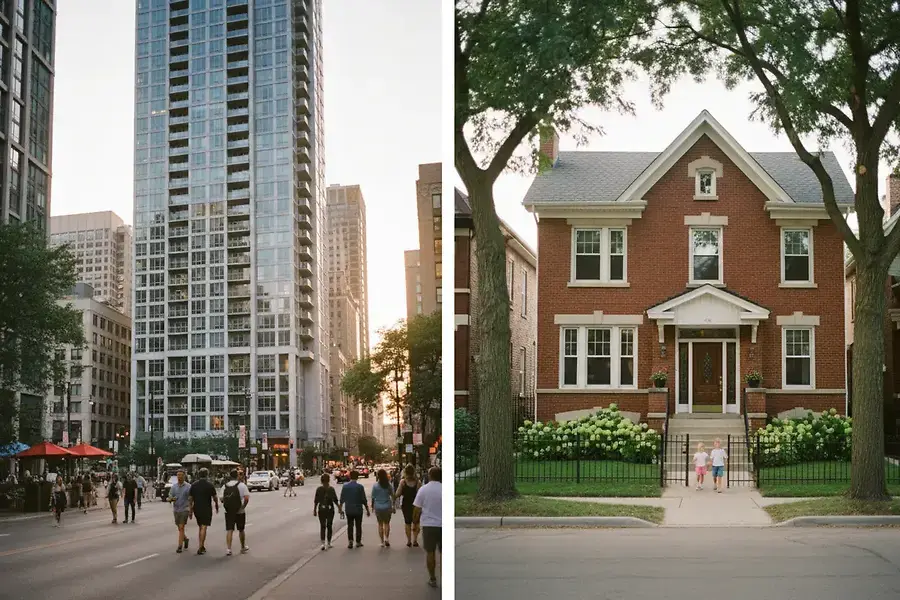
Understanding Chicago's Housing Market: Condos and Single-Family Homes Explained
Chicago's real estate market offers two primary housing options for buyers: condominiums and single-family homes. Each comes with distinct characteristics that appeal to different lifestyles and financial situations. Understanding these differences is the first step toward making an informed decision about your next home purchase.
Condominiums are individual units within larger residential buildings or complexes. When you purchase a condo, you own your specific unit but share common areas like lobbies, hallways, gyms, and sometimes parking facilities. Single-family homes, on the other hand, are standalone properties where you own both the structure and the land it sits on. This fundamental difference shapes everything from maintenance responsibilities to community dynamics.
Chicago's condo market thrives primarily in urban neighborhoods like the Loop, River North, Lincoln Park, and Wicker Park, where high-rise and mid-rise buildings dominate the skyline. Single-family homes are more prevalent in neighborhoods like Lincoln Square, Pilsen, Ravenswood, and the suburbs surrounding the city, offering more space and privacy.
Cost Comparison: Mortgage, Taxes, HOA Fees, and Maintenance Expenses
Purchase Price and Mortgage
In Chicago, condos typically have lower entry prices compared to single-family homes, making them attractive to first-time buyers and investors. However, this varies significantly by neighborhood. A modest condo in a desirable downtown location might cost more than a single-family home in an emerging neighborhood.
Property Taxes and HOA Fees
Single-family homeowners pay property taxes directly to Cook County based on their home's assessed value. Condo owners also pay property taxes, but typically on a lower assessed value since they own less land. However, condo owners must pay homeowners association (HOA) fees, which can range from $200 to $800+ monthly, depending on the building's amenities and maintenance needs.
HOA fees cover building maintenance, insurance, property management, and shared amenities—costs that single-family homeowners handle individually.
Maintenance and Repair Costs
This is where the financial differences become significant:
- Condo owners have predictable HOA fees but limited control over major expenses. The HOA handles roof repairs, exterior maintenance, and structural issues.
- Single-family homeowners are responsible for all maintenance and repairs, from roof replacement to foundation work. These costs can be substantial and unpredictable.
Single-family homeowners should budget 1-2% of their home's value annually for maintenance and repairs. A $400,000 home could require $4,000-$8,000 yearly in upkeep.
Lifestyle and Community Factors: Urban Living Versus Suburban Space
Space and Privacy
Single-family homes offer significantly more space, both indoors and outdoors. You'll have a yard for gardening, entertaining, or letting children and pets play freely. Condos provide limited outdoor space, typically just a balcony or patio, though some buildings offer shared courtyards or rooftop terraces.
Privacy is another consideration. In condos, you share walls with neighbors, which means potential noise concerns. Single-family homes provide complete privacy and control over your surroundings.
Urban Amenities vs. Suburban Convenience
Condo living in Chicago's urban neighborhoods puts you steps away from restaurants, shops, public transportation, and entertainment venues. You can walk to work, enjoy vibrant nightlife, and access cultural institutions easily. Many condo buildings offer amenities like fitness centers, pools, and concierge services.
Single-family homes in suburban areas offer quieter, family-friendly environments with excellent schools and parks. You'll need a car for most errands, but you gain peace, space, and a strong sense of community.
Community and Social Life
Condo buildings create built-in communities where you'll interact with neighbors in common areas. Some buildings organize social events and activities. Single-family neighborhoods vary widely—some are tight-knit communities with block parties and neighborhood associations, while others are more isolated.
Making Your Decision: Key Questions to Ask Before Buying
Assess Your Lifestyle Priorities
- Do you prioritize walkability and urban convenience, or do you prefer space and quiet?
- Are you comfortable with shared living spaces and community rules?
- How important are building amenities to your daily life?
Evaluate Your Financial Situation
- Can you afford the down payment and closing costs for either option?
- Are you prepared for unexpected maintenance costs in a single-family home?
- Can you comfortably budget for HOA fees in a condo?
- What's your long-term investment timeline?
Consider Your Future Plans
Condos work well if: You're a young professional, first-time buyer, or someone who values convenience over space. You prefer predictable housing costs and minimal maintenance responsibilities. You enjoy urban living and don't plan to stay in Chicago long-term.
Single-family homes work well if: You're planning to stay in Chicago for 10+ years. You have or plan to have a family. You want to build equity through property appreciation and customization. You're willing to handle maintenance and repairs or hire contractors.
Research Neighborhood Trends
Before deciding between a condo and single-family home, research specific neighborhoods. Look at property appreciation rates, school quality, crime statistics, and future development plans. A condo in an emerging neighborhood might appreciate faster than one in a saturated market, while a single-family home in a stable, established area offers predictability.
Chicago's real estate market offers excellent opportunities in both categories. The right choice depends on your lifestyle preferences, financial capacity, and long-term goals. Take time to evaluate your priorities, visit neighborhoods at different times of day, and consult with a real estate agent familiar with Chicago's diverse markets. Whether you choose the convenience of condo living or the space of a single-family home, Chicago has options to match your vision of home.


