Commercial Investment Opportunities in Emerging Secondary Markets
How industrial, retail, and mixed-use development across the Midwest and South are creating lucrative opportunities for real estate professionals.

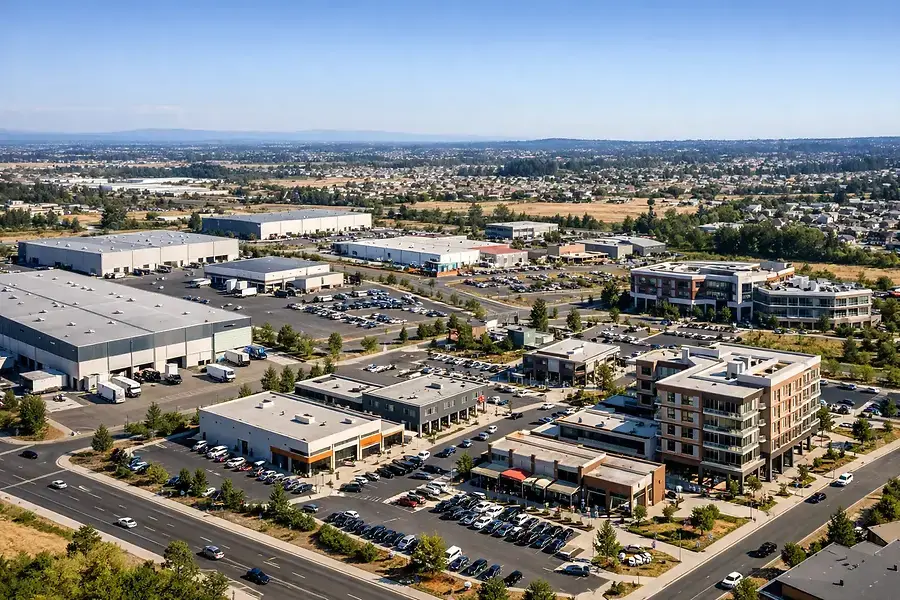
Introduction: The Rise of Secondary Market Commercial Real Estate
The commercial real estate landscape is undergoing a significant transformation. While primary markets like New York, Los Angeles, and Chicago have long dominated investor attention, secondary markets across the Midwest and South are emerging as the new frontier for lucrative opportunities. These regions are experiencing unprecedented growth driven by population migration, business expansion, and changing consumer preferences.
Secondary markets offer distinct advantages that are attracting institutional investors, developers, and real estate professionals seeking higher returns and lower competition. With lower entry costs, stronger rental growth potential, and increasing demand for quality commercial space, these markets present a compelling case for portfolio diversification and strategic investment.
Industrial and Logistics Hub Expansion Across Key Regions
The E-Commerce Catalyst
The explosive growth of e-commerce has fundamentally reshaped industrial real estate demand. Secondary markets in the Midwest and South are perfectly positioned to capitalize on this trend. Cities like Nashville, Memphis, Charlotte, and Indianapolis are becoming critical distribution hubs due to their strategic geographic locations and lower operational costs compared to coastal markets.
Industrial properties in these regions are experiencing unprecedented demand, with vacancy rates declining and rental rates climbing steadily. Developers are responding by constructing state-of-the-art fulfillment centers, last-mile delivery facilities, and logistics parks that meet the stringent requirements of modern supply chains.
Infrastructure and Accessibility Advantages
Secondary markets benefit from excellent highway connectivity, rail access, and increasingly, proximity to major airports. These infrastructure advantages make them ideal locations for companies seeking to optimize their distribution networks. Investment opportunities abound in:
- Warehouse and Distribution Centers: Modern facilities designed for automation and efficiency
- Cross-Dock Facilities: Strategic transfer points for goods in transit
- Cold Storage and Specialized Logistics: Temperature-controlled facilities for perishables and pharmaceuticals
- Manufacturing and Light Industrial: Flexible spaces for production and assembly operations
Real estate professionals can expect strong tenant demand, long-term lease agreements, and stable cash flows from industrial investments in these emerging hubs.
Retail and Mixed-Use Development Trends Reshaping Market Dynamics
The Evolution of Retail Spaces
Traditional retail has faced challenges, but secondary markets are proving that strategic retail development remains viable. The key is understanding how consumer behavior has evolved. Rather than large, enclosed malls, successful retail developments now feature:
- Open-air lifestyle centers with mixed-use components
- Experiential retail spaces that blend shopping with entertainment and dining
- Flexible tenant spaces accommodating both brick-and-mortar and pop-up retailers
- Community-focused developments that serve as gathering places
Mixed-Use Development: The Future of Urban Growth
Mixed-use developments are transforming secondary markets by combining residential, retail, office, and entertainment spaces in single projects. These developments create vibrant communities that attract residents, workers, and visitors, generating multiple revenue streams for investors.
Mixed-use projects in secondary markets are delivering superior returns by diversifying income sources and reducing vacancy risk across multiple asset classes.
Key Investment Opportunities in Retail and Mixed-Use
Successful projects in secondary markets share common characteristics:
- Strategic Location: Proximity to growing residential areas and employment centers
- Diverse Tenant Mix: Anchor tenants combined with local and emerging brands
- Adaptive Reuse: Converting historic buildings into modern mixed-use spaces
- Walkability and Accessibility: Pedestrian-friendly designs with ample parking and public transit connections
- Community Integration: Public spaces, events, and programming that build local loyalty
Secondary markets are attracting national retailers seeking expansion opportunities outside saturated primary markets. This creates opportunities for developers and investors to secure quality tenants at favorable terms while building long-term value.
The Role of Population Growth
Population migration to secondary markets is driving retail and mixed-use development. As residents relocate for employment opportunities and quality of life, demand for shopping, dining, and entertainment venues increases proportionally. This demographic shift creates a favorable environment for retail and mixed-use investments with strong fundamentals and long-term growth potential.
Conclusion: Capitalizing on Growth Opportunities for Your Clients
Secondary markets across the Midwest and South represent a compelling investment thesis for real estate professionals. The convergence of industrial expansion, retail evolution, and mixed-use development is creating diverse opportunities for investors seeking to build resilient, profitable portfolios.
For real estate professionals, the message is clear: secondary markets are no longer secondary in terms of opportunity. By understanding the unique dynamics of these markets—from e-commerce logistics to community-focused retail development—you can guide your clients toward investments that deliver strong returns and sustainable growth.
The time to act is now. As capital flows into these emerging markets and competition intensifies, early movers will capture the most attractive opportunities. Whether your clients are seeking industrial assets, retail developments, or mixed-use projects, secondary markets offer the growth potential and returns that define successful real estate investing.


