Commercial Real Estate Opportunities Across St. Louis Metro Markets
Discover the most promising commercial and mixed-use development opportunities across the St. Louis metro area.

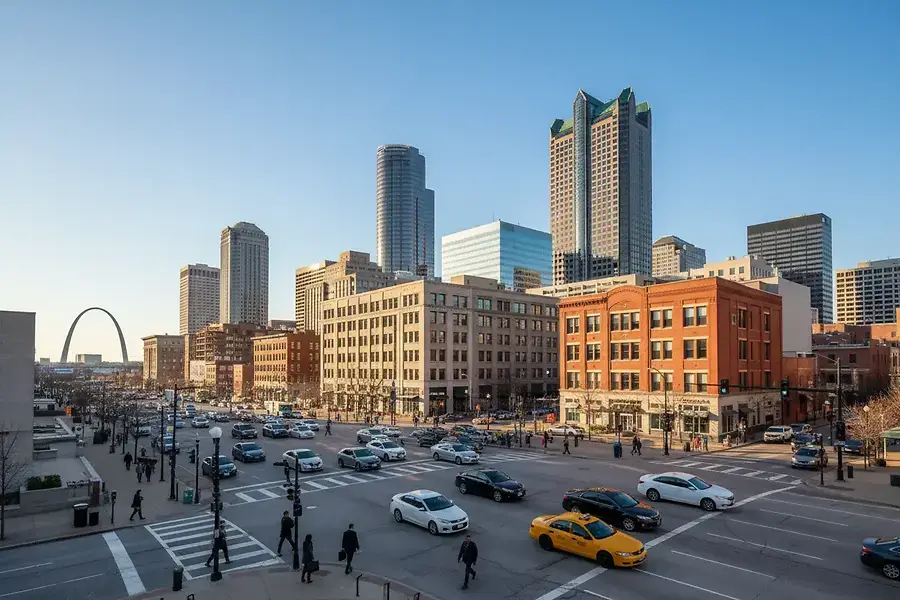
The Commercial Real Estate Boom in St. Louis Metro
The St. Louis metropolitan area is experiencing a significant transformation in its commercial real estate landscape. With a diverse economy, strategic geographic location, and increasingly attractive incentive programs, the region has become a hotbed for investors and developers seeking profitable opportunities. The convergence of population growth, corporate relocations, and infrastructure improvements has created an ideal environment for commercial and mixed-use development projects.
The metro area's commercial sector is no longer confined to traditional downtown corridors. Instead, opportunities are flourishing across multiple submarkets, each with unique characteristics and growth potential. From suburban office parks to vibrant mixed-use developments, the St. Louis region offers something for every type of investor and business operator.
Top Commercial and Residential/Commercial Markets: From Arnold to Wentzville
Arnold and South County Growth
Arnold has emerged as one of the most dynamic commercial markets in the St. Louis metro area. Located in Jefferson County, this submarket benefits from excellent highway access and proximity to major employment centers. The area is experiencing robust retail and office development, with new shopping centers and professional office buildings transforming the landscape. Mixed-use developments combining retail, office, and residential components are particularly attractive to investors in this region.
South County, more broadly, continues to attract national retailers and regional businesses seeking affordable real estate with strong visibility and traffic patterns. The competitive pricing compared to central St. Louis makes this area particularly appealing for cost-conscious operators.
Clayton and the Central Business District
Clayton remains the premier commercial real estate market in the St. Louis metro area. As the county seat of St. Louis County, Clayton hosts numerous corporate headquarters, professional services firms, and high-end retail establishments. The market continues to see strong demand for Class A office space and luxury mixed-use developments, though pricing reflects the premium location and amenities.
Recent trends show increasing interest in adaptive reuse projects that convert older office buildings into residential lofts and boutique retail spaces, creating vibrant urban neighborhoods within the business district.
Wentzville and the I-70 Corridor
Wentzville represents one of the fastest-growing commercial markets in the region. Located along the I-70 corridor in St. Charles County, this area has experienced explosive growth driven by:
- Strategic location between St. Louis and Kansas City
- Excellent highway connectivity and logistics infrastructure
- Significant population growth in surrounding residential areas
- Competitive commercial real estate pricing
- Business-friendly municipal policies and incentives
The Wentzville market is particularly attractive for logistics, distribution, and light manufacturing operations, though retail and office development are also accelerating.
Other Emerging Markets
Markets such as O'Fallon, Chesterfield, and Kirkwood are also experiencing notable commercial development activity. Each offers distinct advantages, from O'Fallon's affordability to Chesterfield's upscale positioning and Kirkwood's established professional community.
Investment Trends and Development Potential in Key Corridors
Mixed-Use Development Dominance
Mixed-use development has become the dominant trend across St. Louis metro commercial real estate. Investors recognize that combining residential, retail, and office components in single projects creates multiple revenue streams and appeals to modern consumers and businesses. These developments often feature ground-floor retail with office or residential space above, creating vibrant, walkable communities.
E-Commerce and Logistics Expansion
The growth of e-commerce has created unprecedented demand for warehouse and distribution facilities throughout the metro area. The I-70 and I-44 corridors are particularly attractive for logistics operations, with Wentzville and surrounding areas seeing significant industrial development. Last-mile delivery facilities and regional distribution centers are commanding premium rents as retailers compete for efficient supply chain solutions.
Adaptive Reuse and Historic Preservation
Historic buildings throughout the St. Louis metro area are being reimagined for modern uses. Developers are converting warehouses, factories, and office buildings into trendy lofts, creative office spaces, and experiential retail environments. This trend is particularly strong in neighborhoods with architectural character and established communities.
Healthcare and Life Sciences Growth
The region's strong healthcare sector continues to drive commercial real estate demand. Medical office buildings, research facilities, and specialized healthcare real estate are experiencing steady growth, particularly around major hospital systems and research institutions.
Workforce Housing and Affordability
As residential costs rise, developers are increasingly focusing on workforce housing projects that serve middle-income residents. Mixed-use developments that include affordable residential components alongside commercial space are attracting investor interest and municipal support through tax incentives and expedited permitting.
Positioning Yourself in the Evolving St. Louis Market
For investors and developers looking to capitalize on St. Louis metro opportunities, several strategic considerations emerge:
- Location Selection: Evaluate submarkets based on demographic trends, traffic patterns, and municipal growth plans
- Project Type: Mixed-use developments offer diversified revenue potential compared to single-use properties
- Incentive Programs: Research available tax credits, opportunity zone benefits, and municipal incentives that can significantly improve project economics
- Infrastructure Access: Prioritize locations with excellent highway connectivity and public transportation options
- Long-Term Vision: Consider how demographic and economic trends will affect property values over the holding period
The St. Louis metropolitan area's commercial real estate market is at an inflection point. With multiple growth corridors, diverse market opportunities, and favorable economic fundamentals, the region offers compelling prospects for investors willing to conduct thorough market research and execute disciplined investment strategies.
The convergence of population growth, strategic location, and business-friendly policies positions the St. Louis metro area as an increasingly attractive destination for commercial real estate investment.
Whether you're interested in retail, office, industrial, or mixed-use development, the St. Louis metro area presents opportunities across multiple asset classes and submarkets. Success requires understanding local market dynamics, identifying emerging growth areas, and positioning investments to capture long-term value creation in this evolving market.


