Commercial Zoning and Development Opportunities in Pismo Beach, Atascadero, and Grover Beach
Discover how strategic zoning regulations create unique investment potential across California's Central Coast communities.

Understanding Commercial Zoning on the Central Coast
California's Central Coast presents a compelling landscape for commercial real estate investors seeking growth opportunities. The communities of Pismo Beach, Atascadero, and Grover Beach each offer distinct zoning frameworks that shape development potential and investment returns. Understanding these regulatory environments is essential for anyone looking to capitalize on the region's expanding economy and tourism appeal.
Commercial zoning serves as the foundation for economic development, determining what types of businesses can operate in specific areas and how properties can be developed. The Central Coast's strategic location, combined with its growing population and tourism industry, creates a unique environment where zoning regulations directly influence property values and business viability.
Zoning Regulations and Development Potential in Each Market
Pismo Beach: Coastal Commercial Excellence
Pismo Beach's zoning regulations reflect its dual identity as both a tourist destination and residential community. The city maintains distinct commercial zones that prioritize:
- Downtown Commercial Districts: These areas encourage retail, dining, and hospitality businesses that serve both residents and visitors
- Mixed-Use Development: Properties that combine residential units with ground-floor commercial spaces are increasingly encouraged
- Visitor-Serving Uses: Hotels, resorts, and entertainment venues receive favorable zoning considerations
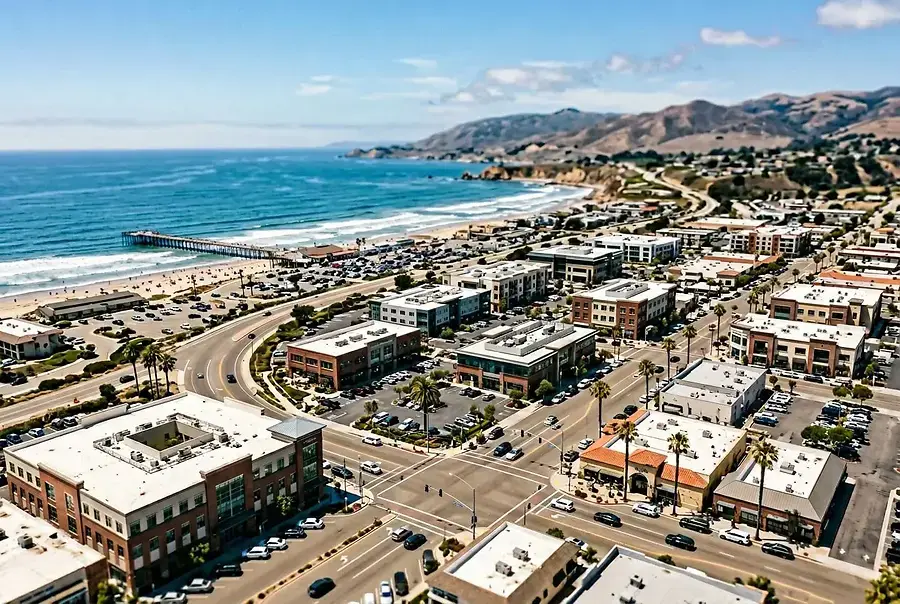
The city's proximity to the Pacific Ocean and popular attractions like the Pismo Beach Pier creates natural demand for commercial services. Investors focusing on hospitality, retail, and food service sectors find the zoning environment particularly conducive to profitability.
Atascadero: Inland Commercial Growth
Atascadero's zoning strategy emphasizes planned commercial development with a focus on serving the local community. Key characteristics include:
- Business Parks: Designated zones for office, light industrial, and professional services
- Retail Centers: Strategic locations designed to accommodate shopping centers and commercial clusters
- Agricultural Compatibility: Zoning that respects the region's agricultural heritage while promoting commercial growth
As the inland anchor of the region, Atascadero attracts businesses seeking lower land costs than coastal areas while maintaining excellent accessibility. The city's zoning framework supports diverse commercial ventures, from professional offices to retail operations.
Grover Beach: Emerging Commercial Opportunities
Grover Beach represents an emerging market with flexible zoning provisions designed to attract new investment. The city's approach includes:
- Adaptive Reuse Incentives: Zoning flexibility for converting older structures into modern commercial spaces
- Small Business Zones: Areas specifically designated to support startup and small business operations
- Coastal Access Commerce: Zoning that leverages proximity to beaches and recreational areas
Grover Beach's emerging status creates opportunities for early-stage investors willing to develop properties in areas experiencing revitalization and growth.
Commercial vs. Residential Zoning: Maximizing Your Property Investment
Understanding the Differences
The distinction between commercial and residential zoning fundamentally affects property use, income potential, and long-term value. Commercial zoning permits business operations, retail establishments, and service providers, while residential zoning restricts properties to dwelling units and related uses.
Income Potential and Returns
Commercial properties typically generate higher revenue streams than residential investments. Consider these factors:
- Lease Rates: Commercial tenants often pay premium rates compared to residential renters
- Business Diversity: Multiple commercial uses can be stacked on a single property through mixed-use development
- Long-Term Leases: Commercial tenants frequently commit to longer lease terms, providing stable income
Zoning Conversion Strategies
Savvy investors sometimes pursue zoning variance requests or conditional use permits to unlock additional property value. On the Central Coast, municipalities occasionally approve conversions from residential to commercial zoning when projects align with community development goals.
Key Insight: Properties positioned at the intersection of commercial and residential zones often command premium values due to their flexibility and multiple use potential.
Risk Considerations
While commercial zoning offers higher income potential, it requires careful market analysis. Investors should evaluate:
- Local market demand for specific business types
- Competition from existing commercial properties
- Tenant stability and creditworthiness
- Regulatory compliance costs and requirements
Positioning Yourself for Success in Central Coast Real Estate
Success in Central Coast commercial real estate requires a strategic approach that combines market knowledge with regulatory understanding. First, research local zoning codes thoroughly before making investment decisions. Each municipality maintains detailed zoning ordinances that specify permitted uses, density requirements, and development standards.
Second, engage with local planning departments early. Building relationships with city planners and zoning officials provides valuable insights into future development trends and potential regulatory changes. These professionals can clarify how zoning regulations apply to specific properties and identify emerging opportunities.
Third, consider hiring specialized professionals. Real estate attorneys, commercial brokers, and planning consultants familiar with Central Coast regulations can identify properties with hidden value and navigate complex approval processes.
Finally, stay informed about market trends. The Central Coast's economy continues evolving, with tourism, agriculture, and technology sectors creating new commercial opportunities. Investors who understand these trends can position themselves ahead of market shifts.
The commercial zoning landscape in Pismo Beach, Atascadero, and Grover Beach offers diverse opportunities for informed investors. By understanding how zoning regulations shape development potential and strategically evaluating properties within this framework, you can identify investments aligned with your financial goals and the region's growth trajectory. The Central Coast's unique blend of coastal appeal, agricultural heritage, and growing population creates a compelling environment for commercial real estate success.


