Commute Times vs. Home Prices: Finding Your Sweet Spot in DFW
Discover how proximity to Dallas and Fort Worth impacts property values across Arlington, Irving, Mansfield, and surrounding communities.

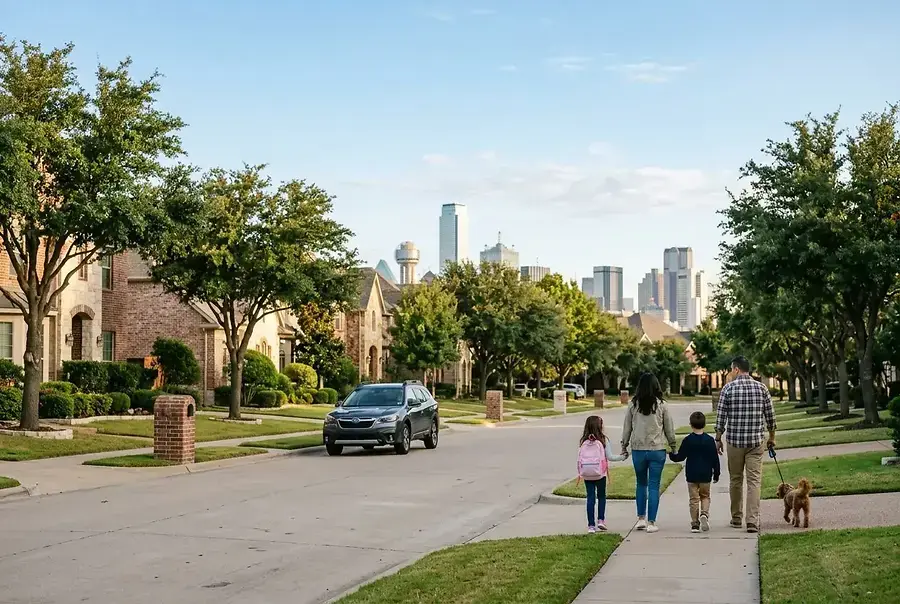
The Commute-Price Trade-Off in DFW Real Estate
The Dallas-Fort Worth metroplex has experienced explosive growth over the past decade, transforming it into one of America's most dynamic real estate markets. As more professionals and families relocate to the region, a fundamental question emerges: How much are you willing to pay for proximity to the urban core? The answer to this question can significantly impact your quality of life and financial well-being.
The relationship between commute times and home prices in DFW is not straightforward. While conventional wisdom suggests that homes closer to downtown Dallas command premium prices, the reality is more nuanced. The sprawling nature of the metroplex, combined with multiple employment centers and improving infrastructure, has created unique opportunities for homebuyers seeking value without sacrificing accessibility.
Understanding this dynamic is essential for anyone considering a move to DFW. Whether you're a first-time homebuyer, a growing family, or an investor, finding the right balance between commute convenience and affordability can mean the difference between a wise investment and financial strain.
Analyzing Commute Patterns and Their Effect on Home Values
The Impact of Distance on Property Values
Commute times remain one of the most significant factors influencing home prices in the DFW area. However, the relationship is not linear. Properties within a 15-20 minute commute to major employment centers typically command a 10-15% premium compared to those 30-40 minutes away. Beyond that threshold, the price differential diminishes as other factors—such as neighborhood amenities, school quality, and community character—become more influential.
The I-35E and I-30 corridors have historically been the primary arteries connecting residential areas to downtown Dallas, making communities along these routes more expensive. Similarly, proximity to the Dallas-Fort Worth International Airport and the booming Las Colinas business district has elevated property values in nearby Irving and surrounding areas.
Infrastructure Improvements Reshaping the Market
Recent infrastructure developments have fundamentally altered commute patterns across DFW. The expansion of toll roads, improvements to public transportation, and the rise of remote work have created new opportunities for homebuyers. Communities that were once considered too distant are now competitive alternatives to traditionally expensive neighborhoods.
The Texas Central Railway project and ongoing highway improvements promise to further reshape commute dynamics. Smart homebuyers are already positioning themselves in emerging areas that offer excellent value today but may appreciate significantly as infrastructure improves.
The Remote Work Revolution
Perhaps the most significant shift in DFW real estate has been the normalization of remote work. With many professionals working from home two to three days per week, the importance of a short commute has diminished. This trend has opened up previously overlooked communities, allowing buyers to prioritize other factors such as space, affordability, and lifestyle amenities over proximity to the office.
Neighborhoods Offering the Best Balance of Affordability and Accessibility
Arlington: The Goldilocks Zone
Arlington represents an ideal middle ground for many DFW homebuyers. Located between Dallas and Fort Worth, Arlington offers:
- Moderate commute times (20-30 minutes to downtown Dallas or Fort Worth)
- Home prices 15-20% below comparable Dallas properties
- Excellent schools and family-friendly amenities
- A vibrant entertainment district and diverse job market
The city's strategic location makes it attractive to professionals working in either downtown core, while its growing job market means many residents can find employment locally.
Irving: The Business Hub Alternative
Irving has transformed into a major employment center in its own right, hosting corporate headquarters and business parks. This shift has created a unique advantage: many residents can minimize their commute while enjoying lower home prices than Dallas proper.
Properties in Irving typically range 10-25% below comparable Dallas homes, while offering:
- Direct access to DFW International Airport
- Multiple employment centers within the city
- Diverse neighborhoods with varying price points
- Strong school districts and community programs
Mansfield: The Emerging Opportunity
Mansfield represents one of the most compelling opportunities for value-conscious buyers. Located south of Arlington, Mansfield offers:
- Home prices 20-30% below comparable Dallas properties
- A 30-40 minute commute to downtown Dallas (manageable for many professionals)
- Rapid population growth and improving infrastructure
- Excellent schools and family-oriented community
- Lower cost of living overall
For remote workers or those with flexible schedules, Mansfield represents exceptional value. The city's growth trajectory suggests strong appreciation potential for early investors.
Other Emerging Communities
Beyond these primary options, communities like Burleson, Cedar Hill, and Frisco offer distinct advantages:
- Burleson: Affordable homes with a 35-45 minute commute to Dallas; strong schools and family amenities
- Cedar Hill: Beautiful natural setting with moderate pricing; 25-35 minute commute; excellent parks and recreation
- Frisco: Premium pricing but exceptional schools and amenities; shorter commute to northern Dallas employment centers
Conclusion: Making an Informed Decision Based on Your Lifestyle Needs
The ideal neighborhood in DFW depends entirely on your personal priorities and lifestyle. There is no universally "best" choice—only the choice that best aligns with your values and circumstances.
Consider these key factors when evaluating your options:
- Commute tolerance: How much time are you willing to spend traveling to work?
- Budget constraints: What price range aligns with your financial goals?
- Family needs: Do school quality and family amenities matter to your decision?
- Career flexibility: Is remote work an option for your profession?
- Long-term vision: Are you investing for appreciation or building a forever home?
The DFW metroplex's size and diversity mean that exceptional opportunities exist at every price point and distance from the urban core. By carefully analyzing your priorities and understanding how commute times affect property values, you can make an informed decision that maximizes both your quality of life and your financial investment.
The sweet spot isn't about finding the cheapest home or the shortest commute—it's about finding the home that offers the best value for your unique situation. In today's dynamic DFW market, that opportunity is more accessible than ever.


