Converting Retail Spaces Into Mixed-Use Commercial Developments
Discover how forward-thinking commercial real estate professionals are maximizing property value by transforming traditional retail into dynamic mixed-use destinations in growing secondary markets.

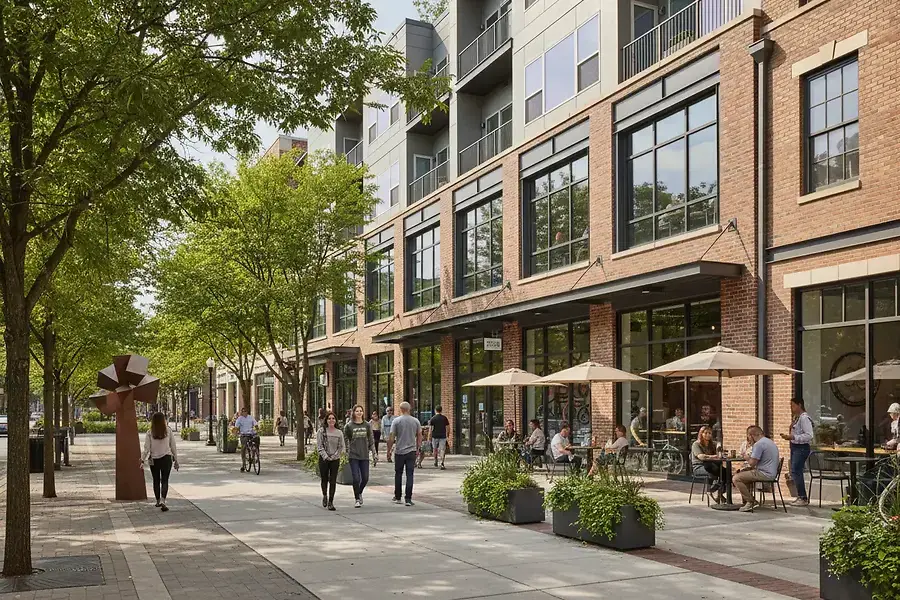
The Shift From Single-Use to Mixed-Use Commercial Properties
The commercial real estate landscape is undergoing a fundamental transformation. Traditional single-use retail properties that once dominated secondary markets are rapidly evolving into vibrant mixed-use developments that combine retail, office, residential, and entertainment spaces. This shift represents one of the most significant opportunities for forward-thinking investors and developers looking to maximize property value and adapt to changing consumer preferences.
The driving force behind this conversion trend is clear: consumer behavior has fundamentally changed. Today's shoppers and workers expect convenience, community, and connectivity. They want to shop, work, dine, and live in the same neighborhood. Single-use retail spaces no longer meet these expectations, leaving many property owners with underperforming assets. By embracing mixed-use development, commercial real estate professionals are not only revitalizing aging properties but also creating sustainable, profitable ventures that attract tenants and customers alike.
Secondary markets—mid-sized cities and growing metropolitan areas outside major urban centers—present particularly compelling opportunities for these conversions. These markets offer lower acquisition costs, less competition, and strong demand for mixed-use spaces as communities seek to become more vibrant and self-sufficient.
Understanding Market Demand and Feasibility Analysis in Secondary Markets
Assessing Local Market Conditions
Before converting a retail space into a mixed-use development, thorough market analysis is essential. Successful developers begin by understanding the demographic profile of their target market. Key questions include:
- What is the population growth rate in the area?
- What are the income levels and employment trends?
- What types of businesses and services are currently underserved?
- What is the existing vacancy rate for different property types?
Secondary markets often have untapped potential. A declining retail corridor in a growing mid-sized city might be perfectly positioned for conversion into a mixed-use hub that serves both local residents and regional visitors. The key is identifying markets with positive economic fundamentals—population growth, job creation, and rising incomes—rather than those in permanent decline.
Evaluating Financial Feasibility
Financial analysis must account for conversion costs, potential revenue streams, and market absorption rates. Mixed-use developments typically require significant upfront investment in structural improvements, infrastructure upgrades, and tenant improvements. However, the revenue potential is substantially higher than single-use retail.
Consider multiple income streams: Ground-floor retail, office space on upper floors, residential units, parking revenue, and common area amenities can all contribute to project profitability. A comprehensive pro forma should model various lease-up scenarios and account for the different timelines required for retail, office, and residential tenants.
Understanding Tenant Mix and Demand
The most successful mixed-use developments feature carefully curated tenant mixes that create synergy and drive foot traffic. Rather than simply filling available space, developers should strategically recruit tenants that complement each other. For example, pairing a fitness center with healthy dining options, or combining office space with convenient retail services, creates an ecosystem where tenants benefit from shared customer bases.
Practical Conversion Strategies and Zoning Considerations
Navigating Zoning and Regulatory Requirements
Zoning regulations often present the first hurdle in conversion projects. Many secondary markets have outdated zoning codes that were designed for single-use development. Successful developers work proactively with local planning departments to understand current regulations and identify pathways for approval.
Common zoning challenges include:
- Restrictions on mixed-use development in commercial zones
- Parking requirements that may be excessive for mixed-use properties
- Height or density limitations that constrain development potential
- Setback or frontage requirements designed for car-dependent retail
Many municipalities are updating their zoning codes to encourage mixed-use development, recognizing the economic and community benefits. Developers who engage early with local officials and demonstrate how their projects align with community goals often find receptive audiences for variances and zoning modifications.
Structural and Infrastructure Considerations
Converting existing retail space requires careful assessment of the building's structural integrity and systems. Key considerations include:
- Load-bearing capacity: Can the structure support residential or office use above retail?
- Mechanical systems: Do HVAC, electrical, and plumbing systems require significant upgrades?
- Parking and circulation: Can the site accommodate the parking and traffic patterns required for mixed-use development?
- Accessibility: Does the building meet ADA requirements for all proposed uses?
Engaging structural engineers and building systems specialists early in the planning process helps identify potential issues and develop cost-effective solutions. Some conversions may require substantial investment in infrastructure, while others may be relatively straightforward.
Phased Development Approach
Rather than attempting to convert an entire property simultaneously, many successful developers employ a phased approach. This strategy allows for:
- Spreading capital requirements over multiple years
- Testing market demand before committing to full development
- Adjusting the tenant mix based on early leasing success
- Generating revenue from completed phases to fund subsequent development
A phased approach also reduces risk and provides flexibility to respond to changing market conditions.
Creating Vibrant Community Spaces
The most successful mixed-use developments go beyond simply combining different uses. They create vibrant community spaces that draw people and encourage interaction. This might include:
- Public plazas or courtyards with seating and landscaping
- Ground-floor retail with active storefronts and transparent windows
- Pedestrian-friendly streetscapes with wide sidewalks and street trees
- Programming such as farmers markets, concerts, or community events
The most valuable mixed-use developments are those that become genuine community destinations, not just collections of different uses under one roof.
Positioning Your Portfolio for Long-Term Commercial Real Estate Success
Converting retail spaces into mixed-use developments represents a strategic opportunity for commercial real estate professionals seeking to future-proof their portfolios. Secondary markets offer particularly attractive opportunities due to lower acquisition costs, less competition, and strong demand for mixed-use spaces.
Success requires thorough market analysis, careful financial modeling, proactive engagement with local officials, and a commitment to creating genuine community value. Developers who master these elements will find themselves well-positioned to capitalize on the ongoing shift toward mixed-use development.
The retail landscape will continue to evolve, but properties that adapt by embracing mixed-use development will remain valuable, profitable assets for decades to come. The time to begin exploring these opportunities in secondary markets is now.