Converting Retail Spaces into Mixed-Use Commercial Properties
Learn how to maximize property value by transforming traditional retail locations into thriving mixed-use developments across Queens, Brooklyn, and the Bronx.

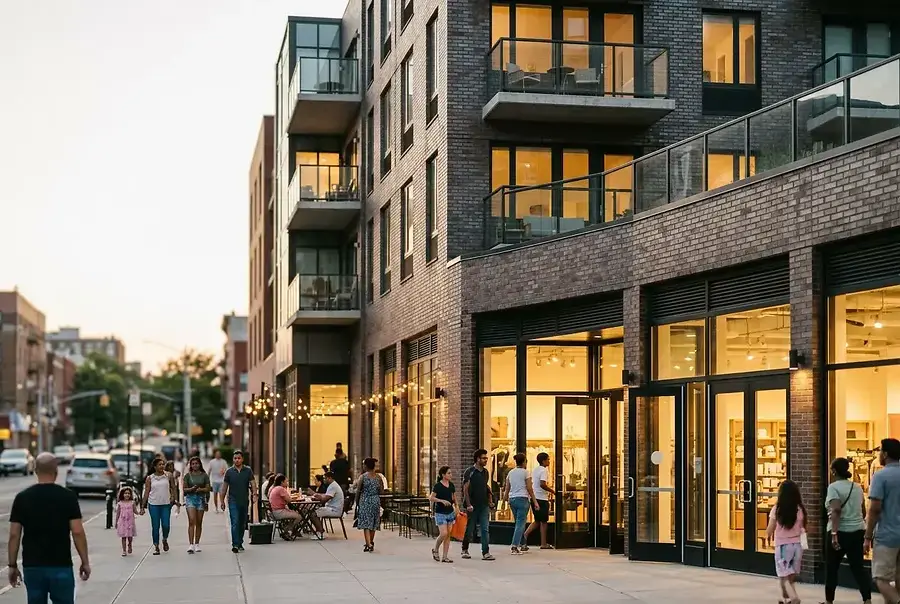
The Rise of Mixed-Use Development in NYC's Outer Boroughs
The commercial real estate landscape in New York City's outer boroughs is undergoing a dramatic transformation. Traditional single-use retail spaces that once dominated street corners are being reimagined as vibrant mixed-use properties that combine retail, residential, and office components under one roof. This shift represents one of the most significant opportunities for property investors and developers looking to maximize returns in Queens, Brooklyn, and the Bronx.
The demand for mixed-use properties has surged as businesses and residents increasingly seek integrated communities where they can live, work, and shop without leaving their neighborhood. This trend has been accelerated by changing consumer preferences and the growing recognition that single-use retail spaces often struggle to remain profitable in today's competitive market.
Why Mixed-Use Development Makes Sense
- Diversified revenue streams from multiple tenant types
- Increased foot traffic that benefits all businesses in the property
- Higher property valuations compared to single-use retail
- Greater resilience during economic downturns
- Alignment with modern urban planning principles
Property owners who successfully convert their retail spaces position themselves to capture significant appreciation while contributing to the revitalization of their neighborhoods.
Identifying High-Potential Retail Spaces for Conversion
Location Analysis and Market Research
The first step in identifying conversion opportunities is conducting thorough market research. Look for retail spaces in neighborhoods experiencing population growth, increased foot traffic, and rising property values. Areas with strong public transportation access, proximity to employment centers, and established community amenities are particularly attractive for mixed-use development.
Key indicators of conversion potential include:
- Declining retail vacancy rates or underperforming tenants
- Zoning that permits mixed-use development
- Proximity to transit hubs and major employment centers
- Neighborhood demographic trends showing younger, urban-oriented populations
- Existing or planned infrastructure improvements
Property Assessment and Feasibility Studies
Once you've identified a promising location, conduct a comprehensive feasibility study. This should include structural assessments, environmental reviews, and financial projections. Understanding the true condition of the building and its conversion costs is essential for making informed investment decisions.
Critical factors to evaluate:
- Building age, structural integrity, and mechanical systems
- Current lease agreements and tenant situations
- Parking availability and transportation access
- Utility infrastructure capacity for expanded uses
- Estimated conversion costs and timeline
Understanding Your Target Market
Successful conversions require a clear understanding of your target market. Are you converting to attract young professionals seeking urban apartments? Families looking for neighborhood-based living? Remote workers needing flexible office space? Your market analysis should inform every aspect of your conversion strategy, from unit sizes to amenity offerings.
Design and Zoning Considerations for Mixed-Use Properties
Navigating Zoning Requirements
Zoning regulations are perhaps the most critical factor in mixed-use conversions. New York City's zoning code is complex, and what's permitted in one neighborhood may be restricted in another. Before committing significant resources, verify that your intended mixed-use development aligns with local zoning regulations.
Essential zoning considerations:
- Current zoning classification and permitted uses
- Floor Area Ratio (FAR) limitations
- Height restrictions and setback requirements
- Parking requirements for different uses
- Potential need for variances or special permits
Many property owners find that working with experienced zoning consultants and architects early in the process saves time and money by identifying potential obstacles before significant investment is made.
Architectural and Design Planning
Converting a single-use retail space into a mixed-use property requires thoughtful architectural planning. The design must accommodate multiple uses while creating a cohesive, attractive property that appeals to diverse tenants and customers.
Key design considerations include:
- Vertical integration: Strategically stacking uses to maximize efficiency and create natural separation between residential and commercial areas
- Entrance design: Creating distinct, secure entrances for residential units while maintaining vibrant street-level retail
- Parking solutions: Incorporating parking that serves all uses, whether through structured parking, shared facilities, or creative solutions
- Amenities: Including features that enhance property value, such as rooftop terraces, community spaces, or fitness facilities
- Sustainability: Incorporating green building practices that appeal to modern tenants and reduce operating costs
Regulatory Approvals and Community Engagement
Successfully navigating the approval process requires more than just meeting technical requirements. Community engagement is essential, particularly in neighborhoods where residents may have concerns about increased density or changing character.
Proactive communication about your project's benefits—including job creation, improved street activation, and neighborhood revitalization—can build support among community stakeholders and streamline the approval process.
Capitalizing on Conversion Opportunities in Your Market
The opportunity to convert traditional retail spaces into mixed-use properties represents a significant value creation strategy for property owners in Queens, Brooklyn, and the Bronx. As these outer boroughs continue to attract residents and businesses seeking alternatives to Manhattan, the demand for well-designed, mixed-use properties will only increase.
Success requires careful site selection, thorough due diligence, and expert navigation of zoning and design considerations. Property owners who approach conversions strategically—understanding their market, respecting community concerns, and creating genuinely valuable mixed-use spaces—position themselves to achieve substantial returns while contributing meaningfully to neighborhood development.
The future of retail real estate isn't about single-use spaces—it's about creating integrated communities where people want to live, work, and spend their time. Mixed-use conversions represent the evolution of commercial real estate in NYC's outer boroughs.
Whether you're a seasoned developer or a property owner exploring new opportunities, the time to consider mixed-use conversion is now. The market fundamentals are strong, regulatory frameworks are increasingly supportive, and community demand is clear. Your next step should be identifying promising properties in your market and beginning the feasibility analysis that could unlock significant value.