Converting Single-Family Homes to Multi-Unit Investment Properties in NH
A practical guide to understanding zoning, financing, and tenant considerations for residential-to-commercial conversions across New Hampshire's growing communities.

Introduction: The Residential-to-Commercial Conversion Opportunity
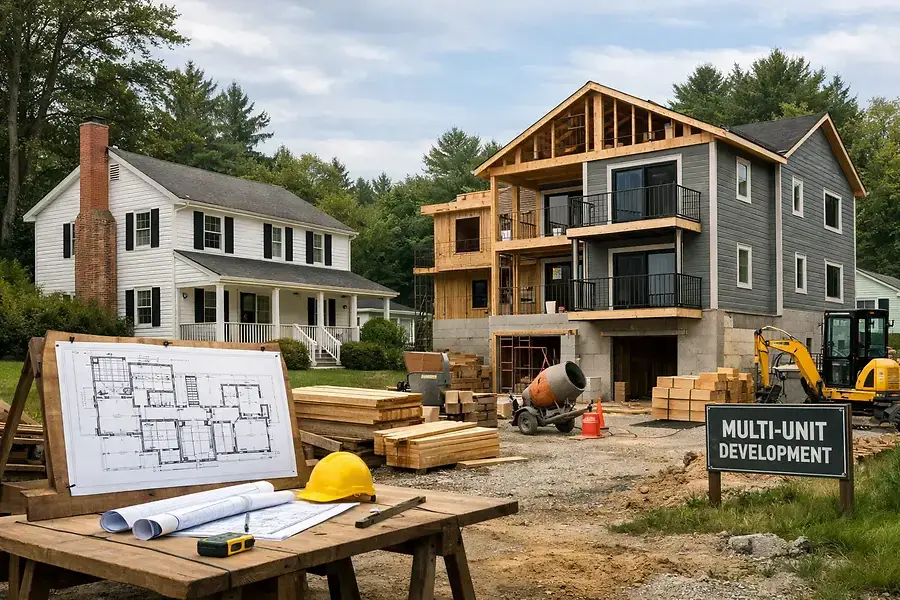
New Hampshire's real estate market presents a compelling opportunity for savvy investors looking to increase property value and rental income. Converting single-family homes into multi-unit investment properties has become an increasingly popular strategy across the state's growing communities. This transformation allows property owners to tap into higher rental yields while meeting the rising demand for affordable housing in desirable neighborhoods.
The conversion process, however, requires careful planning and understanding of local regulations, financial considerations, and market dynamics. Whether you're a seasoned real estate investor or exploring your first conversion project, this guide will walk you through the essential steps to successfully transform your residential property into a profitable multi-unit investment.
Zoning Laws and Municipal Requirements Across Central NH Towns
Understanding Local Zoning Regulations
Before breaking ground on any conversion project, you must thoroughly research your municipality's zoning ordinances. New Hampshire communities vary significantly in their approach to residential-to-commercial conversions, and what's permitted in one town may be restricted in another.
- Single-family zoning districts may prohibit multi-unit properties entirely, requiring a zoning variance or change
- Mixed-use zones often allow conversions with fewer restrictions and faster approval timelines
- Accessory dwelling units (ADUs) are increasingly permitted as a simpler conversion alternative in many NH towns
- Commercial overlay districts may enable conversions in specific areas designated for business use
Municipal Approval Process
The approval process typically involves multiple steps and can take several months. Planning Board review is usually the first hurdle, where your conversion plans are evaluated against local ordinances. Many municipalities also require Board of Adjustment approval if your project doesn't conform to existing zoning regulations.
Key documents you'll need to prepare include detailed site plans, architectural drawings, parking calculations, and traffic impact assessments. Some towns may also require neighborhood impact studies or public hearings to address community concerns about increased density and traffic.
Building Codes and Safety Requirements
Converting a single-family home to multi-unit housing triggers stricter building code compliance. You'll need to address fire safety requirements, including proper egress routes, fire-rated walls, and sprinkler systems. Electrical, plumbing, and HVAC systems must be upgraded to handle increased occupancy loads, and accessibility standards under the Americans with Disabilities Act may apply depending on unit count.
Financing and Renovation Costs for Property Conversions
Estimating Renovation Expenses
Conversion costs vary dramatically based on the property's current condition and your target unit configuration. A typical two-unit conversion from a single-family home might range from $75,000 to $150,000 in renovation expenses, while more extensive three or four-unit conversions could exceed $250,000.
Major cost categories include:
- Structural modifications – Creating separate entrances, adding walls, and reconfiguring floor plans
- Utility upgrades – Separate metering, new electrical panels, and independent HVAC systems
- Safety systems – Fire suppression, emergency lighting, and alarm systems
- Parking and site work – Expanding parking areas and improving drainage
- Permits and professional fees – Architects, engineers, and municipal review costs
Financing Options for Conversion Projects
Traditional mortgage lenders often view conversion projects as higher-risk investments. However, several financing avenues exist for qualified investors:
Construction loans provide short-term financing during the renovation phase, converting to permanent financing upon completion. Portfolio lenders and community banks in New Hampshire often have more flexible criteria than national institutions. Some investors utilize home equity lines of credit or cash-out refinancing on existing properties to fund conversions.
Consider consulting with a lender experienced in investment property conversions to explore options tailored to your specific project and financial situation.
Tenant Demand and Market Potential in Your Target Areas
Identifying High-Demand Markets
New Hampshire's strongest rental markets cluster around employment centers and college towns. Areas near Manchester, Nashua, Portsmouth, and Durham show robust tenant demand driven by job growth and educational institutions. Smaller communities along major commuter corridors also present solid opportunities for multi-unit properties.
Research local employment trends, population growth, and housing shortage data to identify your best investment opportunities. Proximity to public transportation, schools, and amenities significantly impacts rental rates and tenant quality.
Rental Rate Analysis and ROI Projections
Before committing to a conversion project, conduct thorough market analysis of comparable rental properties in your target area. Multi-unit properties typically generate higher gross rental yields than single-family homes, often offsetting the conversion costs within five to seven years.
"Successful conversion investors focus on markets with strong employment growth and limited housing supply, where rental demand consistently outpaces available units."
Calculate your potential return on investment by projecting annual rental income against total conversion costs, including financing expenses and ongoing maintenance reserves.
Tenant Considerations and Property Management
Managing multi-unit properties requires different skills than single-family rentals. You'll need robust tenant screening processes, clear lease agreements addressing shared spaces, and responsive maintenance protocols. Consider whether you'll self-manage or hire a professional property management company—the latter typically costs 8-12% of monthly rental income but ensures professional operations.
Establish clear policies regarding noise, parking, guest policies, and maintenance responsibilities to minimize conflicts between tenants sharing a converted property.
Conclusion: Maximizing Your Multi-Use Property Investment
Converting single-family homes to multi-unit investment properties in New Hampshire offers substantial financial potential for investors willing to navigate zoning complexities and renovation challenges. Success requires thorough due diligence on local regulations, realistic cost projections, and careful market analysis.
Start by consulting with local planning departments to understand your municipality's conversion policies. Engage experienced architects and contractors familiar with conversion projects, and work with lenders who understand investment property financing. Most importantly, focus on markets with strong tenant demand and limited housing supply to ensure your conversion generates consistent returns.
With proper planning and execution, your converted property can become a valuable long-term investment generating reliable income while contributing to New Hampshire's growing housing supply.


