Essential Home Inspection Guide for Honolulu Residential Buyers
Learn what to inspect in Hawaii's tropical climate to protect your investment and avoid costly surprises.

Understanding Honolulu's Unique Inspection Challenges
Purchasing a home in Honolulu presents unique opportunities and challenges that differ significantly from mainland properties. The tropical climate, salt-laden air, and intense UV exposure create specific wear patterns and maintenance concerns that standard home inspections may not adequately address. Understanding these environmental factors is crucial for any residential buyer looking to make an informed decision.
Hawaii's warm, humid climate accelerates deterioration of building materials in ways that buyers from other regions may not anticipate. Salt spray from the ocean, constant moisture, and year-round heat work together to compromise structural integrity, electrical systems, and exterior finishes. Properties within two miles of the coast face particularly aggressive corrosion challenges that can dramatically impact long-term maintenance costs.
The Impact of Salt Air and Moisture
Salt air is one of the most destructive forces affecting Honolulu properties. This corrosive environment affects:
- Metal roofing and gutters
- Air conditioning units and HVAC systems
- Electrical wiring and connections
- Plumbing fixtures and pipes
- Exterior paint and coatings
Moisture accumulation in Hawaii's climate can lead to mold growth, wood rot, and rust formation. Regular maintenance becomes not just a recommendation but a necessity for protecting your investment in the islands.
Key Areas to Evaluate in Island Properties
Roof and Exterior Structures
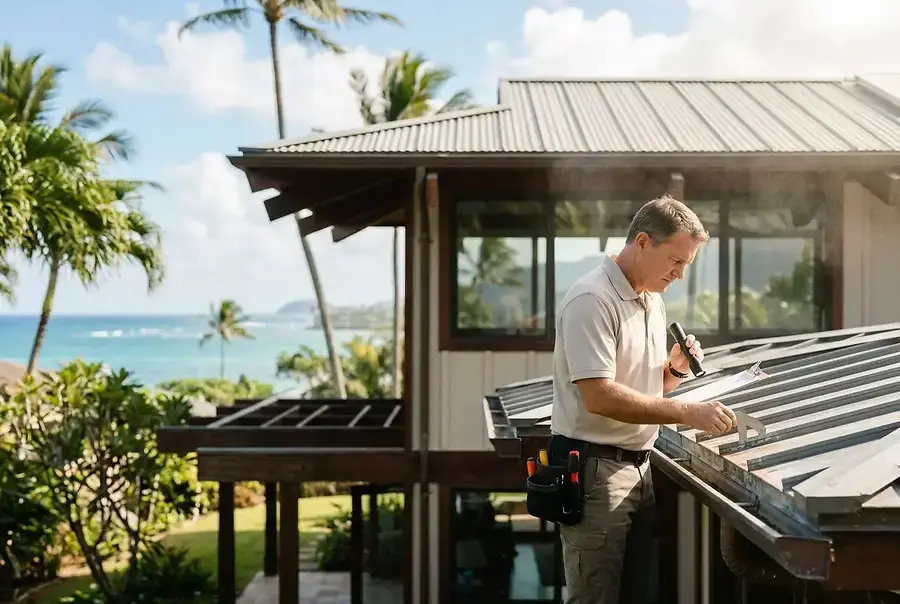
The roof is your first line of defense against Honolulu's intense weather. During inspection, pay special attention to:
- Roof condition and material type – Metal roofs are more resistant to salt corrosion than traditional asphalt shingles
- Flashing around vents, chimneys, and skylights for gaps or deterioration
- Gutters and downspouts for proper drainage and corrosion
- Signs of previous repairs or patching that may indicate ongoing issues
Request documentation of recent roof maintenance or replacement. In Honolulu's climate, roof lifespan is typically shorter than on the mainland, making this a critical investment area.
Plumbing and Water Systems
Hawaii's water quality and the corrosive environment create specific plumbing concerns. Inspect for:
- Copper pipe corrosion and green oxidation
- Water pressure and flow rates
- Water heater age and condition
- Evidence of leaks or water damage in walls and ceilings
- Septic system functionality (if applicable)
Saltwater intrusion can affect coastal properties, making water system inspection particularly important in beachfront or near-shore locations.
Electrical Systems
The combination of moisture and salt air poses significant risks to electrical infrastructure. Ensure your inspector evaluates:
- Panel condition and age
- Corrosion on electrical connections and outlets
- Grounding systems and surge protection
- Compliance with current electrical codes
- Air conditioning unit electrical connections
Corroded electrical systems can be fire hazards and expensive to repair, making thorough inspection essential.
HVAC and Air Conditioning
Air conditioning systems work overtime in Honolulu's climate and face accelerated wear. Verify:
- Unit age and maintenance history
- Refrigerant levels and system efficiency
- Condenser coil condition for salt corrosion
- Ductwork integrity and insulation
A well-maintained AC system is essential for comfort and property value in Hawaii.
Foundation and Structural Integrity
Inspect the foundation for cracks, settling, or water intrusion. Hawaii's volcanic soil and potential for ground movement require careful structural assessment. Look for:
- Cracks in concrete or foundation walls
- Evidence of water damage or moisture in crawl spaces
- Proper drainage around the property perimeter
- Termite or pest damage (common in tropical climates)
Red Flags and Cost Implications
Warning Signs to Take Seriously
Certain inspection findings should prompt serious consideration or negotiation before purchase. These red flags often indicate substantial repair costs ahead.
Major concerns include:
- Extensive mold or mildew growth – Indicates moisture problems and potential health hazards
- Rust and corrosion on structural elements – May compromise safety
- Roof leaks or significant deterioration – Can lead to interior water damage
- Outdated or corroded electrical systems – Fire and safety risks
- Failing HVAC systems – Expensive replacement in Hawaii's climate
- Termite or pest damage – Requires professional treatment and repairs
Understanding Repair Costs in Hawaii
Labor and material costs in Hawaii are significantly higher than mainland averages. A roof replacement, HVAC system upgrade, or electrical system overhaul will cost considerably more in Honolulu. Factor these higher costs into your negotiation strategy when inspection reveals needed repairs.
Request detailed repair estimates from licensed contractors before finalizing your offer. This provides concrete numbers for negotiation and helps you understand the true cost of addressing inspection findings.
Moving Forward with Confidence
Choosing the Right Inspector
Hire a home inspector with specific experience in Hawaiian properties. They should understand tropical climate challenges and local building codes. Ask about their familiarity with:
- Salt air corrosion issues
- Moisture and mold concerns
- Hawaii-specific building regulations
- Common island property problems
Creating Your Action Plan
After receiving the inspection report, prioritize findings by urgency and cost. Address safety issues immediately, plan for major repairs within the first year, and budget for preventive maintenance going forward. Regular maintenance is your best defense against Honolulu's harsh environmental conditions.
Work with your real estate agent and inspector to develop a realistic understanding of the property's condition and future maintenance needs. This knowledge empowers you to make confident decisions and protect your investment in Hawaii's unique real estate market.
By thoroughly understanding what to inspect and what to watch for, you're taking the essential first step toward a successful home purchase in Honolulu. Your diligence now will pay dividends in property value, safety, and peace of mind for years to come.