Essential Home Inspection Guide for Rehoboth Beach Coastal Properties
Discover what to look for when inspecting coastal homes to protect your investment in Delaware's premier beach community.

Why Home Inspections Matter in Coastal Real Estate
Purchasing a home in Rehoboth Beach is an exciting investment, but coastal properties come with unique challenges that require specialized attention. Unlike inland homes, beachfront and near-beach properties face constant exposure to salt air, moisture, and harsh weather conditions that can accelerate deterioration. A thorough home inspection is not just a formality—it's a critical step in protecting your financial investment and ensuring your family's safety.
Coastal homes require inspectors with specific knowledge of salt-related corrosion, moisture intrusion, and weather-related damage. Standard home inspections may miss critical issues that are unique to Rehoboth Beach's marine environment. Understanding what to look for during an inspection can help you identify potential problems before they become expensive repairs.
Salt Air and Moisture: Understanding Coastal-Specific Inspection Concerns
The Impact of Salt Air on Building Materials
Salt air is one of the most damaging elements for coastal properties. The salt particles carried by ocean breezes corrode metal components, degrade wood, and deteriorate concrete and masonry. During your inspection, pay special attention to:
- Metal fixtures and hardware: Look for rust, corrosion, and discoloration on railings, gutters, downspouts, and door hardware
- HVAC systems: Air conditioning units and heat pumps deteriorate faster in coastal environments
- Roofing materials: Metal roofs and flashing are particularly vulnerable to salt corrosion
- Exterior paint and siding: Check for peeling, fading, and underlying damage to wood or composite materials
Moisture Intrusion and Mold Prevention
Moisture is the enemy of any home, but especially in coastal areas where humidity levels remain high year-round. Water damage and mold growth can compromise structural integrity and pose health risks. During inspection, inspectors should examine:
- Basement and crawl space conditions for standing water or dampness
- Attic ventilation and signs of moisture accumulation
- Window and door seals for gaps or deterioration
- Caulking around exterior openings and penetrations
- Grading and drainage systems around the foundation
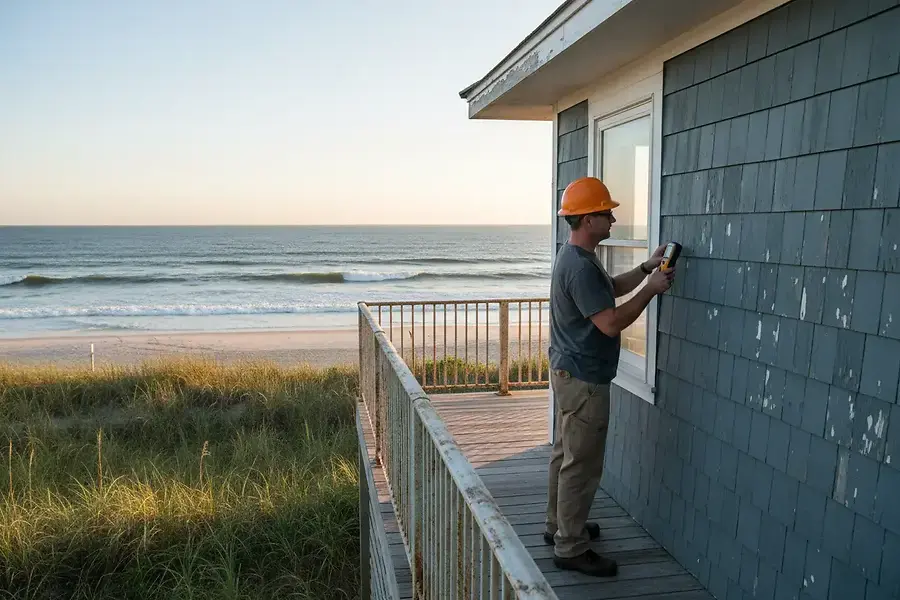
Pro tip: Request a moisture meter reading in suspicious areas. This non-invasive tool can detect moisture problems before they become visible.
Critical Areas to Evaluate in Rehoboth Beach Homes
Foundation and Structural Integrity
Coastal properties are susceptible to foundation issues due to salt water intrusion, shifting sand, and increased moisture. Inspectors should look for:
- Cracks in the foundation or basement walls
- Signs of water seepage or efflorescence (white mineral deposits)
- Proper drainage systems and sump pump functionality
- Evidence of past flooding or water damage
Roofing and Exterior Protection
Your roof is your home's first line of defense against coastal weather. Inspect for:
- Missing, cracked, or curling shingles
- Rust or corrosion on metal components
- Proper flashing around chimneys, vents, and skylights
- Adequate gutters and downspout systems
- Signs of previous repairs or patches
Plumbing and Water Systems
Salt air accelerates corrosion in plumbing systems. Have inspectors evaluate:
- Pipe material and age (copper, PVC, or galvanized steel)
- Water pressure and flow rates
- Hot water heater condition and age
- Septic system functionality (if applicable)
- Evidence of leaks or water stains
Electrical Systems and Safety
Moisture and salt air can compromise electrical systems. Ensure the inspector checks:
- Panel condition and proper grounding
- GFCI outlets in bathrooms, kitchens, and outdoor areas
- Proper ventilation for electrical equipment
- Wiring condition and any signs of corrosion
Windows, Doors, and Weatherproofing
These are critical barriers against moisture and salt air. Evaluate:
- Window and door frame condition and seal integrity
- Caulking and weatherstripping effectiveness
- Glass condition and proper operation
- Exterior trim and paint condition
HVAC and Ventilation Systems
Coastal humidity demands efficient climate control. Inspectors should assess:
- Air conditioning unit age and condition
- Proper refrigerant levels and system efficiency
- Adequate ventilation in bathrooms and kitchen
- Ductwork condition and insulation
Making Informed Decisions with Professional Inspections
Hiring a qualified home inspector with coastal property experience is essential. Look for inspectors who are certified and have specific knowledge of Rehoboth Beach's unique environmental challenges. Don't hesitate to ask questions about their experience with salt-related damage and moisture issues.
A comprehensive home inspection is an investment in peace of mind and financial protection. The cost of an inspection is minimal compared to the potential expenses of undiscovered damage.
After receiving the inspection report, prioritize repairs based on safety and structural concerns. Some issues may be negotiable with the seller, while others may require immediate attention. Use the inspection findings to make an informed decision about your investment in this beautiful coastal community.
By understanding what to look for and working with experienced professionals, you can confidently purchase a Rehoboth Beach home that will provide years of enjoyment and maintain its value for the future.


