Essential Home Inspections for Buyers in Fort Lauderdale and Miami Beach
Discover the critical inspection points every South Florida homebuyer should understand before closing.
Why Home Inspections Matter in South Florida's Real Estate Market
Purchasing a home is one of the most significant financial decisions you'll make, and in South Florida, it's especially crucial to conduct thorough inspections before closing. The unique climate, coastal environment, and building conditions in Fort Lauderdale and Miami Beach present distinct challenges that differ from other regions. A comprehensive home inspection serves as your protection against hidden defects, structural issues, and costly repairs down the road.
South Florida's real estate market moves quickly, and buyers often feel pressured to make rapid decisions. However, skipping or rushing through a professional inspection can lead to expensive problems after purchase. From moisture damage to hurricane-related wear, the region's specific environmental factors require specialized attention that a standard inspection might overlook.
Climate-Specific Issues: Understanding Moisture, Mold, and Hurricane Readiness
Moisture and Mold Concerns
South Florida's humid subtropical climate creates an ideal environment for moisture accumulation and mold growth. Inspectors should thoroughly examine:
- Attics and crawl spaces for signs of water intrusion and mold colonies
- Basement and foundation areas for dampness and efflorescence (white mineral deposits)
- HVAC systems for proper drainage and condensation management
- Window frames and seals for deterioration and water penetration
- Roof condition and potential leak points
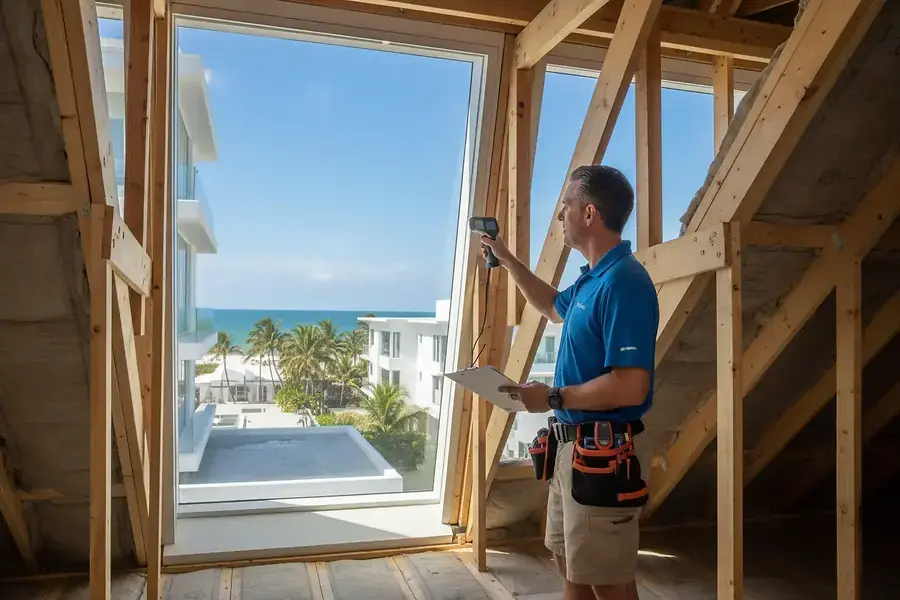
Mold can cause serious health issues and structural damage if left untreated. A qualified inspector will use moisture meters and thermal imaging to detect problems invisible to the naked eye.
Hurricane Readiness and Wind Damage
Living in South Florida means preparing for hurricane season. Your inspection should evaluate:
- Roof integrity – Check for missing shingles, deteriorated flashing, and proper fastening
- Impact-resistant windows and doors – Verify installation and functionality
- Structural reinforcement – Look for hurricane straps, proper bracing, and foundation anchoring
- Exterior cladding – Ensure siding and trim are secure and weather-resistant
- Garage doors – Confirm they meet current wind resistance standards
Properties that have undergone recent hurricane-resistant upgrades may command better insurance rates and provide greater peace of mind during storm season.
Key Systems to Evaluate: Plumbing, Electrical, and Foundation Concerns in Coastal Properties
Plumbing Systems in Coastal Environments
Salt air and high humidity accelerate corrosion in plumbing systems. Inspectors should examine:
- Pipe materials and age – Older galvanized pipes are prone to rust and reduced water pressure
- Water pressure and flow – Test all fixtures to ensure adequate performance
- Drainage systems – Check for slow drains, backups, or improper grading
- Water heater condition – Assess age, maintenance history, and corrosion
- Sump pump functionality – Critical for flood prevention in low-lying areas
Upgrading to PEX or copper piping can extend the life of your plumbing system and reduce future maintenance costs.
Electrical Systems and Safety
Electrical systems require careful evaluation to ensure safety and compliance:
- Panel condition and capacity – Verify the main electrical panel is properly grounded and has adequate capacity for modern appliances
- Outlet and switch functionality – Test GFCI outlets, especially in bathrooms and kitchens
- Wiring age and condition – Older aluminum wiring can pose fire hazards
- Grounding and bonding – Essential for safety in coastal properties
- Generator installation – If present, verify proper installation and fuel storage
South Florida's electrical codes are strict due to hurricane and moisture concerns. Ensure any system upgrades meet current local standards.
Foundation and Structural Integrity
Coastal properties face unique foundation challenges due to soil composition, water tables, and salt exposure:
- Foundation cracks and settling – Look for horizontal cracks, which indicate more serious issues than vertical ones
- Soil conditions – South Florida's sandy, porous soil can shift and settle over time
- Pilings and supports – Verify proper installation and absence of corrosion
- Drainage around the foundation – Ensure water flows away from the structure
- Seawalls and flood barriers – If applicable, assess their condition and effectiveness
Professional structural engineers may be needed for detailed assessments, especially for older properties or those showing signs of settlement.
Making Informed Decisions with Professional Inspection Reports
Once your inspector completes their evaluation, you'll receive a detailed report documenting findings, photographs, and recommendations. Use this information strategically:
Review the report carefully and ask your inspector to explain any concerns. Understanding the severity and cost of repairs helps you negotiate effectively with the seller or decide whether to proceed with the purchase.
Prioritize repairs by separating critical safety issues from cosmetic concerns. Items affecting structural integrity, electrical safety, or water intrusion should take precedence over minor updates.
Obtain repair estimates for significant issues. Use these quotes during negotiations to request seller repairs, credits, or price reductions.
Consider follow-up inspections by specialists. If the general inspection reveals potential problems with specific systems, hiring a licensed plumber, electrician, or structural engineer provides additional peace of mind.
In South Florida's competitive real estate market, a thorough home inspection is your best defense against costly surprises. By understanding climate-specific concerns, evaluating critical systems, and carefully reviewing inspection reports, you'll make an informed decision that protects your investment for years to come.