Essential Home Inspections for Orlando Buyers: Protect Your Investment
Discover the critical inspection checkpoints that protect your investment and reveal hidden property issues before you commit.

Why Home Inspections Are Non-Negotiable in Orlando's Market
Purchasing a home is one of the most significant financial decisions you'll make, and in Orlando's competitive real estate market, protecting that investment is crucial. A professional home inspection serves as your safeguard against costly surprises and hidden defects that could drain your finances after closing.
Orlando's unique climate and construction environment create specific challenges that standard inspections must address. From humidity-related issues to foundation concerns in sandy soil conditions, a thorough inspection tailored to Central Florida properties can save you thousands of dollars in unexpected repairs.
Don't skip this critical step. Many first-time buyers underestimate the value of a comprehensive inspection, viewing it as an unnecessary expense. In reality, a $400-600 inspection investment can prevent you from inheriting a property with $10,000 or more in hidden damage.
Key Areas Inspectors Examine in Central Florida Homes
Roof and Attic Conditions
Orlando's intense sun and frequent afternoon thunderstorms put tremendous stress on roofing systems. Inspectors evaluate shingle condition, flashing integrity, and ventilation adequacy. They'll check for signs of water damage, mold growth, and proper attic insulation—all critical in Florida's hot, humid climate.
Foundation and Structural Integrity
Central Florida's sandy, shifting soil creates unique foundation challenges. Inspectors look for cracks, settling, and moisture intrusion. They assess whether the home sits properly on its foundation and check for signs of structural movement that could indicate serious problems.
HVAC Systems
Your air conditioning system works overtime in Orlando. Inspectors evaluate the age, maintenance history, and operational efficiency of HVAC units. They check refrigerant levels, ductwork condition, and whether the system adequately cools the entire home—essential in Florida's climate.
Plumbing and Water Systems
Hard water and corrosion issues are common in Orlando properties. Inspectors test water pressure, check for leaks, examine pipe materials, and assess the water heater's condition. They'll identify potential issues with the septic or municipal sewer connection.
Electrical Systems
Outdated wiring, improper grounding, and overloaded circuits pose safety risks. Inspectors verify that electrical panels are properly installed, outlets are grounded, and the system meets current safety codes. This is particularly important in older Orlando homes.
Moisture and Mold Assessment
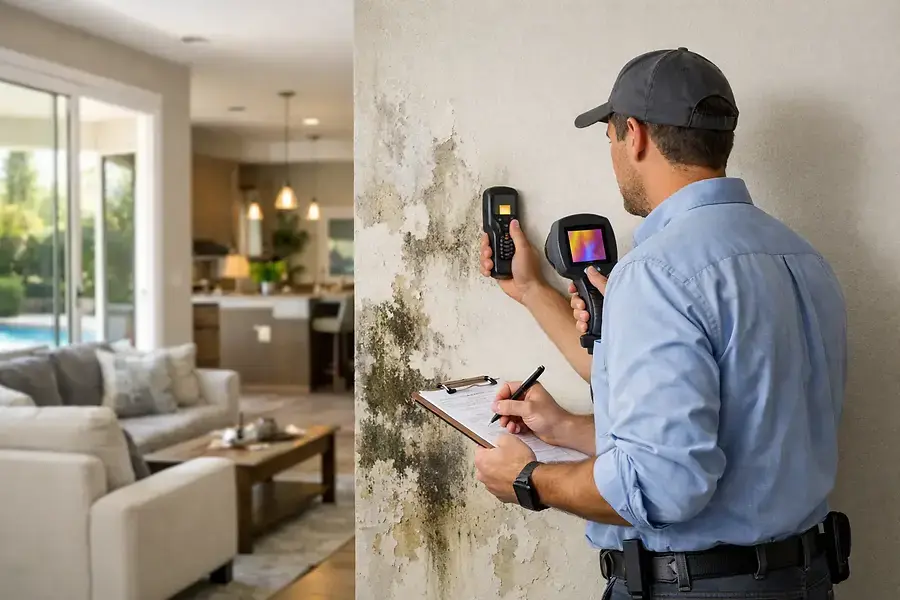
Florida's humidity creates ideal conditions for mold growth. Professional inspectors use moisture meters and thermal imaging to detect hidden water intrusion, condensation problems, and early mold development in walls, crawl spaces, and attics.
Windows, Doors, and Exterior
Inspectors examine caulking, weatherstripping, and seal integrity. They check for wood rot, pest damage, and proper drainage around the foundation. In Orlando, proper exterior maintenance is essential to prevent water intrusion and structural damage.
Common Issues Found in Orlando Properties and How to Address Them
Water Intrusion and Moisture Problems
The Issue: This is the most common problem in Orlando homes. Water seeps through roofs, around windows, or via foundation cracks, leading to mold, rot, and structural damage.
How to Address It: Request a detailed moisture assessment report. Negotiate repairs with the seller, or obtain repair estimates to factor into your offer. Consider hiring a mold specialist for further evaluation if needed.
Aging HVAC Systems
The Issue: Many Orlando homes have air conditioning systems that are 10-15 years old or older, approaching the end of their lifespan.
How to Address It: Ask the seller for maintenance records. If replacement is needed, get quotes from local HVAC contractors. Use this information to renegotiate your purchase price or request that the seller replace the system before closing.
Roof Damage and Deterioration
The Issue: Florida's weather takes a toll on roofs. Missing shingles, damaged flashing, and compromised seals are frequently discovered during inspections.
How to Address It: Obtain a separate roof inspection if major issues are found. Determine whether repairs or replacement is necessary. Many lenders require roof certification in Florida, so this becomes a critical negotiation point.
Foundation Cracks and Settlement
The Issue: Sandy soil and moisture fluctuations can cause minor settling and cracking. While some cracks are cosmetic, others indicate structural concerns.
How to Address It: Have a structural engineer evaluate significant cracks. Minor cracks can often be sealed, but major structural issues may require professional repair or price adjustment.
Outdated Electrical Systems
The Issue: Older homes may have aluminum wiring, insufficient outlets, or panels that don't meet current code requirements.
How to Address It: Get estimates for electrical upgrades. Negotiate with the seller to bring the system up to code or reduce the purchase price accordingly.
Pest and Termite Damage
The Issue: Florida's warm climate attracts termites and other pests. Wood damage may be hidden behind walls or under flooring.
How to Address It: Request a separate termite inspection (often required by lenders anyway). If damage is found, negotiate treatment and repair costs with the seller.
Using Inspection Results to Negotiate and Close with Confidence
Your inspection report is a powerful negotiating tool. Don't view it as a deal-breaker—view it as a roadmap. Use the findings strategically:
- Prioritize issues: Focus on major structural, safety, and system problems rather than cosmetic concerns.
- Get repair estimates: Obtain quotes from licensed contractors to support your negotiation requests.
- Request seller repairs or credits: Ask the seller to fix critical issues or provide credits toward repairs you'll handle yourself.
- Renegotiate if necessary: If major issues are discovered, you may have grounds to renegotiate the purchase price.
- Plan for future maintenance: Use the inspection to understand what maintenance and repairs will be needed in the coming years.
A thorough home inspection gives you the knowledge and leverage to make informed decisions. In Orlando's market, where properties face unique environmental challenges, this investment in due diligence protects both your finances and your peace of mind.
Close with confidence by ensuring you understand exactly what you're buying and what it will cost to maintain. Your inspection report is your roadmap to homeownership success.