Home Staging Strategies That Increase Residential Property Values
Discover proven techniques to enhance your home's appeal and attract serious buyers willing to pay top dollar.

Introduction: The ROI of Professional Home Staging
When it comes to selling your home, first impressions matter more than ever. Professional home staging has become an essential investment for sellers looking to maximize their property's market value. Studies show that properly staged homes sell faster and command higher prices than their unstaged counterparts. In fact, the return on investment from staging can be substantial, with many sellers recouping their staging costs multiple times over through increased sale prices.
Home staging is not about deceiving buyers—it's about strategically presenting your property in its best light. The goal is to help potential buyers envision themselves living in the space while highlighting the home's strongest features. Whether you're selling in a competitive market or simply want to maximize your property's value, understanding and implementing effective staging strategies can make a significant difference in your bottom line.
Decluttering and Depersonalization: Creating a Blank Canvas
The Power of Minimalism
One of the most impactful staging strategies is decluttering. Buyers need to see the potential of your home, and excessive personal items, furniture, and decorations can distract from the property's actual features. A clean, minimalist approach allows buyers to focus on the home's architecture, layout, and quality finishes.
Start by removing items that don't serve a purpose:
- Personal photographs and memorabilia
- Excessive decorative items and collectibles
- Outdated furniture that takes up valuable space
- Clutter on countertops, shelves, and surfaces
- Items stored in closets that make them appear cramped
Depersonalization Strategy
While your home is deeply personal to you, buyers need to see it as a blank canvas for their own dreams. Depersonalization means removing elements that are uniquely "you" so that potential buyers can imagine themselves in the space.
Key depersonalization tactics include:
- Removing family photos and personal artwork
- Storing away hobby-related items and collections
- Neutralizing bold paint colors with soft, universal tones
- Replacing personalized décor with neutral, tasteful alternatives
- Clearing kitchen countertops of appliances and personal items
A depersonalized home allows buyers to project their own lifestyle onto the space, making them more likely to make an offer.
Strategic Furniture Arrangement and Lighting Improvements
Optimizing Furniture Placement
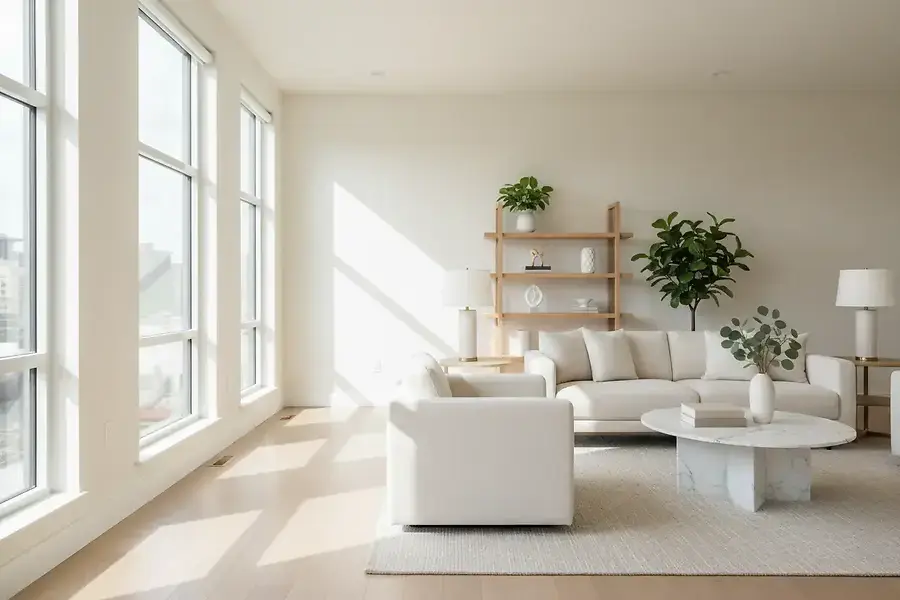
The way you arrange furniture significantly impacts how buyers perceive your home's flow and functionality. Strategic furniture placement should emphasize spaciousness, traffic flow, and the purpose of each room.
Consider these furniture arrangement principles:
- Create conversation areas: Arrange seating to encourage interaction and make spaces feel inviting
- Maximize open floor space: Remove unnecessary furniture to make rooms appear larger
- Define room purposes: Use furniture placement to clearly show how each space functions
- Ensure clear pathways: Arrange furniture to allow easy movement through rooms
- Float furniture away from walls: This creates a more intimate, designed feel rather than a sparse appearance
Lighting: The Game Changer
Lighting is one of the most underutilized staging tools, yet it has tremendous power to transform a space. Proper lighting makes homes feel warm, welcoming, and spacious. Dark, poorly lit homes feel depressing and can actually reduce perceived value.
Implement these lighting improvements:
- Open all curtains and blinds to maximize natural light during showings
- Replace dim bulbs with brighter, energy-efficient LED options
- Add accent lighting to highlight architectural features and artwork
- Install dimmer switches to create ambiance and flexibility
- Use table lamps and floor lamps to create layers of light
- Ensure entryways are well-lit to create a welcoming first impression
The combination of natural and artificial lighting creates depth and warmth that makes homes more appealing to buyers.
Additional Staging Enhancements
Beyond furniture and lighting, consider these additional improvements:
- Fresh paint: Neutral colors like soft whites, beiges, and grays appeal to the broadest audience
- Clean and organized closets: Open closets during showings to demonstrate storage capacity
- Curb appeal: First impressions begin outside—ensure landscaping is neat and the entrance is inviting
- Neutral scents: Fresh coffee or baked goods can create positive associations, but avoid strong perfumes
- Minimal accessories: A few high-quality pieces are better than numerous small decorations
Conclusion: Maximizing Buyer Interest Through Thoughtful Presentation
Home staging is an investment in your property's marketability and sale price. By decluttering, depersonalizing, strategically arranging furniture, and optimizing lighting, you create an environment where buyers can envision their future. These proven techniques work together to highlight your home's best features while minimizing distractions.
The beauty of effective staging is that many improvements require minimal financial investment—mostly just time and thoughtful arrangement. Whether you choose to work with a professional stager or implement these strategies yourself, the key is approaching your home from a buyer's perspective. When potential buyers walk through a well-staged home, they don't just see a property; they see possibilities.
In today's competitive real estate market, presentation is everything. By investing in proper home staging strategies, you're not just preparing your home for sale—you're positioning yourself to achieve the highest possible price and attract serious, qualified buyers ready to make an offer.


