Home Staging Techniques That Attract Serious Buyers and Faster Sales
Discover practical staging strategies that showcase your property's best features and help you sell faster at a higher price.

Why Home Staging Matters in Today's Competitive Real Estate Market
In today's fast-paced real estate market, first impressions are everything. Home staging is no longer a luxury—it's a necessity for sellers who want to stand out from the competition and maximize their return on investment. When potential buyers walk through your door, they're not just evaluating the physical structure; they're imagining themselves living in your space.
Studies show that properly staged homes sell faster and at higher prices compared to unstaged properties. Buyers are more likely to make emotional connections with spaces that feel welcoming, organized, and well-maintained. By strategically presenting your home, you're essentially telling a story that resonates with your target audience.
The goal of home staging is simple: highlight your property's strengths while minimizing its weaknesses. Whether you're selling a cozy apartment or a sprawling estate, the right staging techniques can make all the difference in attracting serious buyers and closing deals faster.
Essential Staging Strategies: Decluttering, Lighting, and Strategic Furniture Arrangement
Decluttering: The Foundation of Effective Staging
Before you can showcase your home's best features, you need to remove the clutter. Potential buyers need to envision their own belongings in your space, and excessive personal items, furniture, and decorations can be distracting.
- Remove 30-50% of your belongings from visible areas
- Store seasonal items, excess furniture, and personal memorabilia
- Organize closets and storage spaces to demonstrate ample room
- Clear kitchen countertops of appliances and gadgets
- Minimize bedroom furniture to make rooms feel larger
A decluttered home immediately feels more spacious, clean, and inviting. This simple step often yields the biggest impact on buyer perception.
Lighting: Brighten Your Home's Appeal
Proper lighting transforms any space. Natural light is ideal, so open curtains and blinds during showings. For areas lacking natural light, invest in strategic artificial lighting:
- Replace dim bulbs with brighter, warm-white LED lights
- Add accent lighting to highlight architectural features
- Use table lamps and floor lamps to create ambiance
- Ensure all light fixtures are clean and functional
Well-lit homes feel more welcoming and appear larger. Avoid harsh overhead lighting; instead, layer your lighting for a warm, inviting atmosphere.
Strategic Furniture Arrangement
The way you arrange furniture significantly impacts how buyers perceive your space. Less is more when it comes to staging furniture:
- Remove oversized furniture that makes rooms feel cramped
- Arrange furniture to create clear traffic flow
- Position seating to encourage conversation and connection
- Ensure furniture doesn't block windows or architectural features
- Create distinct zones in open-concept spaces
The goal is to make rooms feel spacious and functional while helping buyers visualize how they would use the space.
Room-by-Room Staging Tips: Creating Emotional Connections with Potential Buyers
Living Room: The Heart of Your Home
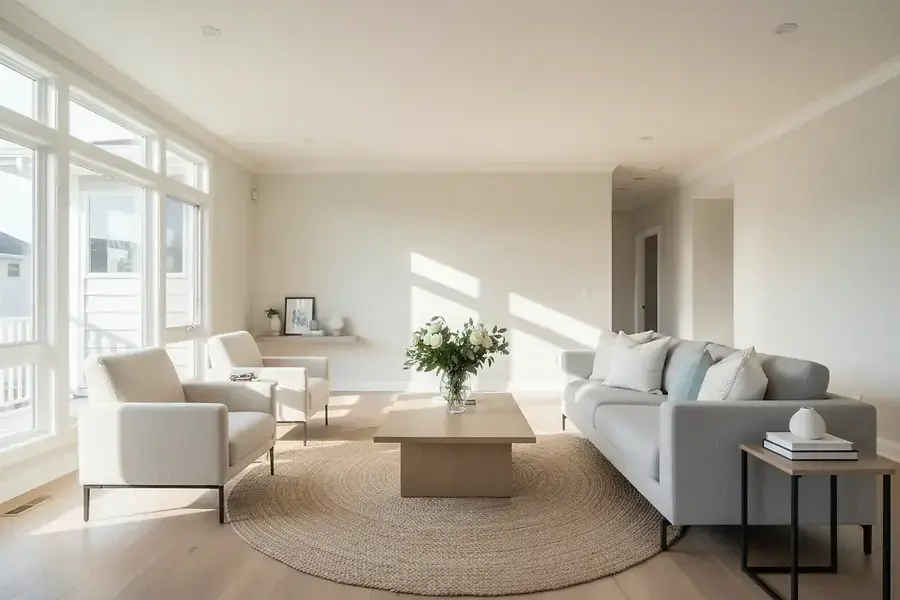
The living room is where families gather and memories are made. Stage this space to evoke comfort and connection:
- Arrange seating to face the focal point (fireplace, TV, or window)
- Add a few tasteful throw pillows and a cozy blanket
- Include a coffee table with a simple centerpiece
- Ensure the room feels inviting but not cluttered
Kitchen: The Modern Home's Command Center
Kitchens are major selling points. Make yours shine:
- Clear countertops completely—store small appliances away
- Clean and polish all surfaces until they gleam
- Add a small bowl of fresh fruit or fresh flowers as a centerpiece
- Ensure cabinet hardware is clean and polished
- Stage the dining area adjacent to the kitchen with a simple table setting
Bedrooms: Sanctuaries of Rest
Bedrooms should feel peaceful and spacious. Keep staging minimal:
- Use neutral bedding in high-quality fabrics
- Remove excess furniture—keep only a bed and nightstands
- Add decorative pillows for visual interest
- Ensure closets are organized and appear spacious
- Keep personal photos and memorabilia to a minimum
Bathrooms: Clean and Spa-Like
Bathrooms must be spotless. Even small bathrooms can feel luxurious:
- Remove all personal toiletries from countertops
- Add fluffy, neutral-colored towels
- Place a small plant or fresh flowers on the counter
- Ensure mirrors are streak-free and lighting is bright
- Caulk any visible gaps and repair any water damage
Outdoor Spaces: Extend Your Home's Appeal
Don't forget about curb appeal and outdoor areas:
- Pressure wash the driveway and walkways
- Trim landscaping and plant colorful flowers
- Stage patios with comfortable seating and lighting
- Ensure the front entrance is welcoming and well-lit
Transform Your Home's Presentation and Maximize Your Selling Potential
Home staging is an investment that pays dividends. By implementing these practical strategies, you're not just preparing your home for sale—you're creating an emotional experience that resonates with buyers.
Remember, the goal of staging is to help potential buyers envision their future in your space. When you declutter, optimize lighting, arrange furniture strategically, and pay attention to room-specific details, you're essentially removing obstacles between the buyer's imagination and their decision to make an offer.
The difference between a home that sells quickly at a premium price and one that lingers on the market often comes down to presentation. Invest in staging, and watch your selling potential soar.
Whether you're working with a professional stager or tackling the project yourself, these techniques are proven to attract serious buyers and accelerate your sale. Start today, and transform your home into an irresistible listing that commands attention in the competitive real estate market.


