Honolulu Commercial Property: Zoning Laws and Investment Returns
Understand zoning regulations and how they impact your commercial real estate investment potential in Honolulu.

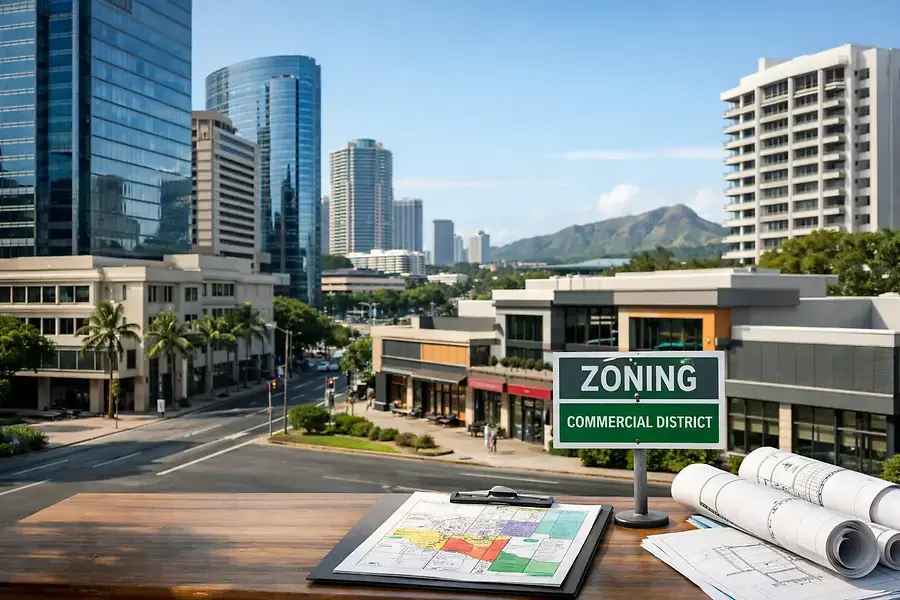
Why Zoning Matters for Honolulu Commercial Investors
When evaluating commercial real estate opportunities in Honolulu, many investors focus primarily on location and property condition. However, zoning regulations are equally critical to your investment success. Zoning laws determine what types of businesses can operate in specific areas, directly affecting property values, rental income potential, and long-term returns on investment.
Honolulu's zoning framework is complex and multifaceted, reflecting the island's unique blend of urban development, environmental protection, and cultural preservation. Understanding these regulations before purchasing commercial property can mean the difference between a profitable investment and a costly mistake. Whether you're a seasoned investor or entering the commercial real estate market for the first time, zoning knowledge is essential.
Understanding Honolulu's Commercial Zoning Districts and Restrictions
Primary Commercial Zoning Categories
Honolulu's commercial zoning districts are designed to support various business types while maintaining neighborhood character and environmental standards. The main commercial zones include:
- Business District (B): Allows retail, offices, restaurants, and service businesses with moderate restrictions
- Commercial District (C): Permits a broader range of commercial activities including wholesale operations and light manufacturing
- Resort District (R): Specifically designed for tourism-related businesses, hotels, and hospitality services
- Mixed-Use Districts: Combine residential and commercial uses, increasingly popular in downtown Honolulu
Key Zoning Restrictions and Considerations
Beyond district classification, Honolulu imposes several important restrictions that impact commercial property use:
- Height Limitations: Vary by district and proximity to residential areas, with stricter limits in sensitive neighborhoods
- Parking Requirements: Commercial properties must provide adequate parking based on business type and square footage
- Environmental Overlays: Coastal zone management, flood plains, and preservation districts add additional layers of regulation
- Historic District Designations: Properties in historic areas face design and modification restrictions
- Conditional Use Permits: Some businesses require special approval even within permitted zones
Understanding these restrictions is crucial because they directly influence what you can do with a property and how much revenue it can generate. A property zoned for retail may not be suitable for office use, and attempting to change zoning can be time-consuming and expensive.
The Zoning Variance and Amendment Process
If you find a property that doesn't perfectly match your intended use, you may pursue a zoning variance or amendment. However, this process is neither quick nor guaranteed. The City and County of Honolulu requires detailed applications, environmental assessments, and community input. Most variance requests take 6-12 months and involve significant legal and consulting fees. Success rates vary, making it risky to purchase property based on the assumption that zoning will be changed.
How Zoning Affects Property Value and Investment ROI
Direct Impact on Property Values
Zoning directly influences what investors will pay for commercial property. A property zoned for high-density mixed-use development commands a premium compared to one restricted to single-use retail. Properties in Resort Districts near Waikiki typically have higher values due to tourism demand, while properties in restricted Business Districts may be more affordable but with limited income potential.
Zoning certainty increases property value. Properties with clear, flexible zoning that allows multiple revenue streams are more attractive to buyers and lenders. Conversely, properties with restrictive zoning or pending zoning disputes may be discounted significantly.
Revenue Generation and Rental Income
The zoning classification determines which tenants you can attract and what rents you can command. A property zoned for commercial use can support higher-paying office or professional service tenants. Properties restricted to retail may have lower rental rates but potentially more stable, long-term tenants. Mixed-use zoning allows you to diversify income streams with both residential and commercial tenants.
Consider this scenario: Two similar-sized properties in Honolulu, one zoned strictly for retail and another zoned for mixed-use development. The mixed-use property can generate revenue from ground-floor retail, office space, and residential units, providing multiple income streams and greater resilience during economic downturns.
Long-Term Investment Appreciation
Zoning changes can dramatically impact long-term appreciation. Areas undergoing zoning transitions—such as neighborhoods rezoned to allow higher-density development—often experience significant property value increases. However, the opposite is also true. Properties in areas where zoning is becoming more restrictive may face stagnant or declining values.
Smart investors monitor zoning trends and development plans in their target areas. City planning documents, zoning maps, and development proposals are public records that can provide valuable insights into future property value trajectories.
Financing and Lender Considerations
Banks and commercial lenders carefully evaluate zoning when determining loan amounts and terms. Properties with clear, unrestricted zoning receive better financing terms and higher loan-to-value ratios. Properties with zoning complications or restrictions may face higher interest rates or require larger down payments. This financing impact directly affects your return on investment and cash flow.
Making Informed Commercial Real Estate Decisions
Due Diligence Steps for Commercial Investors
Before investing in Honolulu commercial property, take these essential steps:
- Review the Zoning Map: Verify the exact zoning classification of any property you're considering
- Obtain a Zoning Verification Letter: Request official documentation from the City confirming permitted uses
- Check Development Plans: Review the Honolulu General Plan and district plans to understand future zoning directions
- Consult a Zoning Attorney: Have a local real estate attorney review zoning implications before purchase
- Analyze Comparable Properties: Study how similar zoning classifications affect property values in your target area
Strategic Zoning Considerations
Successful commercial investors in Honolulu align their investment strategy with zoning realities. Rather than fighting restrictive zoning, identify properties where zoning supports your business model. Look for emerging neighborhoods where zoning is becoming more favorable, or established commercial districts with proven demand.
Additionally, consider how zoning changes might affect your exit strategy. A property you purchase today may be more or less valuable to future buyers depending on zoning evolution. Properties in areas with strong, stable zoning frameworks tend to appreciate more predictably.
The Bottom Line
Zoning laws are not obstacles to ignore—they are fundamental factors that determine commercial property value and investment potential. In Honolulu's competitive real estate market, investors who thoroughly understand zoning regulations gain a significant advantage. By conducting proper due diligence, consulting with experts, and aligning your investment strategy with zoning realities, you can identify opportunities that deliver strong returns while minimizing risk.
The most successful commercial real estate investors view zoning as an opportunity to identify undervalued properties and emerging markets, rather than as a limitation. With this mindset and proper research, Honolulu's commercial real estate market offers excellent investment potential for informed, strategic investors.


