How Property Values Differ Across Rochester's Outer Ring Communities
Compare market prices, buyer demographics, and investment potential in nine suburban neighborhoods surrounding Rochester

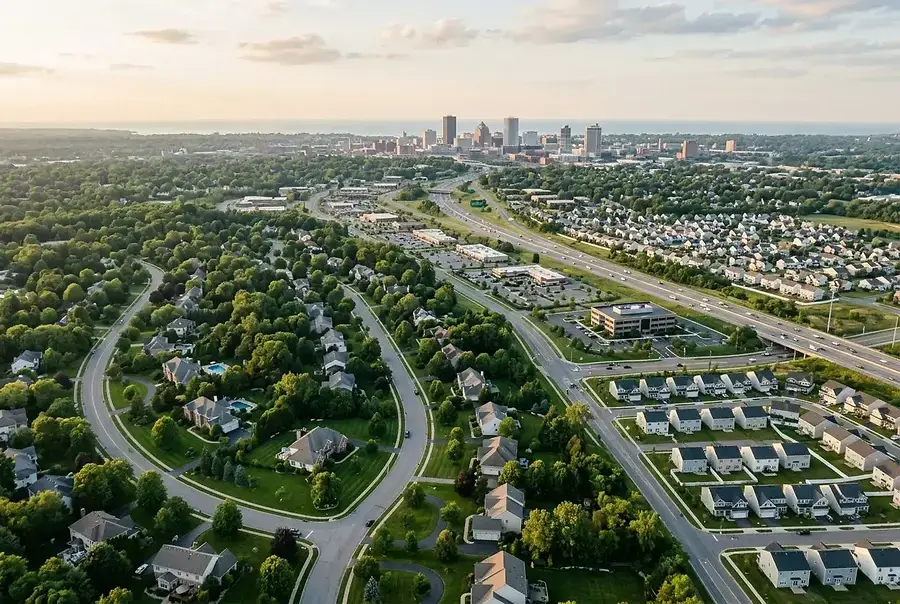
Understanding the Value Variations in Rochester's Suburban Landscape
Rochester's outer ring communities have become increasingly attractive to homebuyers and investors seeking alternatives to the urban core. These nine suburban neighborhoods offer diverse property values, demographic profiles, and investment opportunities that cater to different buyer preferences and financial capabilities. Understanding these variations is essential for making informed real estate decisions in today's competitive market.
The suburban landscape surrounding Rochester has evolved significantly, with each community developing its own character, amenities, and market dynamics. From family-oriented neighborhoods to emerging commercial hubs, the outer ring presents a spectrum of options that deserve careful consideration.
Breaking Down Price Points: Which Communities Offer the Best Value for Residential and Commercial Buyers
Premium Communities with Established Infrastructure
The northern and eastern suburbs command higher property values due to established infrastructure, excellent school systems, and proximity to major employment centers. Communities in this tier typically range from $350,000 to $550,000 for residential properties, with commercial spaces commanding premium lease rates. These areas attract affluent families and established businesses seeking stability and proven returns on investment.
Mid-Range Neighborhoods with Growth Potential
The central outer ring communities offer balanced pricing between $250,000 and $400,000 for residential properties. These neighborhoods are experiencing revitalization efforts, with new retail developments and improved transportation corridors. Commercial buyers find excellent opportunities here, as property costs remain reasonable while demand continues to increase. These areas represent strong value propositions for investors with medium-term horizons.
Emerging Communities with Affordable Entry Points
The southern and western suburbs present the most affordable options, with residential properties ranging from $180,000 to $320,000. While currently undervalued compared to their northern counterparts, these communities are experiencing rapid development and infrastructure improvements. Commercial properties in these areas offer exceptional value, making them attractive for entrepreneurs and investors seeking higher potential returns.
Commercial Real Estate Opportunities
Commercial property values vary significantly across the outer ring. Premium retail locations near major intersections command $15-25 per square foot annually, while emerging areas offer $8-12 per square foot. Industrial properties show similar variations, with established logistics hubs commanding premium rates while newer industrial parks offer competitive pricing for businesses willing to relocate.
Demographic and Economic Factors Driving Property Demand in Each Area
Family-Oriented Communities
Northern and eastern suburbs attract young families with school-age children, driven by highly-rated school districts and family-friendly amenities. These communities feature:
- Average household income: $85,000-$120,000
- Primary demographic: Families with children ages 5-18
- Key attractions: Parks, recreational facilities, and quality schools
- Property appreciation: Steady 3-4% annually
Young Professional Communities
Central outer ring neighborhoods appeal to young professionals and first-time homebuyers seeking affordability without sacrificing convenience. These areas demonstrate:
- Average household income: $65,000-$95,000
- Primary demographic: Ages 25-40, often single or young couples
- Key attractions: Walkable neighborhoods, entertainment venues, and job accessibility
- Property appreciation: Moderate 2-3% annually with growth potential
Emerging Communities with Diverse Demographics
Southern and western suburbs attract diverse populations seeking affordable housing and community development opportunities. These neighborhoods feature:
- Average household income: $45,000-$75,000
- Primary demographic: Mixed age groups, immigrant communities, and first-time buyers
- Key attractions: Affordability, cultural diversity, and emerging amenities
- Property appreciation: Higher growth potential of 4-6% annually
Economic Drivers Across the Outer Ring
Employment Centers: Proximity to major employers significantly influences property values. Communities near technology parks, healthcare facilities, and corporate headquarters command premium prices. The eastern suburbs benefit from proximity to the regional medical center, while northern areas advantage from tech industry clustering.
Transportation Infrastructure: Access to highways, public transit, and commuter rail impacts desirability. Communities with improved transportation corridors experience accelerated property value growth and attract businesses seeking accessible locations.
Retail and Service Development: The presence of shopping centers, restaurants, and entertainment venues drives residential demand. Communities investing in mixed-use developments attract younger demographics and support higher property valuations.
School Quality and Education: School district ratings remain the primary driver of residential property values in family-oriented communities. Districts with high graduation rates and test scores command 15-25% premiums over comparable properties in lower-rated districts.
Making an Informed Decision for Your Next Property Investment
Selecting the right outer ring community requires balancing multiple factors aligned with your specific goals and timeline. For residential buyers, consider your family stage, commute tolerance, and long-term appreciation expectations. Premium communities offer stability and proven returns, while emerging areas provide growth potential for patient investors.
For commercial investors, evaluate foot traffic patterns, demographic alignment with your business model, and lease rate trends. Established communities offer reliable tenant bases, while emerging areas present opportunities for higher returns with corresponding risk.
Key considerations for your decision:
- Compare property prices against comparable homes in your target community
- Research school district ratings and educational quality metrics
- Analyze employment growth trends and major employers in the area
- Evaluate infrastructure development plans and future improvements
- Review demographic trends and population growth projections
- Assess local crime rates and community safety records
- Consider property tax rates and municipal services quality
Rochester's outer ring communities offer something for every buyer and investor. Whether you prioritize stability and established amenities or seek growth potential in emerging neighborhoods, understanding the distinct characteristics of each community empowers you to make confident investment decisions. The suburban landscape continues evolving, creating opportunities for those who understand the market dynamics driving value across these diverse neighborhoods.