How to Navigate Residential Market Cycles for Optimal Timing
Learn when to buy or sell your home by understanding the patterns that drive residential real estate markets.

Understanding Residential Market Cycles and Their Impact on Home Values
The residential real estate market operates in predictable cycles, much like the broader economy. These cycles are driven by a complex interplay of factors including interest rates, employment levels, consumer confidence, and housing supply. Understanding these patterns is crucial for anyone looking to make informed decisions about buying or selling property.
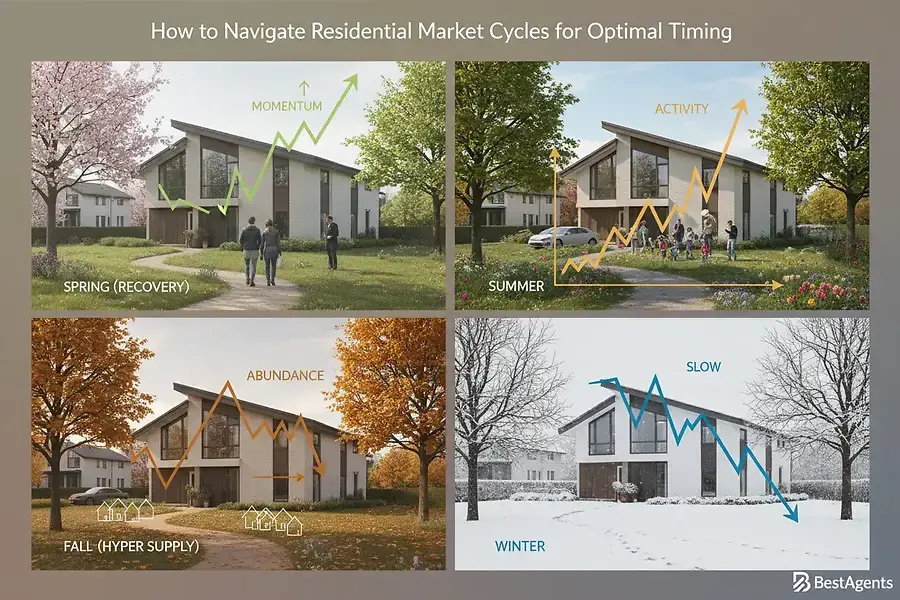
Market cycles typically consist of four distinct phases:
- Recovery Phase: The market begins to stabilize after a downturn, with increasing buyer interest and gradual price appreciation.
- Expansion Phase: Strong demand, rising prices, and increased inventory characterize this period of robust market growth.
- Hyper Supply Phase: Market peaks as prices reach their highest levels, but inventory begins to accumulate and buyer demand starts to soften.
- Recession Phase: Declining prices, reduced buyer activity, and increased inventory create challenges for sellers.
Home values don't move in a straight line. Instead, they fluctuate based on these market conditions. During expansion phases, homeowners often see significant appreciation in their property values. Conversely, during recession phases, values may stagnate or decline. Recognizing where you are in the cycle helps you position yourself strategically.
Identifying Buyer and Seller Markets: Key Indicators and Timing Strategies
Recognizing a Seller's Market
A seller's market occurs when demand exceeds supply, giving sellers a significant advantage. Key indicators include:
- Low inventory levels relative to the number of active buyers
- Homes selling quickly, often within days or weeks
- Multiple offers on properties
- Prices rising month-over-month
- Days on market decreasing
In a seller's market, homeowners can command higher prices and negotiate favorable terms. If you're planning to sell, this is the optimal time to list your property. However, if you're buying, you'll face increased competition and higher prices.
Recognizing a Buyer's Market
A buyer's market develops when supply exceeds demand, shifting power to purchasers. Indicators include:
- High inventory levels with fewer active buyers
- Homes staying on the market longer
- Sellers offering concessions and incentives
- Prices remaining stable or declining
- Increased days on market
Buyer's markets present excellent opportunities for purchasers to negotiate better prices and terms. Sellers, however, must be more strategic and competitive during these periods.
Timing Your Move
For Sellers: List your home during the expansion or early hyper supply phases when buyer demand is strongest. Avoid listing during recession phases when competition is fierce and prices are declining.
For Buyers: Purchase during recession or early recovery phases when prices are lower and sellers are more motivated. Avoid buying at market peaks when prices are highest and inventory is scarce.
Making Smart Residential Decisions During Market Peaks and Downturns
Navigating Market Peaks
When the market reaches its peak, prices are at their highest, and competition among buyers is intense. If you're selling: This is your golden opportunity. List your home aggressively and capitalize on maximum buyer interest. However, be prepared for the market to shift, so price competitively to avoid being caught with inventory as the market turns.
If you're buying: Exercise caution. Avoid overpaying for properties driven by FOMO (fear of missing out). Consider waiting for the market to cool unless you're purchasing a primary residence for long-term occupancy. Focus on properties with strong fundamentals rather than those relying solely on appreciation potential.
Capitalizing on Market Downturns
Downturns create opportunities for strategic buyers. Advantages include:
- Lower purchase prices with greater negotiating power
- Larger selection of available properties
- Less competition from other buyers
- Potential for long-term appreciation as the market recovers
However, downturns also present challenges. If you're selling: Price realistically, highlight your home's best features, and be prepared to negotiate. Consider offering incentives like closing cost assistance or home warranties to attract buyers.
If you're buying: Conduct thorough due diligence. Downturns can reveal properties with underlying issues. Get comprehensive inspections and ensure you're purchasing for the right reasons—not just speculation that the market will recover.
The Importance of Personal Circumstances
While market timing is important, never ignore your personal situation. If you need to sell due to a job relocation or buy because your family is growing, market conditions are secondary. Focus on finding the right property at a fair price rather than waiting for perfect market conditions that may never arrive.
Conclusion: Positioning Yourself for Long-Term Residential Success
Successfully navigating residential market cycles requires a combination of market awareness, strategic planning, and realistic expectations. By understanding the four phases of market cycles and recognizing key indicators of buyer and seller markets, you can make more informed decisions about when to buy or sell.
Key takeaways:
- Study market indicators in your specific area—national trends don't always apply locally
- Align your buying or selling timeline with market conditions when possible
- Don't let market timing override personal needs and circumstances
- Work with experienced real estate professionals who understand local market dynamics
- Think long-term; most homeowners benefit from holding property through multiple market cycles
The residential real estate market will continue to cycle through peaks and valleys. By positioning yourself to understand these patterns and act strategically, you can optimize your timing and build long-term wealth through real estate. Whether you're a first-time buyer or an experienced investor, market awareness combined with sound decision-making is your path to residential success.


