Industrial & Warehouse Space Demand in Metro Atlanta's West Corridor
Discover why commercial property investors are capitalizing on logistics-driven growth across Douglasville, Lithia Springs, and surrounding West Atlanta markets.

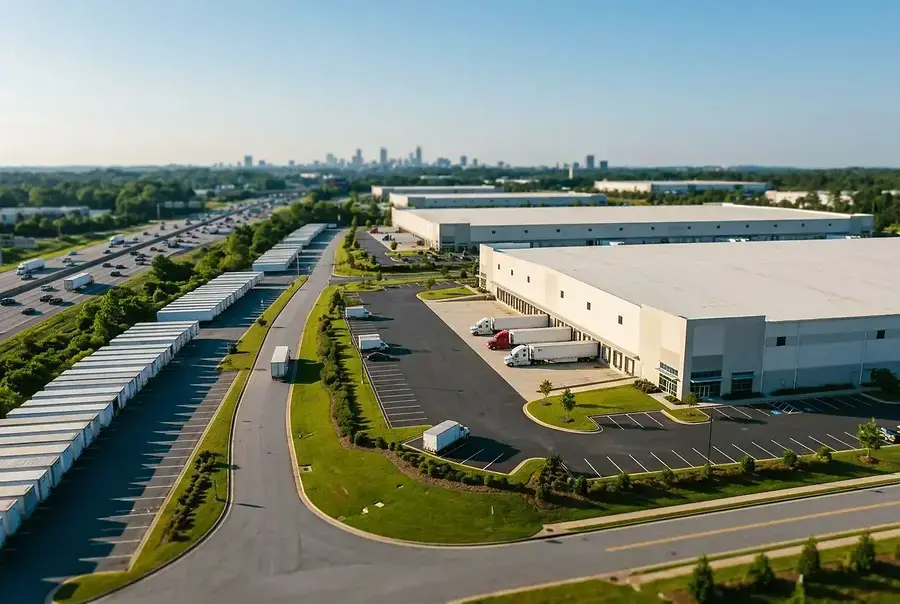
The Rising Demand for Industrial Real Estate in West Atlanta
The industrial real estate landscape in Metro Atlanta is undergoing a significant transformation, and the West Corridor is at the epicenter of this growth. As e-commerce continues to reshape consumer behavior and supply chain networks expand, the demand for warehouse and logistics facilities has reached unprecedented levels. The West Atlanta markets—particularly Douglasville, Lithia Springs, and Villa Rica—are experiencing a surge in commercial property interest from institutional investors, third-party logistics providers, and major retailers seeking strategic distribution hubs.
This boom is not coincidental. The convergence of favorable economic conditions, infrastructure development, and strategic geographic positioning has created an ideal environment for industrial real estate investment. Property investors who recognize these opportunities early are positioning themselves to capture substantial returns in what many analysts consider one of the most dynamic logistics markets in the Southeast.
Strategic Location Advantages: Why Douglasville, Lithia Springs, and Villa Rica Are Attracting Major Tenants
Proximity to Major Transportation Networks
The West Corridor's greatest asset is its strategic location relative to critical transportation infrastructure. Douglasville and Lithia Springs benefit from immediate access to Interstate 20, one of the most important east-west corridors in the United States. This positioning provides direct connectivity to major distribution centers, ports, and consumer markets across the Southeast and beyond.
Key transportation advantages include:
- Direct I-20 access enabling rapid distribution to regional and national markets
- Proximity to Hartsfield-Jackson Atlanta International Airport for time-sensitive logistics
- Connection to rail networks supporting intermodal operations
- Strategic positioning between major population centers and manufacturing hubs
Labor Market and Workforce Availability
Beyond infrastructure, the West Corridor offers access to a robust and growing workforce. The region's population expansion has created a deep labor pool for warehouse operations, logistics management, and supply chain roles. Companies relocating distribution operations to the area benefit from competitive labor costs compared to more saturated markets, combined with the availability of skilled workers.
Land Availability and Development Potential
Unlike more congested areas of Metro Atlanta, the West Corridor still offers substantial developable land at competitive pricing. This availability allows investors to acquire larger parcels suitable for modern warehouse facilities, cross-dock operations, and specialized logistics centers. The region's lower land costs compared to central Atlanta markets create opportunities for higher-margin development projects.
Villa Rica, in particular, has emerged as an attractive secondary market, offering similar strategic advantages with even greater land availability and lower acquisition costs. This positions the area as an excellent opportunity for investors seeking value-add properties with strong growth potential.
Investment Potential: Cap Rates, Lease Terms, and ROI Expectations for Industrial Properties
Current Market Cap Rates and Valuation Metrics
Industrial properties in the West Corridor are commanding competitive cap rates that reflect the market's strong fundamentals. Current cap rates for stabilized industrial assets typically range from 5.5% to 7.0%, depending on property condition, tenant quality, and specific location within the corridor. These rates compare favorably to national averages while offering growth potential as the market matures.
The valuation environment remains attractive for investors. Properties are priced based on per-square-foot metrics that remain below comparable facilities in more established logistics hubs, yet the rental rates are approaching parity with premium markets. This pricing differential creates a compelling investment thesis for value-conscious investors.
Lease Structure and Tenant Quality
The tenant base in the West Corridor is increasingly sophisticated and credit-worthy. Major logistics providers, national retailers, and e-commerce fulfillment operators are securing long-term leases in the region. Triple-net (NNN) lease structures are standard, with tenants responsible for property taxes, insurance, and maintenance costs. This arrangement provides investors with predictable, inflation-protected cash flows.
Lease terms typically range from 5 to 10 years, with renewal options that provide long-term revenue stability. The quality of tenants—often investment-grade companies—significantly reduces vacancy risk and enhances the reliability of returns.
Return on Investment Expectations
Investors in West Corridor industrial properties can realistically expect:
- Annual cash-on-cash returns: 6% to 9% from stabilized properties
- Appreciation potential: 3% to 5% annually as the market matures and rents increase
- Total return potential: 9% to 14% annually when combining cash flow and appreciation
- Value-add opportunities: 12% to 18% IRR for repositioned or newly developed properties
These returns reflect the market's current dynamics and growth trajectory. As the West Corridor continues to establish itself as a premier logistics destination, appreciation potential may exceed these conservative estimates.
Risk Considerations and Market Outlook
While the outlook is positive, prudent investors should consider market dynamics. Economic cycles, interest rate fluctuations, and changes in consumer behavior can impact industrial real estate demand. However, the structural shift toward e-commerce and the need for distributed logistics networks suggest long-term tailwinds for the sector.
The West Corridor's diversified tenant base—spanning third-party logistics, retail distribution, manufacturing support, and e-commerce fulfillment—provides resilience against sector-specific downturns.
Positioning Your Portfolio in Metro Atlanta's Most Dynamic Logistics Hub
The industrial real estate opportunity in Metro Atlanta's West Corridor represents a compelling investment thesis for commercial property investors. The combination of strategic location, infrastructure advantages, workforce availability, and attractive valuation metrics creates an environment ripe for capital deployment.
For investors considering entry into this market, key action items include:
- Conducting thorough market analysis and identifying specific sub-markets with highest growth potential
- Evaluating tenant credit quality and lease structure to ensure cash flow stability
- Assessing property condition and capital expenditure requirements for value-add opportunities
- Monitoring interest rate trends and financing availability to optimize capital structure
- Building relationships with local brokers and developers to access off-market opportunities
The West Corridor's emergence as a logistics hub is not a temporary phenomenon—it reflects fundamental shifts in supply chain strategy and consumer expectations. Investors who position their portfolios strategically in Douglasville, Lithia Springs, and Villa Rica today are likely to benefit from sustained demand, rising rents, and property appreciation for years to come.
The question for commercial real estate investors is not whether to invest in Metro Atlanta's West Corridor, but when and how to structure that investment for maximum returns. The market window remains open, but as awareness spreads and competition intensifies, early movers will capture the most attractive opportunities and highest returns.