Las Vegas Home Inspection: Key Issues to Identify Before Buying
Protect your investment by understanding the most common problems found during home inspections in the Las Vegas market.

Introduction: Why Home Inspections Matter in Las Vegas
Purchasing a home is one of the most significant financial decisions you'll make in your lifetime. In the Las Vegas market, where desert conditions and rapid development create unique challenges, a thorough home inspection becomes even more critical. A professional home inspection can reveal hidden problems that could cost thousands of dollars to repair, protecting your investment and giving you peace of mind before closing the deal.
Las Vegas properties face distinct environmental stressors that differ from other regions. The intense heat, low humidity, and mineral-rich water create specific wear patterns that inspectors are trained to identify. Understanding these common issues helps you negotiate better terms, request repairs, or make an informed decision about whether a property is worth your investment.
Common Structural and Foundation Issues in Desert Climates
Foundation Settling and Cracks
The desert soil in Las Vegas is notoriously challenging for home foundations. Expansive clay soils can shift dramatically with temperature changes and moisture fluctuations, causing foundations to settle unevenly. Inspectors carefully examine foundation walls for cracks, which may indicate structural movement. While some minor cracks are normal, larger or diagonal cracks warrant professional evaluation and potential repair.
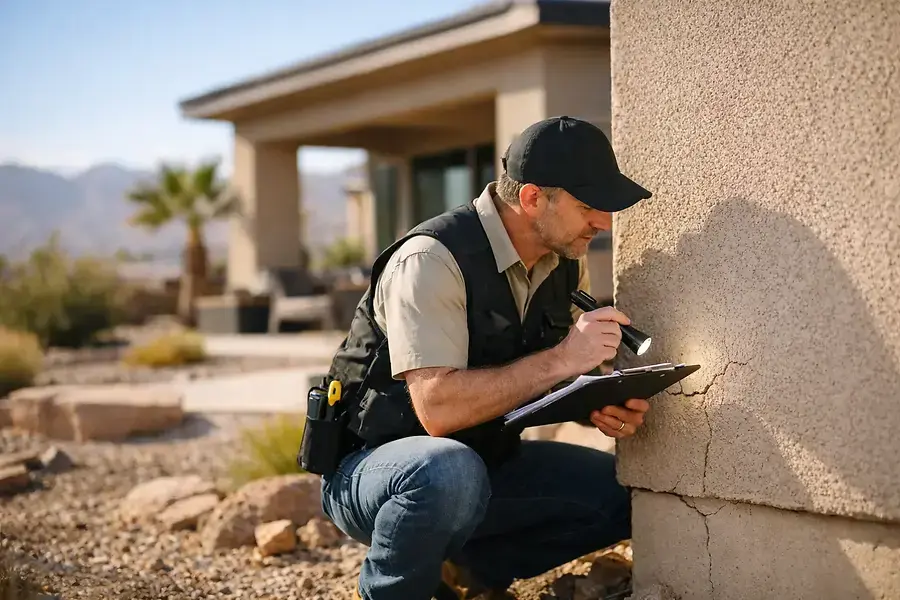
Exterior Wall Damage and Stucco Issues
Most Las Vegas homes feature stucco exteriors, which are popular due to their durability in desert conditions. However, stucco can develop problems over time:
- Hairline cracks that allow water infiltration
- Separation from the underlying structure
- Deterioration from UV exposure and temperature extremes
- Improper installation leading to moisture damage
Water intrusion through compromised stucco is one of the most expensive issues to repair, making this a critical inspection point. Inspectors use moisture meters to detect hidden water damage behind walls.
Roof Condition and Ventilation
Las Vegas's intense sun can prematurely age roofing materials. Inspectors look for:
- Curled, cracked, or missing shingles
- Deteriorated flashing around vents and chimneys
- Inadequate attic ventilation leading to heat buildup
- Pooling water or poor drainage patterns
Proper roof ventilation is essential in the desert climate to prevent premature deterioration and reduce cooling costs. A well-maintained roof should last 15-20 years, but poor ventilation can cut this lifespan significantly.
HVAC, Plumbing, and Electrical Systems: What Inspectors Look For
Air Conditioning Systems
In Las Vegas, air conditioning isn't a luxury—it's a necessity. Inspectors evaluate whether HVAC systems are appropriately sized for the home and functioning efficiently. Common issues include:
- Undersized units that struggle to cool the home adequately
- Refrigerant leaks reducing cooling capacity
- Dirty filters and coils reducing efficiency
- Aging systems nearing the end of their lifespan (typically 10-15 years)
Replacing an HVAC system can cost $5,000-$10,000 or more, so understanding the condition and age of existing systems is crucial for budgeting.
Water Quality and Plumbing Concerns
Las Vegas water is notoriously hard, with high mineral content that affects plumbing systems. Inspectors check for:
- Mineral buildup in pipes reducing water pressure
- Corroded copper pipes requiring replacement
- Water heater condition and age (typically 8-12 years)
- Leaks in visible pipes and under sinks
- Proper grading to prevent water from pooling near the foundation
Hard water issues are so common in Las Vegas that many homeowners invest in water softening systems to extend the life of their plumbing and appliances.
Electrical Systems and Safety
Electrical inspections ensure your home meets current safety codes. Inspectors examine:
- Panel capacity and condition of the main breaker
- Presence of GFCI outlets in bathrooms and kitchens
- Proper grounding and bonding throughout the home
- Outdated wiring that may pose fire hazards
- Adequate outlets and circuits for modern appliance usage
Homes built before the 1980s may have outdated electrical systems that require upgrades to safely handle today's power demands. Electrical issues can be serious safety concerns, so any problems identified during inspection should be addressed before purchase.
Conclusion: Making an Informed Purchase Decision with Inspection Results
A comprehensive home inspection in Las Vegas provides invaluable information about your potential purchase. By understanding the specific challenges that desert properties face—from foundation settling to hard water damage—you can make informed decisions about whether to proceed with the purchase, negotiate repairs, or request credits toward closing costs.
Don't skip the home inspection or hire an inexperienced inspector. Choose a licensed, certified professional familiar with Las Vegas construction and climate-specific issues. Review the inspection report carefully, ask questions about any concerns, and consult with contractors for repair estimates on significant issues.
Your home inspection is your opportunity to protect your investment and ensure you're making a sound financial decision. Take it seriously, and you'll enjoy your Las Vegas home with confidence for years to come.


