Maximizing Profit: Commercial to Residential Conversions in Los Angeles
Discover how forward-thinking investors are capitalizing on LA's adaptive reuse market to transform underutilized commercial spaces into thriving residential properties.

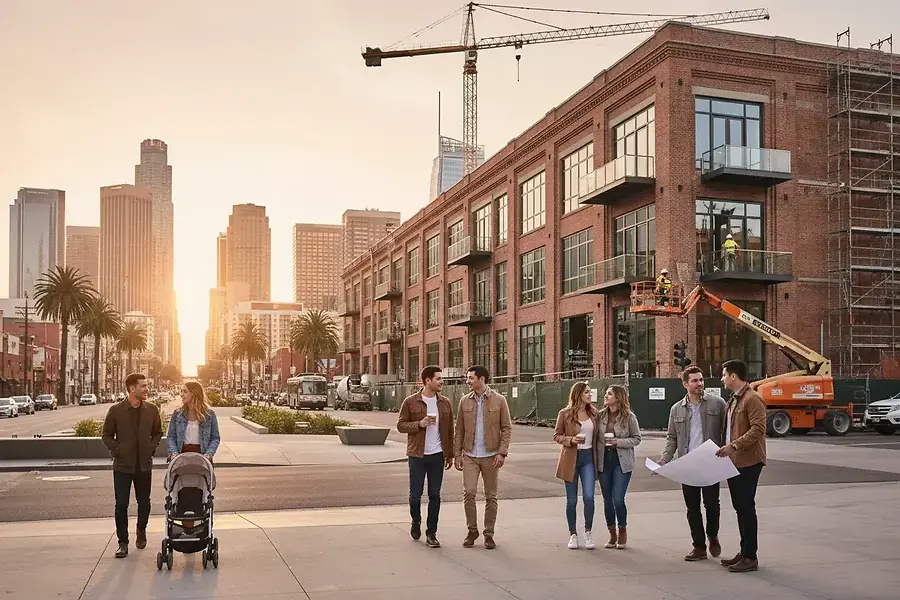
Introduction: The Conversion Opportunity in Los Angeles Real Estate
Los Angeles stands at a pivotal moment in its real estate evolution. With the rise of remote work and changing urban dynamics, countless commercial properties sit underutilized, creating an unprecedented opportunity for savvy investors. The conversion of commercial spaces into residential units has emerged as one of the most lucrative strategies in LA's adaptive reuse market, offering substantial returns for those willing to navigate the process strategically.
The demand for residential housing in Los Angeles continues to outpace supply, driving prices higher and creating favorable conditions for conversion projects. Forward-thinking investors recognize that transforming vacant office buildings, warehouses, and retail spaces into modern apartments and condominiums isn't just environmentally responsible—it's financially rewarding.
Understanding the Commercial-to-Residential Conversion Process and Market Demand
The Conversion Process: Key Steps and Considerations
Converting commercial property to residential use involves several critical phases that require careful planning and expertise. Understanding each step ensures smoother execution and better financial outcomes.
- Zoning and Regulatory Compliance: The first hurdle involves navigating Los Angeles's zoning laws. Many commercial properties require zoning variances or conditional use permits to legally operate as residential units. Working with experienced real estate attorneys and zoning consultants is essential to avoid costly delays.
- Structural and Safety Assessments: Commercial buildings often require significant modifications to meet residential building codes. This includes upgrading fire safety systems, electrical infrastructure, plumbing, and HVAC systems to residential standards.
- Architectural Design and Planning: Creating functional residential units from commercial spaces demands creative architectural solutions. Designers must optimize floor plans, ensure adequate natural light, and incorporate modern amenities that appeal to today's renters.
- Construction and Renovation: The actual conversion work can be extensive, ranging from cosmetic updates to complete structural overhauls. Budget flexibility and timeline management are crucial during this phase.
- Permitting and Inspections: Multiple inspections and permits are required throughout the process. Building departments scrutinize every aspect to ensure compliance with residential standards.
Market Demand: Why Residential Conversions Make Sense
Los Angeles faces a significant housing shortage, with demand far exceeding available inventory. This supply-demand imbalance creates ideal conditions for conversion projects. Several factors drive this demand:
- Population growth continues to attract new residents to the Los Angeles area
- Limited available land for new construction increases the value of adaptive reuse projects
- Younger professionals and remote workers seek urban living spaces with character and affordability
- Environmental consciousness favors repurposing existing structures over new development
Downtown Los Angeles has become a conversion hotspot, with former office buildings and warehouses transforming into vibrant residential communities. Similar opportunities exist in emerging neighborhoods throughout the city, where commercial properties can be acquired at reasonable prices and converted into premium residential units.
Financial Benefits and ROI Potential for Property Investors
Understanding the Financial Advantages
The financial case for commercial-to-residential conversions is compelling. Investors can achieve impressive returns through multiple revenue streams and cost advantages.
Acquisition Costs
Commercial properties typically sell at lower per-square-foot prices than residential properties in the same area. This price differential creates immediate equity potential. An investor purchasing a commercial building at $300 per square foot can convert it into residential units worth $600+ per square foot, creating substantial built-in profit.
Rental Income Potential
Once converted, residential units generate consistent monthly rental income. Los Angeles's rental market remains strong, with average rents continuing to climb. A converted commercial building with 50 units generating $2,500 monthly rent per unit produces $125,000 in monthly revenue—a significant income stream for investors.
Tax Incentives and Financing Options
Several financial incentives support conversion projects:
- New Markets Tax Credit: Projects in designated areas can qualify for federal tax credits
- Historic Tax Credits: Converting historic commercial buildings may qualify for substantial tax benefits
- Opportunity Zone Benefits: Investments in designated Opportunity Zones offer capital gains tax deferral
- Specialized Financing: Lenders increasingly offer conversion-specific financing with favorable terms
Calculating ROI: A Realistic Example
Consider a typical conversion scenario: An investor purchases a 40,000 square-foot commercial building for $8 million ($200/sq ft). Conversion costs total $4 million, creating 60 residential units. Total investment: $12 million.
If each unit rents for $2,200 monthly, annual gross revenue reaches $1.584 million. After accounting for operating expenses (typically 35-40% of revenue), net operating income approaches $950,000 annually. This represents approximately 7.9% annual return on investment—competitive with other real estate strategies and superior to many traditional investments.
Additionally, property appreciation typically adds 3-5% annual value growth, further enhancing overall returns.
Risk Mitigation Strategies
While conversion projects offer substantial rewards, they carry risks. Successful investors employ several strategies to minimize exposure:
- Conduct thorough due diligence before acquisition, including environmental assessments and structural inspections
- Obtain detailed cost estimates from experienced contractors familiar with conversion projects
- Build contingency reserves of 15-20% into project budgets
- Secure pre-leasing commitments before construction completion
- Partner with experienced development teams and consultants
Conclusion: Positioning Yourself in LA's Evolving Real Estate Landscape
Commercial-to-residential conversions represent a compelling investment opportunity in Los Angeles's dynamic real estate market. The combination of strong housing demand, available commercial inventory, favorable financing options, and tax incentives creates an ideal environment for conversion projects.
Success requires more than capital—it demands expertise, patience, and strategic planning. Investors who understand the regulatory landscape, accurately assess conversion costs, and execute projects professionally can achieve exceptional returns while contributing to Los Angeles's housing supply.
The window of opportunity in LA's conversion market remains open, but it won't last forever. As more investors recognize the potential, competition for prime conversion properties will intensify. Forward-thinking investors who act now position themselves to capitalize on one of real estate's most rewarding strategies.
Whether you're an experienced real estate investor or exploring your first conversion project, the Los Angeles market offers unprecedented potential. By understanding the process, respecting the financial realities, and partnering with knowledgeable professionals, you can transform underutilized commercial spaces into thriving residential communities—and substantial profits.


