Mixed-Use Properties: Smart Investment Opportunities Across Greater Austin
Why residential-commercial hybrid properties are becoming the smart investment choice for Austin-area buyers and developers.

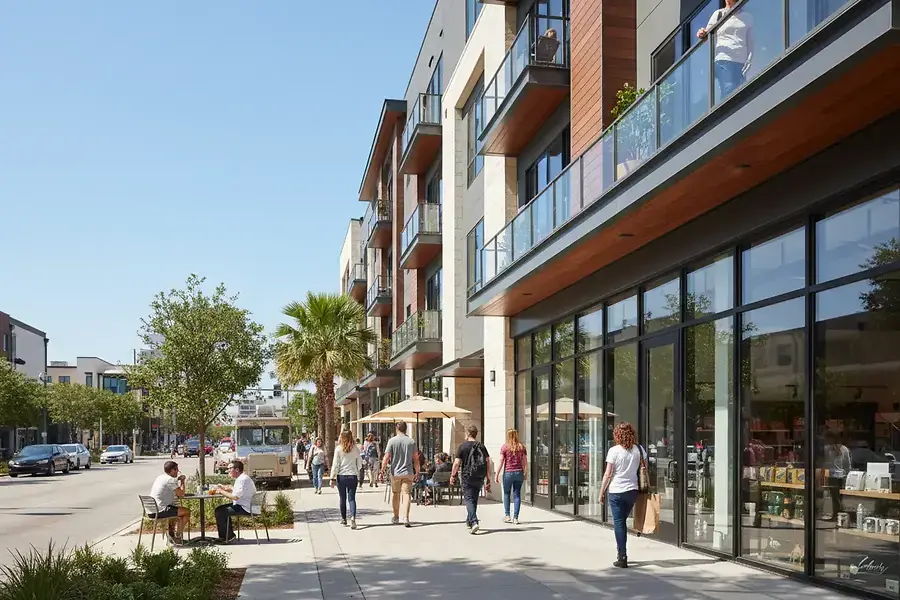
Understanding Mixed-Use Properties: Benefits for Investors and End Users
Mixed-use properties represent a dynamic evolution in real estate investment, combining residential, commercial, and sometimes retail spaces within a single development. These properties have become increasingly attractive to investors seeking diversified income streams and reduced risk exposure.
For investors, the advantages are compelling:
- Multiple revenue streams from residential rentals, commercial leases, and retail operations
- Reduced vacancy risk through diversified tenant bases
- Enhanced property values driven by walkability and convenience
- Tax benefits and depreciation advantages across multiple property classes
- Greater resilience during economic downturns
End users benefit equally from mixed-use developments. Residents enjoy the convenience of ground-floor amenities, reduced commute times, and vibrant community spaces. Businesses gain access to foot traffic from residential populations, while retailers benefit from the synergy of having both customers and employees nearby.
The Austin market has embraced this trend enthusiastically, with developers recognizing that modern consumers increasingly prefer walkable, integrated communities over traditional single-use developments.
Top Mixed-Use Markets in the Austin Region: Leander, Cedar Park, Round Rock, and Georgetown
Leander
Leander has emerged as a premier mixed-use destination, with developments like Old Settlers Park and emerging downtown revitalization projects. The city's strategic location north of Austin, combined with strong population growth, makes it ideal for investors seeking appreciation potential. Commercial spaces here command solid lease rates while residential units maintain strong occupancy.
Cedar Park
Cedar Park's mixed-use landscape centers around the downtown corridor and areas near major employers. The city's business-friendly environment and growing tech sector create robust demand for both office and residential spaces. Properties here typically see higher commercial lease rates due to proximity to major employment centers.
Round Rock
As home to major tech companies and corporate headquarters, Round Rock offers exceptional opportunities for mixed-use investments. The downtown area has undergone significant revitalization, with new mixed-use developments attracting both corporate tenants and young professionals. This market demonstrates strong fundamentals with consistent appreciation and low vacancy rates.
Georgetown
Georgetown's historic downtown combined with modern development creates a unique mixed-use environment. The city's charm attracts both tourists and residents, supporting retail and hospitality components of mixed-use properties. Strong community engagement and local support for development make Georgetown an attractive market for long-term investors.
How to Evaluate Residential-Commercial Properties for Maximum ROI
Analyze the Income Potential
Begin by projecting realistic income from all property components. Research comparable commercial lease rates in the area, residential rental rates, and retail performance metrics. Conservative estimates are crucial—use historical data and speak with local property managers to understand actual market conditions rather than relying on developer projections.
Assess Location and Demographics
Location determines success in mixed-use properties. Evaluate foot traffic patterns, proximity to employment centers, public transportation access, and demographic trends. Properties in walkable areas with strong population growth typically command premium prices and maintain higher occupancy rates.
Evaluate Operating Expenses
Mixed-use properties require careful expense analysis. Consider property management complexity, maintenance costs for multiple property types, insurance requirements, and utilities. Properties with shared amenities and common areas may have higher operating costs than single-use buildings.
Review Market Fundamentals
Examine local market trends for both residential and commercial sectors. A strong residential market with weak commercial fundamentals—or vice versa—can create imbalanced returns. The best mixed-use investments exist in markets where both components show healthy demand and growth potential.
Calculate Cap Rates and Cash Flow
Use the cap rate formula to compare mixed-use properties with other investments. Calculate net operating income by subtracting all expenses from gross income, then divide by the property price. Compare results across multiple properties and markets to identify the strongest opportunities.
Getting Started: Finding and Financing Your Mixed-Use Investment
Finding the Right Property
Work with commercial real estate brokers who specialize in mixed-use properties in the Austin region. These professionals understand local market nuances and have access to off-market deals. Attend local real estate investment meetings and network with developers to learn about upcoming projects before they hit the market.
Financing Strategies
Financing mixed-use properties differs from traditional residential mortgages. Most lenders require:
- Larger down payments (typically 20-30%)
- Detailed financial projections for all property components
- Proof of experience with commercial properties
- Strong credit scores and financial reserves
Consider working with commercial lenders, portfolio lenders, or SBA-backed loans designed for mixed-use properties. Some investors use a combination of residential and commercial financing to optimize rates and terms.
Due Diligence and Next Steps
Conduct thorough inspections covering both residential and commercial systems. Review all existing leases, tenant quality, and lease expiration dates. Hire an accountant familiar with mixed-use properties to review financial statements and tax implications.
The most successful mixed-use investors treat these properties as active management opportunities rather than passive investments. Your involvement in tenant relations, lease negotiations, and property improvements directly impacts returns.
Mixed-use properties in Greater Austin represent a compelling investment opportunity for those willing to understand the complexities and manage the properties actively. With strong market fundamentals, growing population, and increasing demand for walkable communities, the Austin region offers exceptional potential for mixed-use real estate success.


