Navigating Commercial Real Estate Zoning Laws in Central Florida
Understand local zoning regulations and how they impact your commercial property investment decisions across Lakeland, Orlando, and the Space Coast.

Why Zoning Matters for Commercial Real Estate Success
When investing in commercial real estate across Central Florida, zoning regulations are far more than bureaucratic red tape—they are the foundation upon which successful investments are built. Whether you're eyeing a prime location in downtown Orlando, a developing corridor in Lakeland, or a tech hub near the Space Coast, understanding local zoning laws is essential to maximizing your property's potential and protecting your investment.
Zoning laws determine what types of businesses can operate in specific areas, how buildings can be developed, and what restrictions apply to property use. A property that appears perfect on the surface may face significant limitations due to zoning classifications, potentially costing you thousands in lost opportunities or expensive variances. Conversely, understanding zoning can reveal hidden opportunities that other investors overlook.
Understanding Central Florida's Diverse Zoning Classifications and Requirements
Commercial Zoning Categories
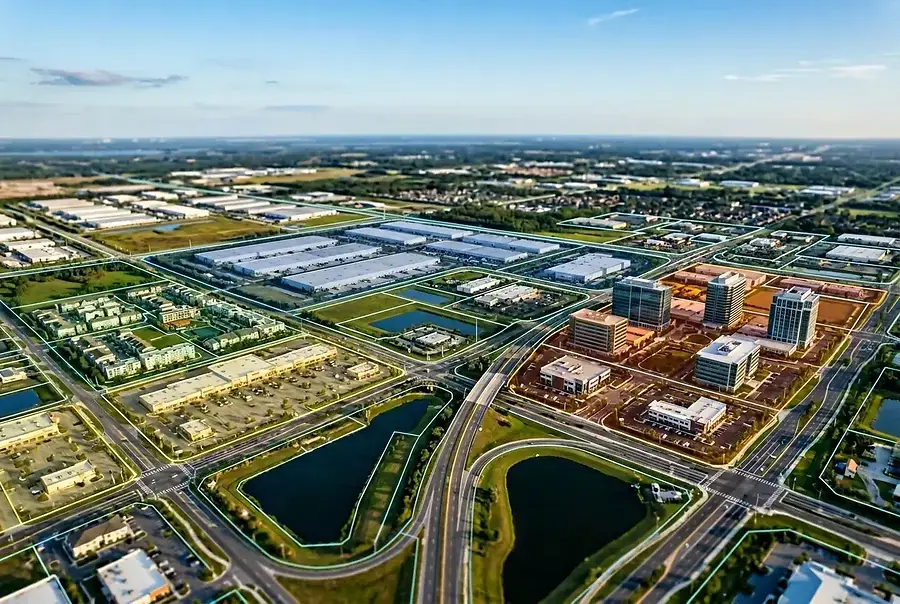
Central Florida's zoning landscape is remarkably diverse, reflecting the region's varied economic development. The primary commercial zoning classifications include:
- General Commercial (C-1, C-2, C-3): These zones permit retail stores, restaurants, offices, and service businesses. C-1 typically allows smaller-scale operations, while C-2 and C-3 accommodate larger commercial developments and mixed-use projects.
- Office and Professional (O-1, O-2): Designated for medical offices, law firms, corporate headquarters, and professional services. These zones maintain stricter standards for appearance and traffic management.
- Industrial (I-1, I-2, I-3): Reserved for manufacturing, warehousing, and distribution centers. The Space Coast region, in particular, has extensive industrial zoning to support aerospace and technology manufacturing.
- Mixed-Use Development (MUD): Increasingly popular in Orlando and surrounding areas, these zones blend residential, commercial, and office spaces in single developments.
Zoning Requirements and Setbacks
Beyond classification, each zone comes with specific requirements that directly impact your development plans. Setback requirements dictate how far buildings must be positioned from property lines and roads. Height restrictions vary significantly—downtown Orlando allows taller structures than suburban Lakeland areas. Parking requirements can dramatically affect your project's feasibility and cost, with commercial zones typically requiring one space per 250-400 square feet of building space.
Additionally, floor area ratios (FAR) limit the total building square footage relative to lot size. A property with a 2.0 FAR can have twice the building area as the land itself—common in urban Orlando—while suburban zones may restrict FAR to 0.5 or less.
Variance and Conditional Use Permits
If your intended use doesn't align perfectly with zoning classifications, you're not necessarily out of luck. Variances allow property owners to deviate from standard zoning requirements, though they require demonstrating hardship and proving the variance won't negatively impact the neighborhood. Conditional use permits allow certain uses within a zone under specific conditions. Both processes require navigating local planning departments and often involve public hearings—a time-consuming and expensive undertaking that should be factored into your investment timeline.
How Zoning Regulations Affect Property Value and Development Potential
Impact on Property Valuation
Zoning directly influences property values in multiple ways. A property zoned for high-density commercial use in a growing Orlando corridor commands premium prices compared to identical land zoned for low-density retail. Conversely, restrictive zoning can significantly limit a property's value and marketability.
Highest and best use is a critical appraisal concept—the most profitable legal use of a property given its zoning. Understanding this principle helps investors identify undervalued properties where zoning changes or variances could unlock substantial value. For example, a Lakeland property currently zoned industrial but positioned near residential expansion might be a candidate for rezoning to mixed-use development.
Development Potential and Timeline Considerations
Zoning regulations directly affect your development timeline and costs. Properties in well-established commercial zones with clear regulations can move from purchase to development quickly. However, properties requiring variances or conditional use permits may face 6-12 month delays and legal expenses of $5,000-$25,000 or more.
The Space Coast region, for instance, has streamlined zoning for aerospace and technology facilities, making it attractive for industrial investors. Orlando's downtown core offers flexibility through mixed-use zoning, while Lakeland's suburban areas maintain stricter single-use zoning that may require more extensive variance applications.
Future Growth and Zoning Changes
Smart investors monitor comprehensive plans and zoning amendments in their target markets. Comprehensive plans outline municipalities' long-term development visions and often signal future zoning changes. Areas designated for growth in these plans typically see zoning liberalization, increasing property values. Conversely, areas slated for preservation may face increasingly restrictive zoning.
Orlando's continued expansion, Lakeland's revitalization efforts, and the Space Coast's aerospace industry growth all influence zoning trends. Staying informed about these trajectories can reveal investment opportunities before zoning changes drive up prices.
Making Informed Commercial Real Estate Decisions with Zoning Knowledge
Successfully navigating Central Florida's zoning landscape requires a systematic approach. First, verify current zoning by consulting your municipality's zoning maps and ordinances—available online for Lakeland, Orlando, Orange County, Brevard County, and other Space Coast jurisdictions. Second, understand your intended use's compatibility with the zoning classification. Third, identify any variances or permits required and budget accordingly for both time and legal expenses.
Fourth, consult with local professionals—real estate attorneys, planning consultants, and experienced commercial brokers familiar with Central Florida's specific regulations. These experts can identify zoning opportunities and pitfalls that aren't immediately obvious.
Finally, consider zoning in your exit strategy. A property's zoning affects not just your use but future buyers' options. Properties with flexible, growth-oriented zoning are easier to sell and typically appreciate faster than those with restrictive zoning.
Zoning knowledge transforms from a compliance checkbox into a competitive advantage. Whether you're developing a retail center in Orlando, an industrial facility on the Space Coast, or a mixed-use project in Lakeland, understanding local zoning regulations empowers you to make confident, profitable investment decisions. Take time to master these rules—your bottom line will thank you.


