Navigating HOA Rules: Albuquerque Residential Community Guidelines
Master the essential HOA requirements and community standards that impact your Albuquerque home purchase and ownership experience.

Understanding HOA Importance in Albuquerque Communities
Homeowners Associations (HOAs) play a vital role in maintaining property values and community standards throughout Albuquerque's residential neighborhoods. Whether you're a first-time homebuyer or an experienced property owner, understanding HOA rules is essential for a smooth ownership experience. These organizations establish guidelines that protect neighborhood aesthetics, ensure property maintenance, and foster a sense of community among residents.
Albuquerque's diverse neighborhoods each have unique HOA structures and requirements. Some communities are strictly regulated with comprehensive architectural guidelines, while others maintain a more relaxed approach. Before purchasing a home in an HOA community, it's crucial to review the governing documents, including the Covenants, Conditions, and Restrictions (CC&Rs), bylaws, and rules and regulations. These documents outline what you can and cannot do with your property and what financial commitments you'll need to make.
Understanding your HOA's mission and governance structure helps you become an engaged community member. Most HOAs are governed by a board of directors elected by homeowners, and they meet regularly to address community concerns and make decisions that affect all residents.
Common HOA Regulations and Architectural Standards in Albuquerque
Exterior Appearance and Landscaping
One of the most common HOA regulations in Albuquerque involves maintaining your home's exterior appearance. Most communities require homeowners to keep their lawns well-maintained, with grass trimmed and landscaping neat. Many HOAs have specific guidelines about:
- Lawn maintenance: Regular mowing and watering requirements
- Landscaping: Approved plant species and color schemes
- Xeriscaping: Water-conscious landscaping options popular in the Southwest
- Tree trimming: Guidelines for maintaining trees and removing dead branches
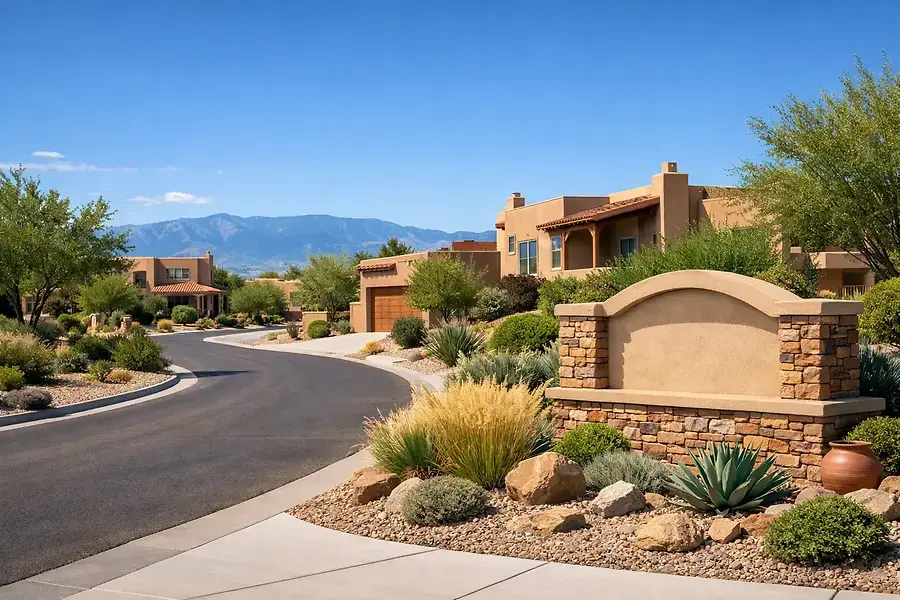
Given Albuquerque's desert climate, many HOAs encourage or require xeriscaping—using drought-resistant plants and mulch instead of traditional grass. This approach conserves water while maintaining aesthetic appeal.
Paint Colors and Home Modifications
HOAs typically maintain strict guidelines about exterior paint colors to ensure neighborhood cohesion. Before painting your home, you'll likely need to submit a request to your HOA for approval. Albuquerque communities often favor earth tones and Southwestern colors that complement the region's natural landscape.
Any structural modifications, additions, or renovations usually require HOA approval. This includes:
- Adding decks, patios, or pools
- Installing solar panels or satellite dishes
- Replacing roofing materials
- Adding fencing or gates
- Installing outdoor lighting or signage
Vehicle and Parking Regulations
Most Albuquerque HOAs have rules governing vehicle parking and storage. Common regulations include restrictions on commercial vehicles, RVs, boats, and trailers. Some communities limit the number of vehicles per household or require that vehicles be parked in garages or designated areas. These rules help maintain the neighborhood's appearance and prevent congestion.
Pet Policies
Pet regulations vary widely among Albuquerque HOAs. Some communities allow unlimited pets, while others restrict the number, size, or breed of animals. Most HOAs require that pets be kept indoors or on leashes and that owners clean up after their animals promptly.
Financial Obligations: Fees, Assessments, and Budget Planning
Monthly HOA Fees
HOA fees are regular monthly or annual payments that fund community operations and maintenance. In Albuquerque, these fees vary significantly depending on the community's amenities and services. Typical fees range from modest amounts for basic maintenance communities to higher amounts for communities with extensive amenities like pools, fitness centers, or gated security.
Before purchasing a home, carefully review the HOA's budget and fee structure. Ask about:
- Current monthly or annual fees
- Fee increase history and projections
- What services and amenities are included
- Reserve fund status and adequacy
Special Assessments
Beyond regular fees, HOAs may levy special assessments for unexpected expenses or major projects. These might include roof repairs, parking lot resurfacing, or infrastructure upgrades. Special assessments can be substantial, so understanding your community's reserve fund status is important. A well-funded reserve means fewer surprise assessments for homeowners.
Budget Planning and Financial Health
A healthy HOA maintains adequate reserves—typically 20-30% of the annual budget—to cover unexpected expenses and major repairs. Review the HOA's financial statements and reserve study before purchasing. If reserves are inadequate, future special assessments are likely.
Ask the HOA for:
- Annual financial statements and audit reports
- Reserve study reports
- Detailed budget information
- Information about pending projects or repairs
Delinquent Fees and Liens
Failing to pay HOA fees can result in serious consequences. HOAs have the legal right to place liens on properties with unpaid fees, which can affect your ability to sell or refinance your home. Always budget for HOA fees as part of your monthly housing costs.
Making Informed Decisions About HOA Communities
Choosing to purchase a home in an HOA community is a significant decision that requires careful consideration. Take time to thoroughly review all HOA documents before making your purchase. Request the HOA's Resale Disclosure Package, which includes essential information about the community's rules, finances, and governance.
Consider these key questions:
- Are the HOA rules compatible with your lifestyle and preferences?
- Is the HOA financially stable with adequate reserves?
- What is the history of fee increases?
- How responsive is the HOA board to resident concerns?
- Are there any pending special assessments or major projects?
- What is the enforcement policy for rule violations?
Attending HOA meetings and speaking with current residents can provide valuable insights into community dynamics and satisfaction levels. Don't hesitate to ask questions—understanding your HOA before purchasing ensures you're making an informed decision that aligns with your needs and expectations.
Albuquerque's HOA communities offer many benefits, including maintained properties, community amenities, and neighborhood stability. By understanding the rules, financial obligations, and governance structure, you can confidently navigate HOA living and enjoy the benefits of community ownership.


