Navigating Phoenix's Cooling System Requirements for Home Sales
Essential HVAC considerations every Phoenix homeowner should understand before listing their property.

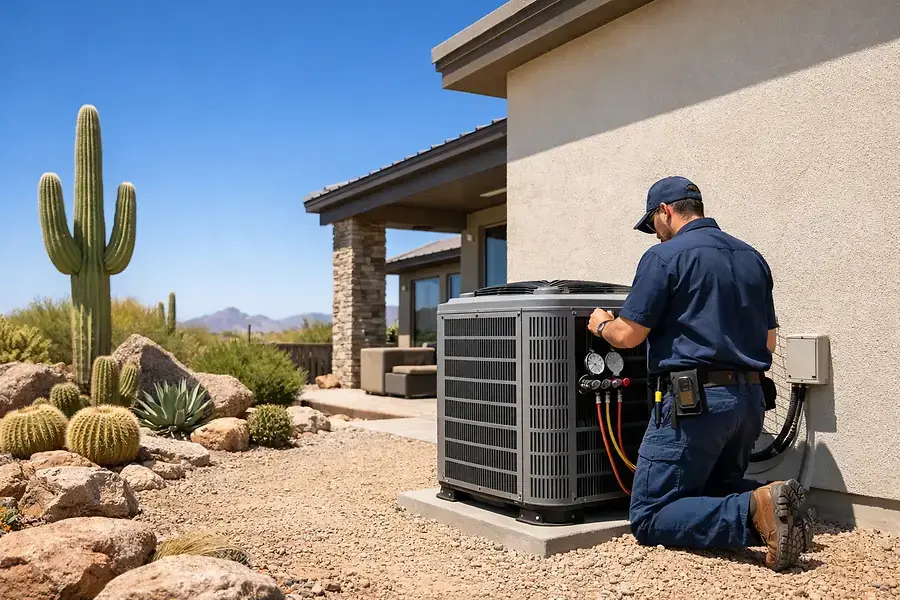
Why Phoenix's Climate Makes HVAC a Key Selling Feature
In Phoenix, the air conditioning system isn't just a luxury—it's an absolute necessity. With scorching summers where temperatures regularly exceed 110°F, a functional and efficient cooling system is one of the most critical features potential buyers evaluate. Unlike homes in moderate climates where HVAC systems are secondary considerations, Phoenix properties live or die based on their cooling capabilities.
When you're preparing to sell your Phoenix home, understanding how crucial your HVAC system is to buyers can make the difference between a quick sale at asking price and a property that lingers on the market. Buyers in Phoenix are acutely aware that a failing air conditioning system could cost them $5,000 to $15,000 in replacement costs, making them extremely cautious during the inspection process.
The reality is simple: a well-maintained cooling system can be a major selling point, while a problematic one can be a deal-breaker. This is why taking proactive steps to ensure your HVAC system is in top condition before listing is essential.
Understanding Phoenix's Cooling System Standards and Buyer Expectations
What Buyers Are Looking For
Modern Phoenix homebuyers expect several key features from an HVAC system:
- Age and Condition: Most buyers prefer systems that are less than 15 years old. Systems older than 20 years are often viewed as imminent replacement candidates.
- Proper Sizing: The cooling system must be appropriately sized for the home. An undersized unit will struggle during peak summer months, while an oversized unit wastes energy.
- Energy Efficiency: Buyers increasingly seek systems with high SEER (Seasonal Energy Efficiency Ratio) ratings, typically 14 SEER or higher, to minimize utility costs.
- Regular Maintenance Records: Documentation showing consistent professional maintenance demonstrates responsible ownership and system reliability.
- Smart Thermostat Compatibility: Modern buyers appreciate systems that work with programmable or smart thermostats for enhanced control and efficiency.
Arizona's Specific Requirements
Arizona doesn't have state-mandated HVAC standards for residential sales, but local municipalities may have specific codes. Phoenix itself requires that cooling systems meet current building codes and function properly during inspections. Additionally, many lenders and appraisers have their own standards—they won't approve financing for homes with non-functional or severely deteriorated cooling systems.
Pro tip: Even though Arizona doesn't mandate specific SEER ratings for existing homes, upgrading to a higher-efficiency system can significantly increase your home's appeal and resale value.
Preparing Your HVAC System for Home Inspection and Appraisal
Pre-Sale HVAC Inspection and Maintenance
Before listing your home, schedule a professional HVAC inspection. A qualified technician will evaluate:
- Refrigerant levels and system pressure
- Compressor and condenser unit functionality
- Ductwork integrity and insulation
- Thermostat accuracy and responsiveness
- Filter condition and airflow
- Electrical connections and safety switches
Address any issues identified during this inspection before putting your home on the market. Small repairs now can prevent major negotiations later.
Essential Maintenance Tasks
Clean or replace air filters: This is the simplest yet most important maintenance task. Dirty filters reduce efficiency and can signal neglect to inspectors.
Clean the outdoor condenser unit: Remove debris, leaves, and dirt from around the outdoor unit. A clean condenser operates more efficiently and looks better to potential buyers.
Seal ductwork leaks: Leaky ducts reduce cooling efficiency and increase energy costs. Professional duct sealing can improve system performance by 15-20%.
Ensure proper clearance: Make sure there's adequate space around the outdoor unit (at least 2-3 feet) for proper airflow and maintenance access.
Documentation and Disclosure
Compile all maintenance records, service receipts, and warranty information. This documentation proves you've maintained the system responsibly. If your system is relatively new or recently upgraded, highlight this prominently in your listing materials.
Be transparent about any known issues. Arizona requires sellers to disclose material defects, including HVAC problems. Honesty about system age and condition builds buyer confidence and prevents post-sale disputes.
When to Repair vs. Replace
A general rule: if your system is over 15 years old and requires significant repairs, replacement may be more cost-effective than repair. However, if your system is newer and the repair is minor, fixing it is usually the better choice.
Consider the system's age, repair costs, and efficiency rating. If repair costs exceed 50% of replacement costs, replacement is typically the smarter investment. This is especially true in Phoenix, where air conditioning is non-negotiable.
Position Your Phoenix Home as Move-In Ready
A well-maintained HVAC system is one of the most important factors in positioning your Phoenix home as move-in ready. Buyers want confidence that they can immediately enjoy their new home without worrying about costly repairs or uncomfortable summers.
By proactively addressing your cooling system before listing, you're not just fixing a mechanical system—you're removing a major source of buyer anxiety. This translates to faster sales, fewer negotiations, and potentially higher offers.
Final recommendations:
- Get a professional HVAC inspection at least 2-3 months before listing
- Complete all necessary repairs and maintenance before showing
- Keep all documentation organized and readily available
- Highlight system upgrades or recent maintenance in your listing
- Consider a home warranty that includes HVAC coverage to provide additional buyer peace of mind
In Phoenix's competitive real estate market, your HVAC system isn't just a feature—it's a fundamental requirement. Taking the time to ensure it's in excellent condition before selling your home will pay dividends in buyer confidence, negotiating power, and ultimately, your bottom line.


