Navigating Portland's Zoning Laws for Mixed-Use Investment Properties
A practical guide to understanding residential-commercial zoning regulations and maximizing your property's investment potential.

Understanding Portland's Zoning Districts and Mixed-Use Categories
Portland's zoning system is designed to balance urban development with community character. The city employs a comprehensive zoning code that categorizes properties into distinct districts, each with specific allowances for residential and commercial uses. Understanding these categories is the first step toward maximizing your investment property's potential.
Portland's primary zoning districts include:
- Residential Zones (R1, R2, R3, R5, R7): These zones prioritize housing, with varying densities. R1 is the lowest density, while R7 allows for higher-density residential development.
- Commercial Zones (C1, C2, C3): These zones support retail, office, and service businesses, with C1 being the most restrictive and C3 the most permissive.
- Mixed-Use Zones (EX, CM, CX): These zones explicitly allow both residential and commercial uses, making them ideal for investors seeking diversified income streams.
- Employment Zones (EG, IG, IH): Designed for industrial and employment-focused development with limited residential components.
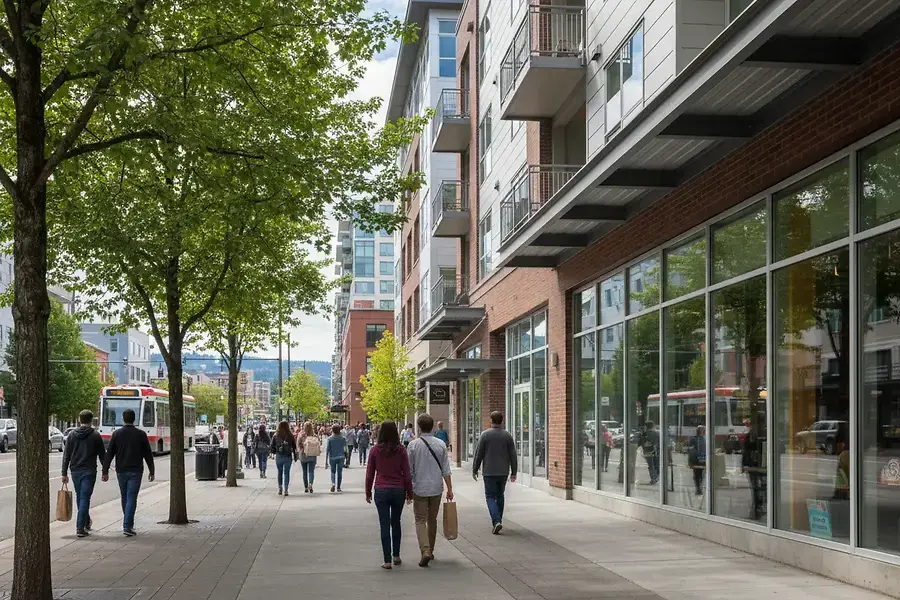
Mixed-use zoning is particularly valuable for investors because it allows properties to generate revenue from multiple sources simultaneously. A property in an EX (Employment/Residential) zone, for example, might support ground-floor retail with residential units above—a proven model for maximizing property value and tenant diversity.
Key Regulations Affecting Residential-Commercial Properties
Building Height and Setback Requirements
Portland's zoning code specifies maximum building heights and required setbacks from property lines. These regulations vary significantly by zone. Mixed-use zones typically allow greater heights than purely residential areas, but understanding these limitations is crucial for development planning. A property zoned for 85 feet of height offers substantially different development potential than one limited to 45 feet.
Parking and Access Standards
One of the most significant cost factors in mixed-use development is parking. Portland has been progressively reducing parking requirements, particularly in transit-rich areas and mixed-use zones. Properties near MAX light rail stations or frequent bus lines may have substantially lower parking requirements, significantly improving project economics. Always verify current parking minimums for your specific zone and location.
Use Restrictions and Conditional Uses
Not all commercial uses are permitted in all zones. Some uses are outright prohibited, while others are allowed as "conditional uses" requiring special approval from the city. For instance, a mixed-use zone might allow restaurants as permitted uses but require conditional use permits for nightclubs. Understanding these distinctions prevents costly mistakes and delays.
Affordable Housing Requirements
Portland's inclusionary housing policies require or incentivize affordable units in new residential development. These regulations vary by zone and project type. While this may initially seem like a constraint, developers often receive density bonuses, tax abatements, or other incentives that can offset costs and improve overall project viability.
How to Identify Properties with Zoning Flexibility
Conduct Thorough Zoning Research
Before purchasing any property, obtain a zoning verification letter from the City of Portland Bureau of Development Services. This document confirms the property's current zoning, permitted uses, and any applicable overlays or restrictions. Never rely solely on listing descriptions or assumptions about zoning.
Look for Properties in Transition Areas
Portland's comprehensive plan identifies areas targeted for growth and intensification. Properties in these areas often have greater flexibility for mixed-use development and may be eligible for expedited permitting. Neighborhoods near transit corridors, town centers, and employment districts typically offer the most opportunity.
Evaluate Overlay Districts
Portland uses overlay districts to apply additional regulations on top of base zoning. Historic districts, river districts, and design districts are common overlays. While overlays can impose additional requirements, they often signal areas with strong investment potential and community support for development.
Assess Lot Configuration
A property's physical characteristics significantly impact its development potential. Corner lots, larger parcels, and properties with good street frontage offer more flexibility for mixed-use development. Properties with irregular shapes or limited frontage may face constraints even in permissive zones.
Working with Local Authorities to Unlock Property Value
Engage Early with City Staff
Portland's Bureau of Development Services offers pre-application conferences where you can discuss your development concept with city planners before investing significant resources. These meetings are invaluable for understanding feasibility, identifying potential obstacles, and learning about available incentives. City staff can often suggest modifications that improve project viability without compromising your vision.
Understand the Land Use Review Process
Depending on your project scope, you may need to pursue a land use compatibility statement, conditional use permit, or variance. Understanding which process applies to your project and the associated timeline and costs is essential for financial planning. Some projects qualify for expedited review, potentially saving months and significant expense.
Leverage Available Incentive Programs
Portland offers several programs to encourage mixed-use development:
- Density Bonuses: Build additional units in exchange for providing affordable housing or other community benefits.
- Tax Abatement: New mixed-use development may qualify for property tax abatement for 10 years.
- Parking Reductions: Shared parking arrangements and transit proximity can reduce required parking.
- Expedited Permitting: Projects meeting certain criteria may receive faster review.
Build Relationships with Planning Professionals
Experienced land use attorneys, architects, and planning consultants understand Portland's regulatory landscape intimately. While their services represent an upfront cost, they often identify opportunities and solutions that more than offset their fees. These professionals can navigate complex negotiations with city staff and help structure projects to maximize incentives.
Engage the Community Early
Community support significantly influences project approval timelines and conditions. Early engagement with neighborhood associations and community groups can identify concerns and build support. Projects that address community priorities often face fewer obstacles and may qualify for additional incentives.
Conclusion: Portland's zoning laws, while complex, offer significant opportunities for savvy investors willing to invest time in understanding the regulations and engaging with local authorities. Mixed-use properties that combine residential and commercial components can generate superior returns while contributing to Portland's vibrant urban neighborhoods. Success requires thorough research, professional guidance, and a collaborative approach with city planners and community stakeholders.


