NYC Transit-Accessible Neighborhoods: Commute Costs vs. Housing Prices
Discover how proximity to subway lines directly impacts your monthly budget across Queens, Brooklyn, and Manhattan.

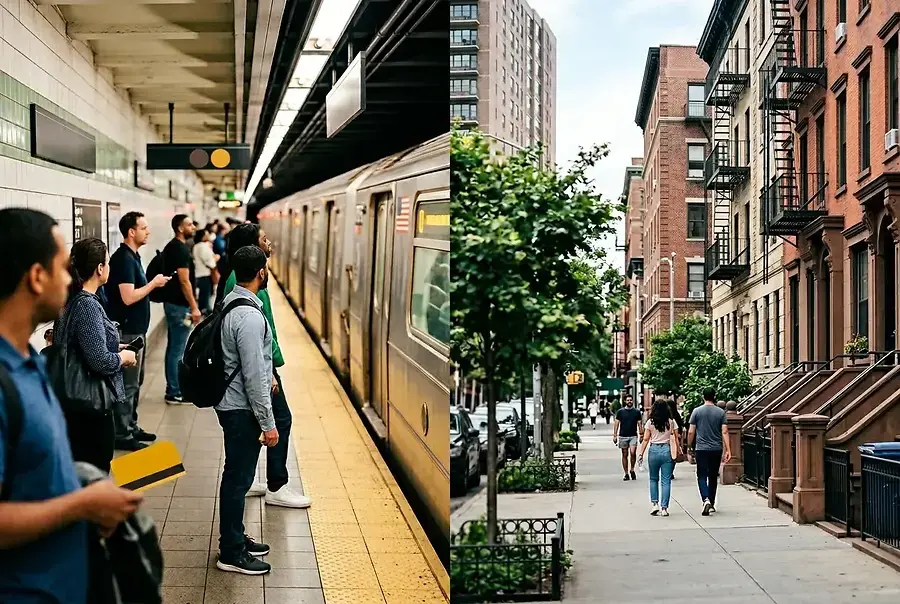
Introduction: Understanding the Transit-Housing Price Relationship
When searching for an apartment in New York City, most renters focus solely on monthly rent prices. However, this approach overlooks a critical factor that significantly impacts your total cost of living: commute expenses. The relationship between transit accessibility and housing prices is more nuanced than it appears. While neighborhoods directly on major subway lines command premium prices, areas just one or two blocks away—or requiring a short bus connection—can offer substantial savings without dramatically increasing your commute time.
Understanding this dynamic is essential for making an informed decision about where to live. Your true housing cost isn't just the rent you pay; it's the combination of rent, transportation costs, and the value of time spent commuting. This article breaks down how proximity to subway lines affects both housing prices and your monthly budget across three of NYC's most popular boroughs.
Analyzing Commute Accessibility Across Your Target Neighborhoods
Manhattan: The Premium Transit Hub
Manhattan neighborhoods with direct subway access command the highest rents in the city. Midtown and Lower Manhattan offer unparalleled transit connectivity, with multiple subway lines intersecting throughout the area. However, this convenience comes at a steep price—average rents in these neighborhoods exceed $3,500 for a one-bedroom apartment.
The trade-off becomes clearer when you examine neighborhoods like Washington Heights or Inwood in Upper Manhattan. These areas still offer excellent subway access via the A, C, and 1 lines, but rents are 30-40% lower than Midtown. Your commute to downtown may take 30-40 minutes instead of 10-15 minutes, but the monthly savings can exceed $800.
Brooklyn: The Emerging Value Proposition
Brooklyn has transformed into a transit-accessible alternative to Manhattan, with neighborhoods like Williamsburg, Park Slope, and Astoria offering excellent subway connections. The L train in Williamsburg provides direct access to Manhattan, making it attractive despite rents averaging $2,800-$3,200 for a one-bedroom.
However, venture slightly further into neighborhoods like Sunset Park or Prospect Heights, and you'll find:
- One-bedroom rents averaging $2,200-$2,500
- Subway access within a 5-10 minute walk
- Commute times to Manhattan of 25-35 minutes
- Monthly savings of $500-$700 compared to prime Brooklyn neighborhoods
Queens: The Hidden Gem for Budget-Conscious Commuters
Queens offers some of NYC's most compelling value propositions for transit-accessible living. Neighborhoods along the 7 line, such as Long Island City and Astoria, provide direct Manhattan access with significantly lower rents than comparable Brooklyn locations.
Forest Hills and Jackson Heights represent even greater value, with:
- One-bedroom rents averaging $1,800-$2,100
- Multiple subway line options (E, F, R, 7)
- Commute times of 30-40 minutes to Midtown
- Monthly savings of $1,000-$1,500 compared to Manhattan
Calculating True Housing Costs: Price Plus Commute Expenses
The Hidden Cost of Commuting
To make an accurate comparison, you must factor in transportation costs. A monthly MetroCard costs approximately $133 for unlimited subway and bus access. However, this is just the baseline. Consider these additional factors:
- Time value: A 45-minute commute versus a 15-minute commute represents 30 minutes daily—2.5 hours weekly
- Stress and fatigue: Longer commutes correlate with increased stress and reduced quality of life
- Occasional ride-sharing: Late nights or bad weather may require Uber/Lyft, adding $15-$30 per trip
- Parking (if applicable): Some outer neighborhoods require car ownership, costing $200-$400 monthly
Sample Budget Comparison
Scenario: Working in Midtown Manhattan
Option 1: Midtown Manhattan Apartment
- Monthly rent: $3,500
- MetroCard: $133
- Commute time: 10 minutes
- Total monthly cost: $3,633
Option 2: Sunset Park, Brooklyn
- Monthly rent: $2,300
- MetroCard: $133
- Commute time: 30 minutes
- Total monthly cost: $2,433
- Monthly savings: $1,200
Option 3: Forest Hills, Queens
- Monthly rent: $1,950
- MetroCard: $133
- Commute time: 35 minutes
- Total monthly cost: $2,083
- Monthly savings: $1,550
The Annual Impact
These differences compound significantly over time. Choosing Forest Hills over Midtown saves you $18,600 annually—enough for a vacation, emergency fund, or additional savings. Even the Sunset Park option provides $14,400 in yearly savings.
Pro Tip: When evaluating neighborhoods, calculate your true cost of living by adding rent + transportation + estimated ride-sharing expenses. This gives you a realistic picture of your monthly budget impact.
Conclusion: Making Your Location Decision Based on Total Cost of Living
The relationship between transit accessibility and housing prices reveals an important truth: the most expensive neighborhood isn't always the best value. By analyzing commute costs alongside rent prices, you can identify neighborhoods that offer excellent transit access at significantly lower prices.
When making your decision, consider:
- Your workplace location and acceptable commute time
- The true cost of living (rent + transportation + lifestyle factors)
- Neighborhood amenities and quality of life beyond transit
- Long-term financial goals and savings priorities
Queens and outer Brooklyn neighborhoods consistently offer the best value for transit-accessible living, with monthly savings of $1,000-$1,500 compared to prime Manhattan locations. While a shorter commute has undeniable benefits, the financial impact of choosing a slightly more distant neighborhood with excellent subway access can be transformative for your overall financial health.
The key is making an informed decision based on your complete financial picture, not just the headline rent price. By doing so, you'll find a neighborhood that balances affordability, accessibility, and quality of life—the true trifecta of NYC living.