Residential-Commercial Properties: Smart Investments Across NYC's Top Boroughs
Discover how hybrid properties in Brooklyn, Flushing, and Staten Island offer diversified income streams and market flexibility.

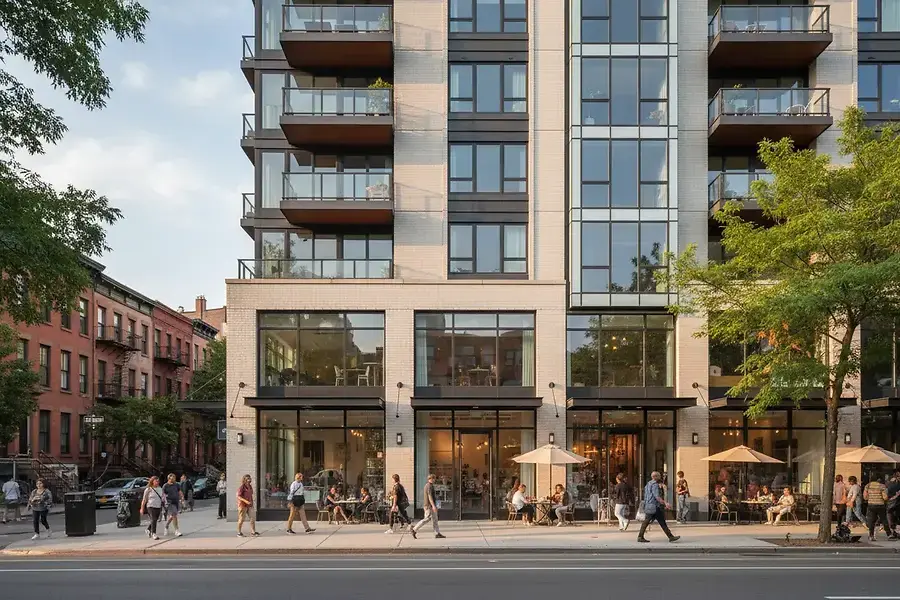
Why Residential-Commercial Properties Offer Unique Financial Advantages
Residential-commercial properties, often called mixed-use or hybrid properties, represent a compelling investment strategy for those seeking to maximize returns while minimizing risk. These dual-purpose properties combine living spaces with commercial units, creating a powerful financial model that traditional single-use properties simply cannot match.
Diversified Income Streams
The primary advantage of residential-commercial properties is the ability to generate multiple revenue sources from a single asset. While a purely residential building relies solely on tenant rent, a hybrid property can earn income from both residential leases and commercial tenants. This diversification means that if one sector experiences a downturn, the other can help stabilize your overall returns.
Key benefits include:
- Residential units provide stable, long-term rental income
- Commercial spaces attract higher-paying tenants with longer lease terms
- Mixed-use properties often command premium valuations in the market
- Reduced vacancy risk through tenant diversity
Market Flexibility and Adaptability
The real estate market is constantly evolving, and hybrid properties offer investors the flexibility to adapt to changing conditions. If commercial demand weakens, you can focus on residential expansion. Conversely, if residential markets soften, commercial tenants may provide more stable cash flow. This adaptability is invaluable in a dynamic market like New York City.
Market Opportunities Across Brooklyn, Flushing, and Staten Island
New York City's outer boroughs have emerged as prime locations for residential-commercial investments, offering better value than Manhattan while maintaining strong growth potential.
Brooklyn: The Thriving Urban Hub
Brooklyn has transformed into a vibrant commercial and residential destination. Neighborhoods like Williamsburg, Park Slope, and DUMBO have attracted young professionals, entrepreneurs, and established businesses. Properties in these areas benefit from:
- Strong demand for both residential and commercial spaces
- Established infrastructure and public transportation access
- Growing startup and creative industry presence
- Consistent appreciation in property values
Investors in Brooklyn can capitalize on the borough's reputation as a cultural and economic powerhouse while enjoying more reasonable acquisition costs than Manhattan properties.
Flushing: The Emerging Economic Center
Flushing in Queens represents one of NYC's most dynamic emerging markets. With a diverse population, robust commercial activity, and significant infrastructure investments, Flushing offers exceptional opportunities for hybrid property investors.
Why Flushing stands out:
- High population density supporting both residential and commercial demand
- Major transit hub with multiple subway lines
- Thriving Asian business community and cultural attractions
- Lower entry prices compared to Brooklyn and Manhattan
- Strong rental demand from both residential and commercial tenants
The area's economic diversity and growing international business presence make it an ideal location for investors seeking long-term appreciation potential.
Staten Island: The Undervalued Opportunity
Staten Island remains one of NYC's most undervalued boroughs, presenting significant upside potential for forward-thinking investors. While traditionally overlooked, the borough offers:
- Significantly lower property acquisition costs
- Growing residential demand from those seeking more space
- Emerging commercial corridors along major thoroughfares
- Improved transportation connections to other boroughs
- Strong community development initiatives
Early investors in Staten Island hybrid properties may benefit substantially as the borough continues its economic development trajectory.
Financing and Legal Considerations for Dual-Use Properties
Securing Financing for Mixed-Use Properties
Financing hybrid properties requires a different approach than traditional residential or commercial mortgages. Lenders evaluate these properties based on their combined income potential, which can actually work in your favor.
Financing advantages:
- Lenders view diversified income as lower risk
- Commercial income can strengthen your debt service coverage ratio
- Hybrid properties often qualify for favorable loan terms
- Multiple income streams improve refinancing opportunities
Work with lenders experienced in mixed-use properties to ensure you receive appropriate valuation and favorable terms.
Legal and Zoning Considerations
Before investing in any residential-commercial property, thorough due diligence on zoning and legal requirements is essential. NYC's zoning regulations are complex, and violations can result in costly fines or forced modifications.
Critical legal steps:
- Verify the property's zoning classification permits mixed-use development
- Review all existing leases and tenant agreements
- Confirm compliance with building codes and safety regulations
- Investigate any pending zoning changes or community board restrictions
- Consult with a real estate attorney specializing in commercial properties
Proper legal groundwork protects your investment and ensures smooth operations.
Tax Implications and Depreciation Benefits
Hybrid properties offer significant tax advantages through depreciation deductions on both residential and commercial components. The commercial portion may qualify for accelerated depreciation schedules, providing substantial tax benefits that enhance your overall return on investment.
Conclusion: Building a Resilient Real Estate Portfolio
Residential-commercial properties represent a sophisticated investment strategy that combines the stability of residential income with the higher returns potential of commercial leasing. By strategically investing in hybrid properties across Brooklyn, Flushing, and Staten Island, investors can build a resilient portfolio that weathers market fluctuations while capturing growth opportunities.
The key to success lies in thorough market research, proper financing arrangements, and meticulous legal compliance. Those who understand the unique advantages of mixed-use properties and carefully select locations with strong fundamentals will position themselves to benefit from NYC's continued economic evolution.
The future of real estate investing in New York City belongs to those who recognize that diversification and adaptability are not just advantages—they are necessities in an ever-changing market.
Whether you're a seasoned investor or exploring real estate for the first time, residential-commercial properties in NYC's outer boroughs offer a compelling path to building long-term wealth and financial security.