Residential vs. Commercial Real Estate in Southeast Texas: Which Market Suits Your Investment Goals
Explore the distinct opportunities, challenges, and returns across Conroe, Montgomery, Willis, Crockett, Spring, and Cleveland to make an informed investment decision.

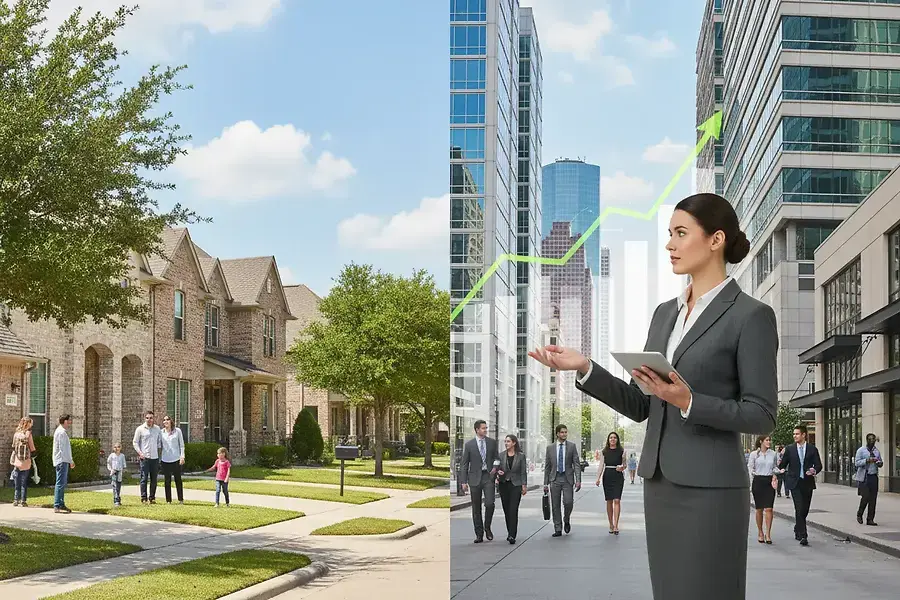
Understanding the Market Differences: Residential vs. Commercial Properties in Southeast Texas
Southeast Texas presents a dynamic real estate landscape with distinct opportunities for investors in both residential and commercial sectors. The region, encompassing areas like Conroe, Montgomery, Willis, Crockett, Spring, and Cleveland, has experienced significant growth and development, making it an attractive market for diverse investment strategies.
Residential Real Estate Characteristics
Residential properties in Southeast Texas include single-family homes, multi-family apartments, townhouses, and condominiums. These properties typically appeal to owner-occupants and long-term investors seeking stable rental income. The residential market in this region has shown consistent demand due to population growth and the area's proximity to Houston's employment centers.
- Lower entry barriers: Residential properties generally require less capital upfront compared to commercial investments
- Easier financing: Conventional mortgages and FHA loans are readily available for residential purchases
- Broader tenant pool: More potential renters means easier property occupancy
- Simpler management: Residential properties typically require less complex maintenance and operations
Commercial Real Estate Characteristics
Commercial properties encompass office buildings, retail spaces, industrial warehouses, and mixed-use developments. These investments typically involve larger capital requirements but can offer higher returns and longer lease terms with established businesses.
- Higher income potential: Commercial leases often generate more revenue per square foot
- Longer lease terms: Tenants typically commit to multi-year agreements, providing income stability
- Professional tenants: Established businesses often maintain properties better and pay reliably
- Greater complexity: Commercial properties require more sophisticated management and market analysis
Investment Returns and Growth Potential: Comparing Residential, Commercial, and Mixed-Use Properties
Residential Investment Returns
Residential properties in Southeast Texas typically offer cap rates ranging from 5% to 8%, depending on location and property condition. Conroe and Spring have emerged as particularly attractive markets for residential investors due to their growing populations and strong rental demand. Returns come primarily from monthly rental income, with appreciation providing additional long-term wealth building.
The residential market in Southeast Texas benefits from steady population growth and strong employment opportunities, making it a reliable choice for conservative investors seeking consistent cash flow.
Commercial Investment Returns
Commercial properties typically offer higher cap rates, ranging from 6% to 10%, with some premium locations exceeding these benchmarks. Willis and Crockett have seen increased commercial development, particularly in retail and industrial sectors. Commercial investors benefit from longer lease terms, which can provide 5 to 10 years of predictable income with built-in rent escalations.
Mixed-Use Development Opportunities
Mixed-use properties combining residential, retail, and office spaces are gaining traction in Southeast Texas. Montgomery and Spring are leading this trend, offering investors exposure to multiple revenue streams. While these properties require more sophisticated management, they can deliver superior returns by diversifying income sources and maximizing land utilization.
- Residential units provide stable base income
- Retail spaces capture foot traffic and consumer spending
- Office components attract professional tenants
- Combined properties often appreciate faster than single-use developments
Financing Options and Considerations for Each Property Type in Your Local Market
Residential Financing
Residential investors in Southeast Texas have access to numerous financing options. Conventional mortgages typically offer favorable terms with down payments as low as 15-20%. FHA loans can require as little as 3.5% down, making them attractive for first-time investors. Portfolio loans from local banks provide flexibility for investors with multiple properties.
Interest rates for residential mortgages are generally lower than commercial rates, reflecting the lower risk profile. Most lenders offer 15, 20, or 30-year terms, allowing investors to match loan duration with their investment timeline.
Commercial Financing
Commercial real estate financing is more complex and typically requires:
- Larger down payments: Usually 20-30% of the purchase price
- Higher interest rates: Reflecting increased risk and complexity
- Shorter loan terms: Typically 5 to 10 years with balloon payments
- Stricter underwriting: Lenders require detailed financial analysis and business plans
- SBA loans: For small business owners purchasing commercial properties
Local Lending Landscape
Southeast Texas benefits from a robust lending community with banks and credit unions specializing in real estate financing. Local lenders often have deeper knowledge of market conditions in Conroe, Montgomery, Willis, Crockett, Spring, and Cleveland, potentially offering more favorable terms for investors familiar with the area.
Choosing the Right Investment Strategy Based on Your Goals and Risk Tolerance
For Conservative Investors
Conservative investors prioritizing steady income and lower risk should consider residential properties in established neighborhoods. Single-family homes and small multi-family units in Spring and Conroe offer reliable rental income with manageable vacancy rates. These properties require less active management and provide predictable returns with lower volatility.
For Growth-Oriented Investors
Investors seeking capital appreciation and higher returns should explore commercial opportunities in developing areas. Willis and Crockett present emerging commercial markets with significant growth potential. Industrial warehouses and retail spaces in these areas can deliver substantial returns as the regions continue to develop.
For Balanced Investors
Investors seeking both income and growth should consider mixed-use properties or a diversified portfolio combining residential and commercial assets. Montgomery's mixed-use developments offer an excellent middle ground, providing stable residential income while capturing commercial upside potential.
Key Decision Factors
- Capital availability: Residential requires less upfront investment; commercial demands more capital
- Time commitment: Residential is simpler; commercial requires active management
- Risk tolerance: Residential offers stability; commercial offers higher returns with more volatility
- Market knowledge: Local expertise in specific Southeast Texas markets enhances success
- Exit strategy: Consider how easily you can sell or refinance your investment
Final Considerations
The best investment choice depends on your specific financial goals, available capital, time commitment, and risk tolerance. Southeast Texas offers compelling opportunities in both residential and commercial sectors. Take time to analyze each market segment, understand local conditions in your target area, and align your investment strategy with your long-term financial objectives. Whether you choose residential stability or commercial growth potential, the Southeast Texas market provides pathways to building substantial real estate wealth.


