Suburban vs Urban: Choosing Your Ideal Home in Greater Seattle
Discover how to evaluate lifestyle, commute, and investment potential across Seattle's diverse residential communities.

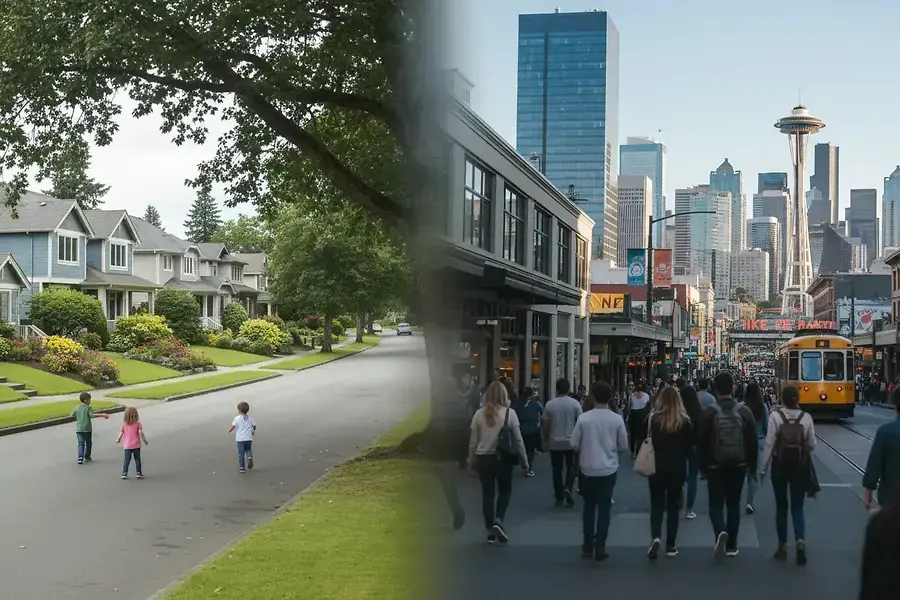
Introduction: Understanding Your Housing Priorities
Choosing where to live is one of the most significant decisions you'll make. In the Greater Seattle area, you're presented with a unique opportunity to select from vibrant urban neighborhoods and peaceful suburban communities, each offering distinct advantages and trade-offs. Before diving into the specifics of each lifestyle, it's essential to understand what matters most to you: career opportunities, family needs, lifestyle preferences, or investment potential.
The Seattle metropolitan area has experienced remarkable growth, transforming the region into a dynamic housing market with options for virtually every lifestyle. Whether you're a young professional seeking urban energy, a growing family looking for space and schools, or an investor analyzing market trends, this guide will help you navigate the decision with clarity and confidence.
Suburban Living: Family-Friendly Communities and Affordability
The Appeal of Suburban Life
Suburban communities in Greater Seattle—including areas like Bellevue, Redmond, Sammamish, and Issaquah—offer spacious homes, excellent schools, and a strong sense of community. These neighborhoods are particularly attractive to families seeking room to grow and established infrastructure designed around residential living.
Key Advantages
- Affordability: While still competitive, suburban homes generally offer more square footage for your investment compared to urban properties.
- Space and Privacy: Larger lots, multi-car garages, and yards provide the space many families desire.
- School Quality: Suburban districts consistently rank among the region's best, making them ideal for families with children.
- Safety and Community: Established neighborhoods often feature lower crime rates and strong community engagement.
- Parking and Convenience: Ample parking and car-friendly infrastructure make daily errands straightforward.
Considerations and Trade-offs
Suburban living requires careful consideration of commute times. Many suburban residents spend 30-60 minutes commuting to downtown Seattle or tech hubs in Bellevue and Redmond. Additionally, suburban life typically demands car ownership and regular maintenance costs. Social opportunities may require more intentional planning, as walkable entertainment and dining options are less abundant than in urban centers.
The suburban lifestyle suits families prioritizing education, space, and community stability over urban convenience.
Urban Living: Walkability, Amenities, and Market Dynamics
The Urban Experience
Seattle's urban neighborhoods—including Capitol Hill, Ballard, Queen Anne, and Downtown—pulse with energy, culture, and opportunity. These areas attract young professionals, artists, and anyone seeking an active, walkable lifestyle with endless entertainment and dining options at their doorstep.
Key Advantages
- Walkability: Most daily needs—groceries, restaurants, entertainment, fitness—are accessible on foot or by bike.
- Public Transportation: Robust transit systems reduce or eliminate the need for car ownership.
- Cultural Amenities: Museums, theaters, live music venues, and galleries create a vibrant cultural scene.
- Diverse Dining and Nightlife: Countless restaurants, bars, and cafes cater to every taste and budget.
- Shorter Commutes: Many urban residents work locally or enjoy significantly shorter commutes to major employment centers.
- Community Diversity: Urban neighborhoods attract people from varied backgrounds, creating dynamic, multicultural communities.
Considerations and Trade-offs
Urban living comes with higher price tags. Condos and townhomes in desirable neighborhoods command premium prices, and square footage is often limited. Noise levels, parking challenges, and less privacy are common trade-offs. Additionally, urban areas may have less green space and fewer family-oriented amenities compared to suburbs.
Urban living prioritizes convenience, culture, and community connection over space and privacy.
Investment Potential
Both suburban and urban properties offer investment opportunities, but with different profiles. Urban properties typically appreciate faster in hot markets and attract renters seeking walkable neighborhoods. Suburban properties may offer steadier, more predictable appreciation with lower volatility. Consider your investment timeline and risk tolerance when evaluating either market.
Conclusion: Making Your Location Decision with Confidence
Evaluating Your Priorities
Your ideal home location depends on your unique priorities. Ask yourself these key questions:
- What is your commute tolerance, and where will you work?
- Do you have children, and how important are schools?
- How much space do you need, and what's your budget?
- Do you prefer walkable neighborhoods or car-dependent communities?
- Are you investing for appreciation or lifestyle?
- How important is community engagement and social life?
Taking the Next Steps
Before making your decision, spend time in neighborhoods you're considering. Visit during different times of day and week to get a genuine feel for the community. Talk to current residents, explore local businesses, and research school ratings, crime statistics, and future development plans.
Work with a knowledgeable real estate agent familiar with the Greater Seattle market. They can provide insights into neighborhood trends, comparable prices, and emerging areas that might align with your needs and budget.
Final Thoughts
There is no universally "best" choice between suburban and urban living in Greater Seattle—only the best choice for you. Both offer compelling advantages and unique lifestyle experiences. By carefully evaluating your priorities, visiting neighborhoods, and considering long-term goals, you'll make a confident decision that aligns with your vision for the future.
Whether you choose the peaceful, spacious comfort of suburban living or the vibrant, walkable energy of urban neighborhoods, Greater Seattle offers exceptional communities ready to welcome you home.


