Understanding Champaign Home Inspections: A Buyer's Essential Guide
Master the critical inspection process to protect your investment and avoid costly surprises when purchasing residential property in Champaign.

Introduction: Why Home Inspections Matter in Champaign's Market
Purchasing a home is one of the most significant financial decisions you'll make in your lifetime. In Champaign's competitive real estate market, a professional home inspection serves as your safeguard against hidden defects and costly repairs. Unlike a simple walkthrough, a comprehensive inspection provides an objective assessment of a property's condition, revealing issues that untrained eyes might miss.
A home inspection is not just a formality—it's a critical investment in your peace of mind. Whether you're a first-time buyer or an experienced homeowner, understanding what inspectors look for and how to interpret their findings can save you thousands of dollars and prevent future headaches. This guide will walk you through every aspect of the inspection process, empowering you to make informed decisions about your Champaign property purchase.
What Professional Inspectors Look For: Key Areas and Common Issues
Structural Components and Foundation
Professional inspectors begin by examining the foundation and structural integrity of the home. They look for signs of settling, cracks, water damage, and structural movement. In Champaign, where soil conditions and weather patterns can affect foundations, this inspection is particularly important. Common issues include:
- Foundation cracks and water seepage
- Uneven floors or sloping ceilings
- Bowing or deteriorating basement walls
- Poor drainage around the foundation
Roofing and Exterior
The roof is your home's first line of defense against the elements. Inspectors evaluate the roof's age, condition, and remaining lifespan. They also examine siding, gutters, downspouts, and exterior walls for damage, deterioration, and proper maintenance. A well-maintained roof can last 20-25 years, but regional weather conditions may affect longevity.
- Missing or damaged shingles
- Flashing issues around chimneys and vents
- Gutter functionality and drainage
- Exterior paint and siding condition
Plumbing Systems
Inspectors test water pressure, check for leaks, and evaluate the overall plumbing system. They examine pipes, fixtures, water heaters, and septic systems if applicable. Plumbing issues can be expensive to repair, making this inspection critical.
- Water pressure and flow rate
- Leaking pipes or fixtures
- Water heater condition and age
- Drain functionality and clogs
- Sump pump operation (if present)
Electrical Systems
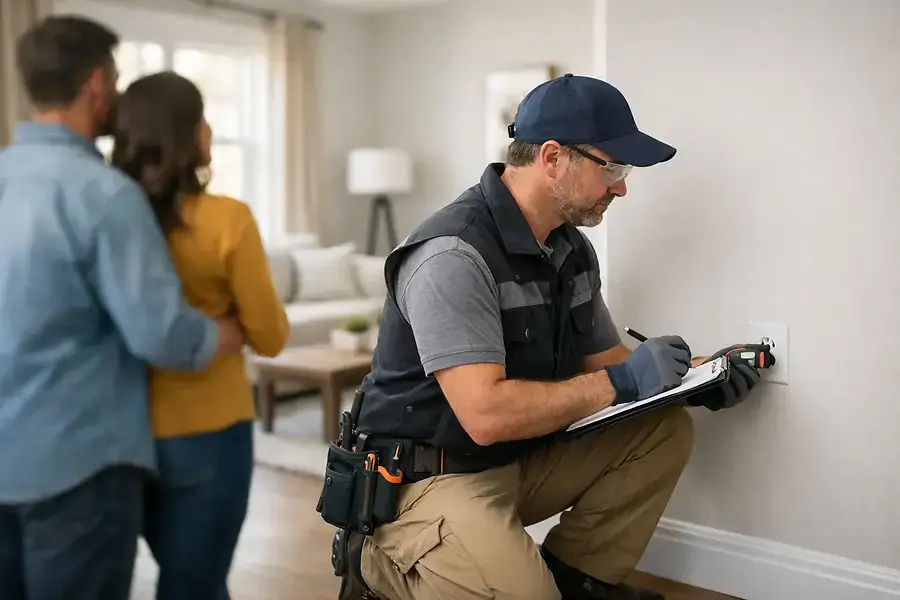
A thorough electrical inspection ensures your home meets current safety standards. Inspectors check the main panel, circuit breakers, outlets, and wiring. They verify that the electrical system can safely handle modern appliance loads and identify any potential fire hazards.
- Panel capacity and condition
- Proper grounding and bonding
- GFCI outlet installation in wet areas
- Outdated or hazardous wiring
HVAC Systems
Heating, ventilation, and air conditioning systems are essential for comfort and indoor air quality. Inspectors evaluate furnaces, air conditioners, ductwork, and thermostats. Regular maintenance can extend HVAC lifespan and improve efficiency.
- Furnace and AC unit age and condition
- Proper ventilation and ductwork
- Carbon monoxide detector presence
- System efficiency and performance
Interior Components
Inspectors examine walls, ceilings, floors, windows, doors, and insulation. They look for water damage, mold, pest infestation, and structural issues. Attics and crawl spaces receive special attention for ventilation, insulation adequacy, and signs of animal intrusion.
How to Prepare for and Respond to Inspection Results
Before the Inspection
Preparation can help ensure a thorough and efficient inspection. Inform the current homeowner that an inspection is scheduled and request access to all areas of the home, including the attic, basement, and crawl spaces. Make sure utilities are on so the inspector can test systems. Clear pathways and remove obstacles that might hinder the inspection process.
During the Inspection
Attend the inspection if possible. This gives you the opportunity to ask questions, learn about the home's systems, and understand any issues firsthand. Take notes and photos of areas of concern. A good inspector will explain their findings and answer your questions thoroughly.
Understanding the Inspection Report
The inspection report typically categorizes findings into three levels: safety concerns, major repairs needed, and minor maintenance items. Safety issues require immediate attention, while major repairs should be factored into your purchase decision. Minor items can often be addressed over time.
"A professional home inspection report is your roadmap to understanding your investment. Use it to negotiate repairs, request credits, or make an informed decision about proceeding with the purchase."
Negotiating Based on Inspection Results
Armed with inspection findings, you have several options:
- Request repairs: Ask the seller to fix significant issues before closing
- Request credits: Negotiate a price reduction to cover repair costs yourself
- Walk away: If issues are too extensive, you may choose not to proceed
- Accept as-is: If issues are minor or acceptable, proceed with the purchase
Your real estate agent can help you understand local market conditions and determine the best negotiation strategy for your situation.
Conclusion: Using Inspection Insights to Make Confident Buying Decisions
A professional home inspection is an investment in your future. By understanding what inspectors look for and how to interpret their findings, you gain the knowledge needed to make confident purchasing decisions. In Champaign's real estate market, informed buyers are protected buyers.
Don't skip the inspection to save money—the potential savings pale in comparison to the cost of discovering major issues after closing. Work with a qualified inspector, attend the inspection, ask questions, and use the results to negotiate effectively. Your dream home should be a source of joy, not financial stress. Take control of the process, and you'll be well on your way to a successful and satisfying home purchase.


