Understanding Home Inspections in Prescott Valley: A Buyer's Essential Guide
Learn what to expect during a home inspection and how to protect your investment in Prescott Valley.

Introduction: The Importance of Home Inspections for Prescott Valley Buyers
Purchasing a home is one of the most significant financial decisions you'll make in your lifetime. In Prescott Valley, where the real estate market is competitive and diverse, a professional home inspection is not just a formality—it's your essential safeguard. A thorough inspection can reveal hidden problems that might cost thousands to repair after closing, making it a critical step in the buying process.
Many first-time homebuyers underestimate the value of a comprehensive inspection. While a property might look beautiful on the surface, underlying structural issues, plumbing problems, or electrical concerns could lurk beneath. By investing in a professional inspection, you gain peace of mind and valuable information to make informed decisions about your Prescott Valley home purchase.
What Professional Inspectors Look for in Arizona Properties
Structural Integrity and Foundation
Arizona's unique climate, with its extreme temperature fluctuations and occasional seismic activity, can impact a home's structural integrity. Professional inspectors examine:
- Foundation cracks and settling issues
- Wall alignment and structural damage
- Roof condition and potential water damage
- Attic ventilation and insulation
Plumbing and Water Systems
Water-related issues are among the most expensive to repair. Inspectors thoroughly evaluate:
- Water pressure and flow rates
- Pipe materials and corrosion signs
- Drainage systems and septic functionality
- Water heater age and condition
- Potential leaks in visible and hidden areas
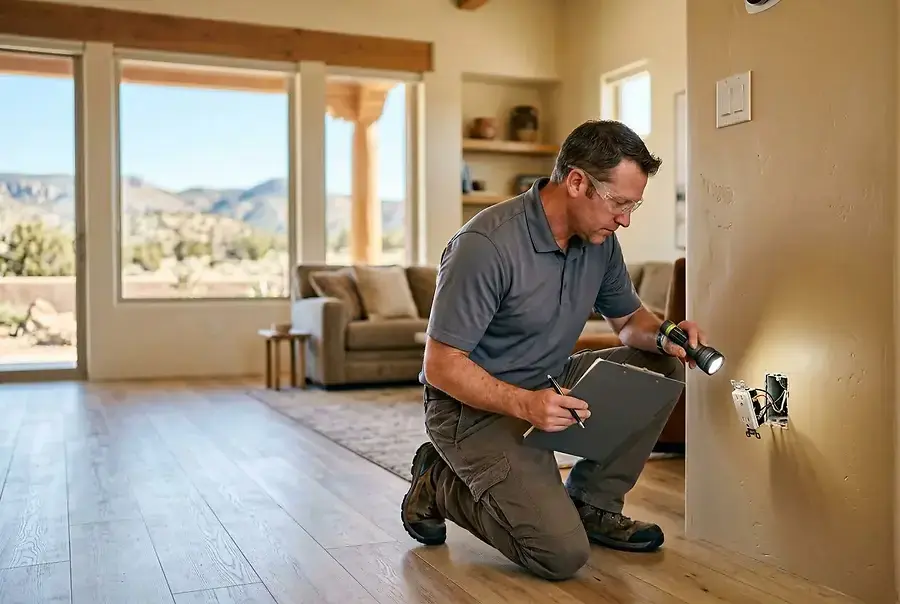
Electrical Systems
Electrical safety is paramount. Inspectors check:
- Panel capacity and breaker functionality
- Outlet grounding and GFCI protection
- Wiring age and condition
- Compliance with current electrical codes
HVAC and Climate Control
In Prescott Valley's climate, heating and cooling systems are essential. Inspectors assess:
- Air conditioning unit age and efficiency
- Heating system functionality
- Ductwork condition and sealing
- Thermostat operation
Common Issues Found in Prescott Valley Homes and How to Address Them
Desert-Related Wear and Tear
Prescott Valley's high desert environment presents unique challenges. UV exposure, temperature swings, and low humidity can cause:
- Roof deterioration: UV rays degrade roofing materials faster than in other climates. If your inspection reveals significant wear, budget for replacement or repairs.
- Exterior paint and siding damage: Extreme temperature changes cause expansion and contraction, leading to cracks and peeling. Plan for regular maintenance and repainting.
- Landscaping challenges: Inspect irrigation systems for efficiency, as water conservation is important in Arizona.
Water Intrusion and Moisture Issues
Despite the dry climate, water damage is a common problem in Prescott Valley homes. Look for:
- Roof leaks causing attic moisture
- Foundation cracks allowing water seepage
- Improper grading directing water toward the home
- Damaged gutters and downspouts
Pro Tip: Ask your inspector specifically about water intrusion signs. This is one of the most costly issues to address after purchase.
HVAC System Age and Efficiency
Many Prescott Valley homes have aging air conditioning systems. If your inspection reveals a unit older than 10-15 years, budget for replacement. Modern systems are significantly more energy-efficient and can reduce utility bills substantially.
Electrical Upgrades and Safety Concerns
Older homes may have outdated electrical systems that don't meet current safety standards. Common issues include:
- Insufficient outlets and circuits for modern living
- Outdated panel capacity
- Missing GFCI protection in bathrooms and kitchens
Conclusion: Using Inspection Reports to Negotiate and Protect Your Purchase
A professional home inspection report is more than just a document—it's your negotiating tool and protection strategy. Once you receive the inspection report, you have several options:
Negotiation Strategies
Request repairs: Ask the seller to fix significant issues before closing. This is especially effective for structural, electrical, or plumbing problems.
Request credits: If the seller won't make repairs, negotiate a credit toward closing costs to handle repairs yourself after purchase.
Renegotiate the price: Use inspection findings to justify a lower purchase price that accounts for necessary repairs.
Making Your Final Decision
Not every inspection finding requires action. Work with your real estate agent and inspector to prioritize issues by severity and cost. Focus on major structural, safety, and system issues rather than cosmetic concerns.
By understanding what home inspectors look for and how to use their findings, you're taking control of your Prescott Valley home purchase. This knowledge empowers you to make informed decisions, negotiate effectively, and protect your investment for years to come. Remember, a thorough inspection today can save you thousands in unexpected repairs tomorrow.


