Understanding Permafrost and Home Foundations in Interior Alaska
Learn how Interior Alaska's unique soil conditions affect residential property selection and long-term home stability in Fairbanks, North Pole, Salcha, and Fort Wainwright.

Introduction: The Hidden Challenge of Interior Alaska's Permafrost
When considering a home purchase in Interior Alaska—whether in Fairbanks, North Pole, Salcha, or Fort Wainwright—most buyers focus on square footage, amenities, and location. However, there's an invisible factor beneath every property that can dramatically impact your investment: permafrost. This permanently frozen ground layer presents unique challenges that every prospective homeowner in the region must understand.
Permafrost covers approximately 85% of Alaska and plays a crucial role in determining whether a home will remain structurally sound for decades or face costly foundation problems. Understanding this geological reality is essential for making informed decisions in Interior Alaska's residential market.
How Permafrost Impacts Home Construction and Property Values
What is Permafrost and Why Does It Matter?
Permafrost is soil, rock, or sediment that remains frozen year-round, typically at depths below the active layer—the upper soil that thaws seasonally. In Interior Alaska, permafrost can extend hundreds of feet deep. When homes are built without accounting for this frozen ground, serious structural problems can develop.
The Foundation Problem
Traditional foundation methods used in the Lower 48 states often fail in permafrost regions. When heat from a home melts the permafrost beneath it, the ground subsides and shifts, causing:
- Foundation cracks and settling
- Uneven floors and sloping walls
- Broken pipes and utility lines
- Doors and windows that no longer close properly
- Structural failure in extreme cases
These issues can render a home uninhabitable and cost tens of thousands of dollars to repair.
Proper Construction Techniques
Experienced builders in Fairbanks, North Pole, Salcha, and Fort Wainwright use specialized techniques to prevent permafrost-related damage:
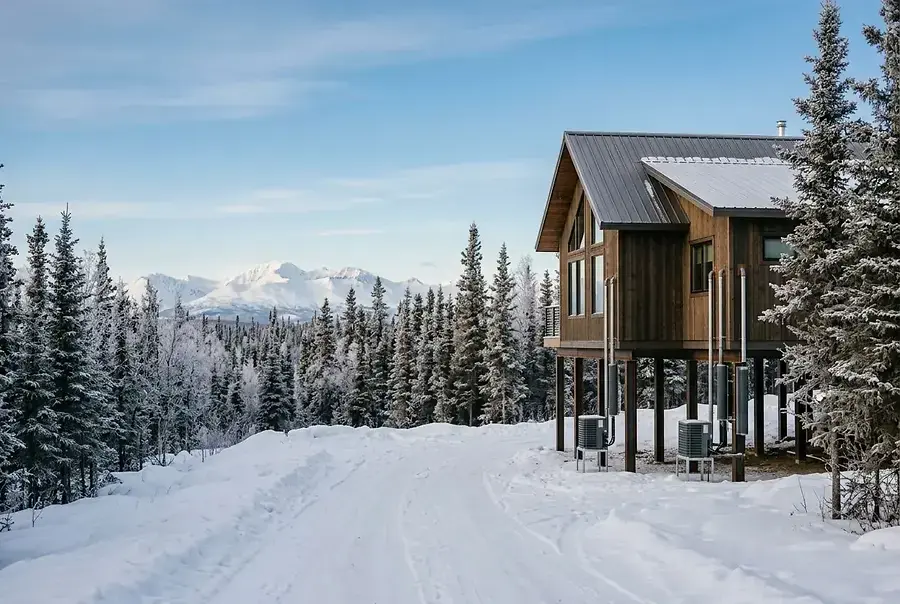
- Pilings and posts: Homes are elevated on deep pilings that extend below the permafrost layer, preventing heat transfer to frozen ground
- Thermosyphons: Passive cooling systems that keep the ground frozen year-round
- Insulation strategies: Proper ventilation under homes to maintain cold ground temperatures
- Gravel pads: Insulating layers that reduce heat transfer to permafrost
Homes built with these methods remain stable for generations, while those built without proper permafrost considerations often develop problems within 5-15 years.
Impact on Property Values
A home's foundation condition directly affects its market value. Properties with:
- Proper permafrost-resistant foundations command premium prices
- Signs of foundation damage sell at significant discounts or may be difficult to sell at all
- Unknown foundation history carry higher risk and uncertainty
In Interior Alaska's market, foundation integrity is often more important than in other regions, making it a critical factor in property valuation.
Evaluating Properties: What Buyers Need to Know Before Purchasing
Conduct a Thorough Inspection
Before purchasing any property in Interior Alaska, hire an inspector familiar with permafrost-related issues. Look for:
- Visible foundation cracks or settling
- Uneven floors (use a level to check)
- Gaps between walls and floors
- Doors and windows that stick or don't close properly
- Evidence of previous foundation repairs
- Moisture or water damage in basements or crawl spaces
Request Foundation Documentation
Ask the seller for:
- Original building permits and construction records
- Documentation of foundation type and construction methods
- Records of any foundation repairs or maintenance
- Soil testing reports if available
- Thermosyphon maintenance records
Homes built by reputable local builders often have detailed records showing proper permafrost-resistant construction.
Understand the Age and History
Older homes built before modern permafrost-aware construction standards are higher risk. If a home was built more than 20 years ago without documented proper foundation techniques, have a structural engineer evaluate it. Some older homes have been retrofitted with pilings or other solutions, which is a positive sign.
Consider Professional Soil Analysis
For significant investments, consider hiring a geotechnical engineer to assess the property's soil conditions. They can determine:
- Permafrost depth and stability
- Active layer thickness
- Ground ice content
- Long-term subsidence risk
This investment of $1,000-$3,000 can save you from purchasing a problematic property.
Insurance and Financing Considerations
Lenders and insurance companies in Interior Alaska are well aware of permafrost issues. Properties with foundation problems may be:
- Difficult or impossible to finance
- Expensive to insure or uninsurable
- Subject to special inspection requirements
Always disclose foundation concerns to your lender and insurance agent before finalizing a purchase.
Conclusion: Making Informed Decisions in Interior Alaska's Residential Market
Permafrost is not a reason to avoid purchasing property in Fairbanks, North Pole, Salcha, Fort Wainwright, or other Interior Alaska communities. Rather, it's a factor that demands respect and understanding. Thousands of homes in the region have been successfully built and maintained for decades using proper permafrost-aware construction techniques.
The key to a sound investment is knowledge and due diligence. By understanding how permafrost affects home foundations, conducting thorough inspections, and working with local professionals experienced in Interior Alaska construction, you can confidently navigate the residential market and find a home that will remain structurally sound for generations.
Whether you're relocating to Alaska for work, retirement, or adventure, taking the time to understand permafrost will help you make one of the most important financial decisions of your life. Your future home—and your peace of mind—depends on it.


