Understanding Property Values in Bloomfield Hills vs Detroit
What drives real estate prices in these two distinct Michigan markets and how it impacts your investment decisions.

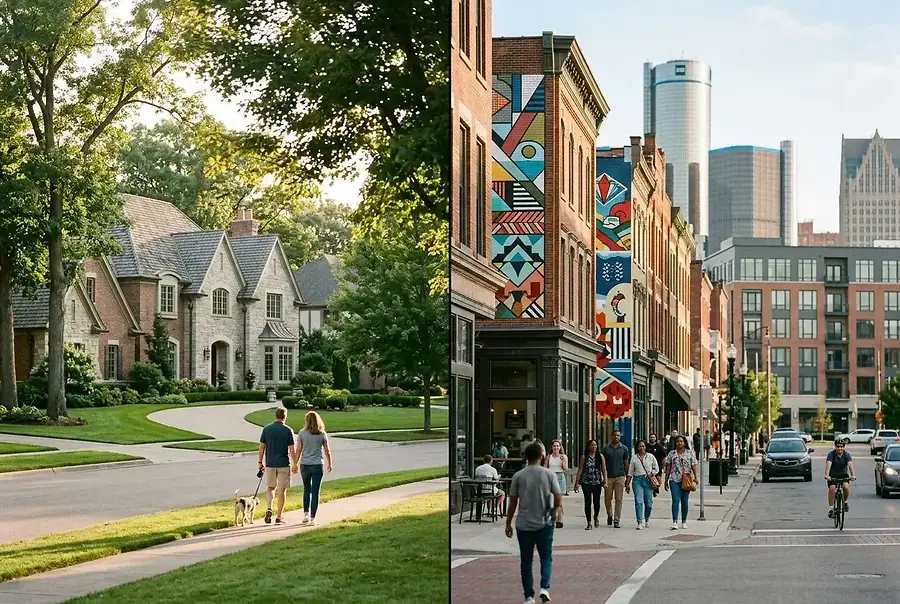
Two Markets, Two Opportunities
Michigan's real estate landscape presents a fascinating study in contrasts. Bloomfield Hills and Detroit represent two distinctly different markets, each with unique characteristics, investment potential, and value drivers. While Bloomfield Hills has long been synonymous with luxury properties and affluent communities, Detroit has emerged as a dynamic market full of revitalization opportunities and emerging neighborhoods. Understanding these differences is crucial for anyone considering real estate investments in Michigan.
The gap between these two markets isn't merely about price tags—it reflects deeper economic, demographic, and infrastructural factors that shape property values. Whether you're a seasoned investor or a first-time homebuyer, recognizing what drives prices in each market will help you make decisions aligned with your financial goals and investment timeline.
Factors Influencing Property Values in Bloomfield Hills
Affluent Demographics and Lifestyle Appeal
Bloomfield Hills has established itself as one of Michigan's most prestigious residential communities. The area attracts high-income professionals, executives, and established families who value exclusivity and quality of life. This demographic concentration naturally supports higher property values and maintains strong market demand.
Superior School Systems
The Bloomfield Hills School District consistently ranks among the top-performing districts in Michigan. Families prioritize education, and properties in areas with excellent schools command premium prices. This factor alone drives significant demand and supports sustained property value appreciation.
Infrastructure and Amenities
Bloomfield Hills boasts:
- Well-maintained roads and modern infrastructure
- Proximity to shopping, dining, and entertainment venues
- Access to golf courses, country clubs, and recreational facilities
- Excellent healthcare facilities and services
- Low crime rates and strong community safety
These amenities create a premium lifestyle environment that justifies higher property valuations.
Limited Housing Supply
Bloomfield Hills maintains strict zoning regulations and limited available land for new development. This scarcity of supply, combined with consistent demand from affluent buyers, creates upward pressure on property values. The exclusivity factor is intentional and carefully maintained.
Market Stability and Appreciation
Properties in Bloomfield Hills have historically demonstrated steady appreciation and resilience during economic downturns. This stability attracts investors seeking long-term wealth preservation and reliable returns.
What Shapes the Detroit Real Estate Market
Urban Revitalization and Emerging Neighborhoods
Detroit's real estate market has undergone significant transformation in recent years. Downtown revitalization, midtown development, and neighborhood restoration projects have created new investment opportunities. Areas like Corktown, Midtown, and Downtown Detroit attract young professionals, entrepreneurs, and investors seeking emerging markets with growth potential.
Affordability and Entry-Level Opportunities
One of Detroit's most compelling advantages is affordability. Property prices remain substantially lower than Bloomfield Hills, making Detroit attractive for:
- First-time homebuyers entering the market
- Investors seeking higher cash-on-cash returns
- Developers and renovation specialists
- Those seeking value-add investment opportunities
Economic Diversification and Job Growth
Detroit's economy is diversifying beyond traditional automotive manufacturing. Tech startups, healthcare institutions, creative industries, and financial services are establishing roots in the city. This economic diversification supports property value growth and attracts a younger, more diverse demographic.
Cultural and Artistic Appeal
Detroit's rich cultural heritage, vibrant arts scene, and growing music and entertainment industry appeal to creative professionals and cultural enthusiasts. This demographic shift influences property demand in specific neighborhoods and supports community development initiatives.
Development Potential and Upside
Unlike the mature, stable Bloomfield Hills market, Detroit offers significant upside potential. Properties purchased at current prices may appreciate substantially as neighborhoods continue to develop and the city's economic momentum builds. This appeals to investors with longer time horizons and higher risk tolerance.
Market Volatility and Risk Factors
Detroit's market does carry greater volatility than Bloomfield Hills. Factors such as neighborhood-specific conditions, ongoing revitalization success, and broader economic trends create more variability in property values. Due diligence and location selection are critical when investing in Detroit real estate.
Making Informed Decisions Based on Market Fundamentals
Define Your Investment Goals
Before choosing between these markets, clarify your objectives. Are you seeking stable, long-term appreciation with lower risk? Bloomfield Hills may align better with your goals. Do you want higher potential returns with greater risk? Detroit's emerging neighborhoods might offer better opportunities.
Consider Your Timeline and Risk Tolerance
Bloomfield Hills suits investors with longer time horizons who prioritize stability and consistent returns. Detroit appeals to those comfortable with market volatility and seeking capital appreciation over 5-10+ year periods.
Evaluate Neighborhood-Specific Factors
Within each market, individual neighborhoods vary significantly. In Detroit, research specific areas' revitalization progress, crime statistics, and development plans. In Bloomfield Hills, compare properties based on proximity to amenities and school district boundaries.
Assess Market Fundamentals
Successful real estate investing requires understanding the fundamental forces driving property values in your target market.
Examine:
- Historical price trends and appreciation rates
- Supply and demand dynamics
- Local economic indicators and job growth
- Population trends and demographic shifts
- Infrastructure investments and development plans
Seek Professional Guidance
Real estate agents, market analysts, and investment advisors familiar with each market can provide invaluable insights. Their local expertise helps you navigate market nuances and identify opportunities aligned with your investment strategy.
Both Bloomfield Hills and Detroit offer legitimate real estate opportunities—they simply serve different investor profiles and investment objectives. By understanding what drives property values in each market, you can make informed decisions that align with your financial goals and risk tolerance.